
From the OverlandEurope Expedition Archive — originally published 2019
Daylight was fading as we took a last walk through the twisted alleys of Antigo de Sarraquinhos. One house still showed signs of life. A dim bulb hung above a doorway at the top of a rough wooden staircase, and inside, hams and chouriça hung blackened under decades of smoke.
José and I stepped closer. A dog lifted its head from the landing above, watched us for a moment, and then let out a low, deliberate growl. It was enough to stop us where we stood. That brief encounter set the tone for what followed.
Not every journey requires distance, time, or elaborate preparation. In the far northeast of Portugal, beyond the reach of the coast and well outside the usual routes, lies Trás-os-Montes, a region shaped by isolation, hard seasons and a way of life that has changed little over time. This was a four-week journey into that landscape.
A Region Shaped by Isolation
Trás-os-Montes sits behind the mountains, enclosed by the Douro gorge and a series of rugged ranges that once cut it off almost entirely from the rest of the country. Roads arrived late, and with them only gradual change. Even today, the region retains a sense of distance. Villages cling to hillsides, populations have thinned, and younger generations have long since left for the coast or the cities.
What remains is a way of life shaped by necessity rather than design. The landscape still dictates the rhythm of the day, and those who remain carry a quiet self-sufficiency that reveals itself only slowly. But once trust is established, doors open without hesitation.
The history runs deep. Jewish communities fleeing the Inquisition settled here, leaving traces that still surface in local traditions. Smuggling routes developed across the borderlands, shaped as much by terrain as by need. Farmers endured extremes of climate that locals still describe, without exaggeration, as nine months of winter followed by three months of heat.
You begin to understand this not through explanation, but through observation.
Encounters with a Vanishing Way of Life
We had come to Portugal to explore three regions, but it was here in the northeast that the journey slowed and began to take on a different weight.
In Vinhais, during the Feira do Fumeiro, the air was thick with smoke and the steady movement of people passing between stalls. Families displayed sausages made to recipes handed down over generations. Some were dark and heavily cured, others lighter—variations that trace back to a time when Jewish communities adapted their food to avoid persecution while maintaining tradition.
Each product carried a history that was rarely explained, but always present.
That sense of continuity extended beyond the festival. Invitations came easily, and without ceremony. One farmer, with no introduction beyond a handshake, summed it up simply: “I don’t have much. But what I have is yours.”
We found ourselves standing in smoke-filled lofts where meat cured slowly above open fires, and in kitchens where bread was still baked in stone ovens. These were not demonstrations or curated experiences, but working spaces, unchanged in their purpose and largely unchanged in their form.
Life here is not presented. It is simply lived.
Borders, Smuggling and Survival
At Rio de Onor, the border between Portugal and Spain runs directly through the village. It is both a line and, in practice, something less defined.
The population has dwindled to only a handful of residents on either side, and the local dialect is fading with it. But the stories remain, carried in conversation and memory.
In the café, people observe first. Then, gradually, they talk.
Smuggling was once part of everyday life. Not organised crime, but a practical response to isolation. Coffee, cloth and small goods moved quietly across the border, sometimes tolerated, sometimes punished.
We met a retired police chief who admitted, with a hint of a smile, that everyone understood what was happening. Enforcement, he suggested, was not always a priority.
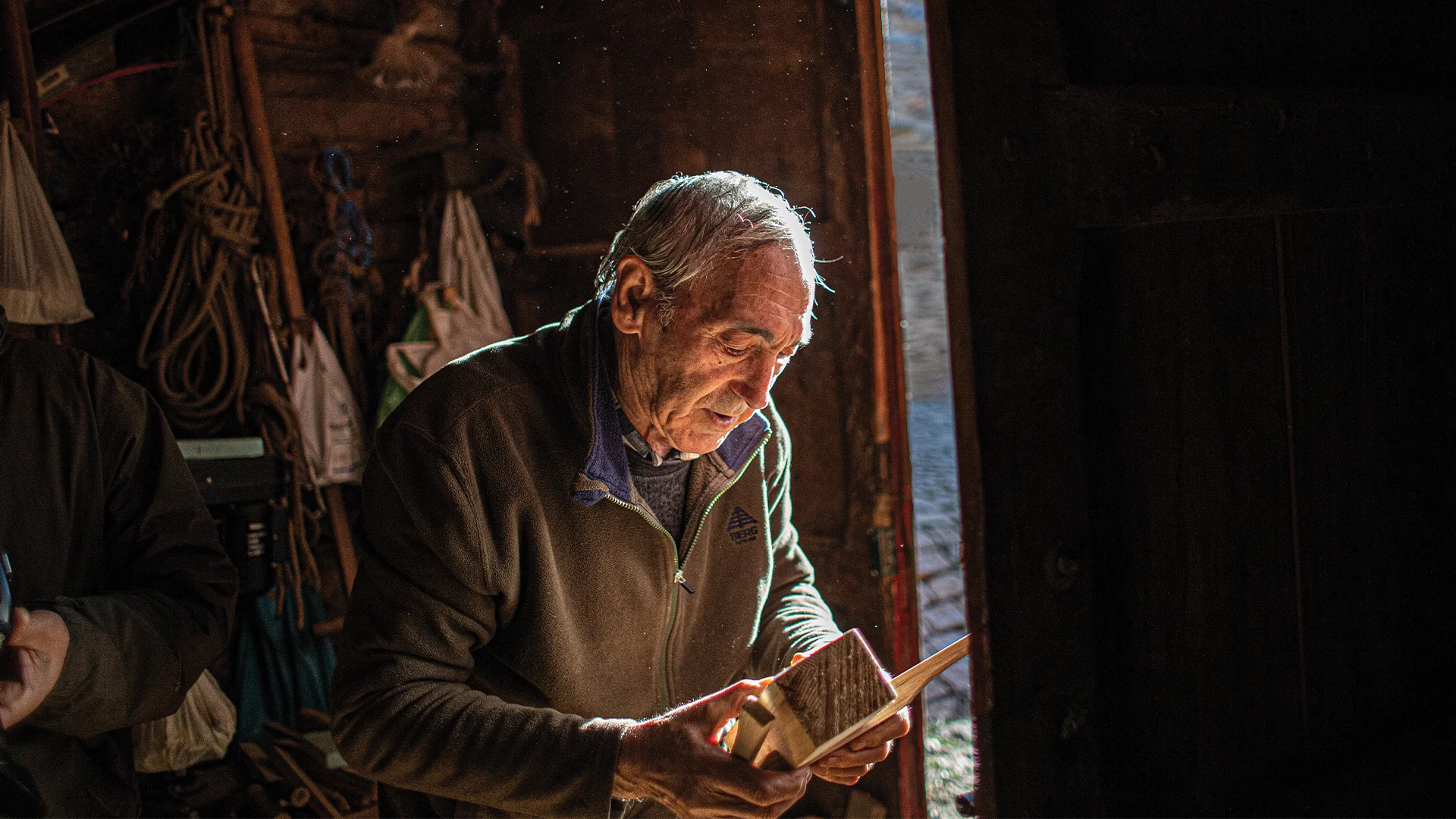
A former carpenter described nights spent transporting goods across the Douro gorge using ropes and handmade wooden gondolas. The risks were real, as were the consequences, but the alternatives were limited.
Here, geography dictated everything … including how people adapted, and where they chose to draw their own lines.
Off-Road Through a Forgotten Landscape
Portugal offers something increasingly rare in Europe: the ability to travel long distances off-road, legally.
With the support of local authorities and our guide, we followed trails that wound through forests, climbed ridgelines and dropped into remote valleys where entire settlements had been abandoned.
The effects of recent wildfires were visible across large areas. Hillsides lay blackened and silent, yet in between, the landscape opened into wide views across the Douro and beyond. Tracks led to long-forgotten mining sites and villages that seemed untouched by time.
Driving here is not about technical challenge. It is about access. Access to places that remain beyond the reach of conventional travel, and to a landscape that reveals itself gradually, rather than all at once.
A Moment That Stays With You
Domingos Moura introduced himself with a raised fist and quiet pride.
“I don’t have much,” he said again. “But what I have is yours.”
That evening turned into wine, cured ham and conversation in a dimly lit cellar. The kind of evening where language becomes secondary and understanding settles in without effort.
The next day, we returned. Lunch was already underway. Soup over an open fire, meat, vegetables and wine, everything produced within a short distance of the table.
Then came the moment of repayment.
“You have eaten at my table,” Domingos said. “Now you must take the cows to the field.”
So we did. Not just his cows, but the village herd, moving from house to house, gathering animals and guiding them out towards pasture. No instructions were needed. The animals knew the way, and the dogs maintained order.
At the edge of the field, Domingos stopped and looked across the valley.
“You can leave now,” he said. “I’m going to sleep under that tree.”
And with that, the day came to a close.
Expedition Overview
Region: Trás-os-Montes, Northeast Portugal
Duration: ~4 weeks
Terrain: Mountain tracks, border trails, remote villages
Focus: Cultural immersion, history, off-road travel
Access: Combination of public routes and permitted restricted areas
This journey was originally published in
OverlandEurope Magazine — 2019 Edition
The full article includes:
• extended interviews and local encounters
• deeper historical context
• full route details and locations
• complete photography series
