Let’s be honest, not all changes are a matter of choice. Circumstance often has a lot to say.
Look at travel through my eyes for a moment and you’ll see my rooftop tent dominating the space above Larry, my Land Rover. I have lived up there for more years than I care to remember—not because of any untoward experiences, but because it has become part of who I am. Truth be told, I am perfectly content once I am lying on the mattress, either inside or next to my sleeping bag. Arctic nights or sweltering summer evenings when the air refuses to move and the thermometer barely acknowledges that darkness has fallen; it makes little difference. I am at home in my lofty abode, away from the animals of the night and safely above the rising tide should a torrential downpour come my way.
But we cannot ignore the fact that a properly installed rooftop tent is just that: a properly installed rooftop tent. The moment another vehicle enters the equation, compromises begin to appear. A last-minute photo shoot. A press launch. A test drive. Some manufacturers understandably prefer their vehicles to remain exactly as they left the factory, and if I’m honest, removing and refitting fifty-odd kilograms of tent for the sake of one or two nights quickly loses its appeal. There are other solutions, and they don’t necessarily involve a hotel.
Two occasions spring immediately to mind. The first came with a phone call out of the blue. Tristan and I were invited to southern France to drive the latest Kia XCeed. While most of the other journalists chose comfortable hotels and urban life, we headed for the hills above Marseille to spend the night under the stars.
Flying and a compact crossover rather ruled out the rooftop tent, so we fell back on our Nordisk Lofoten ultralight tents. Advertised as two-person shelters, I struggle to fit myself and a sleeping bag inside, never mind anything else. Fortunately, that hardly mattered because everything else stayed safely in the car. For that particular trip, the Lofoten did exactly what it had been designed to do.
The second occasion was rather different. A spontaneous winter escape with a New Defender took us into the Eifel for several nights of sub-zero temperatures. Looking back, the spacious Nordisk Asgard would probably have been the more comfortable choice, but after days of relentless rain, the campsite resembled a bog more than a meadow. The tiny Lofoten won again simply because it could be rinsed off under a shower afterwards and hung up to dry.
Did I mention it was the middle of winter? This time it was me, the mattress, a winter sleeping bag, several layers of clothing, and what little dignity remained after squeezing inside, all competing for the same tiny space. Condensation formed so readily that I half expected it to freeze into stalactites before morning.
Don’t get me wrong. For anyone looking for an extraordinarily light tent that disappears into the corner of a rucksack, the Lofoten is a remarkable piece of engineering. In the right environment and for the right purpose, I would happily recommend it. But it also taught me a few lessons.
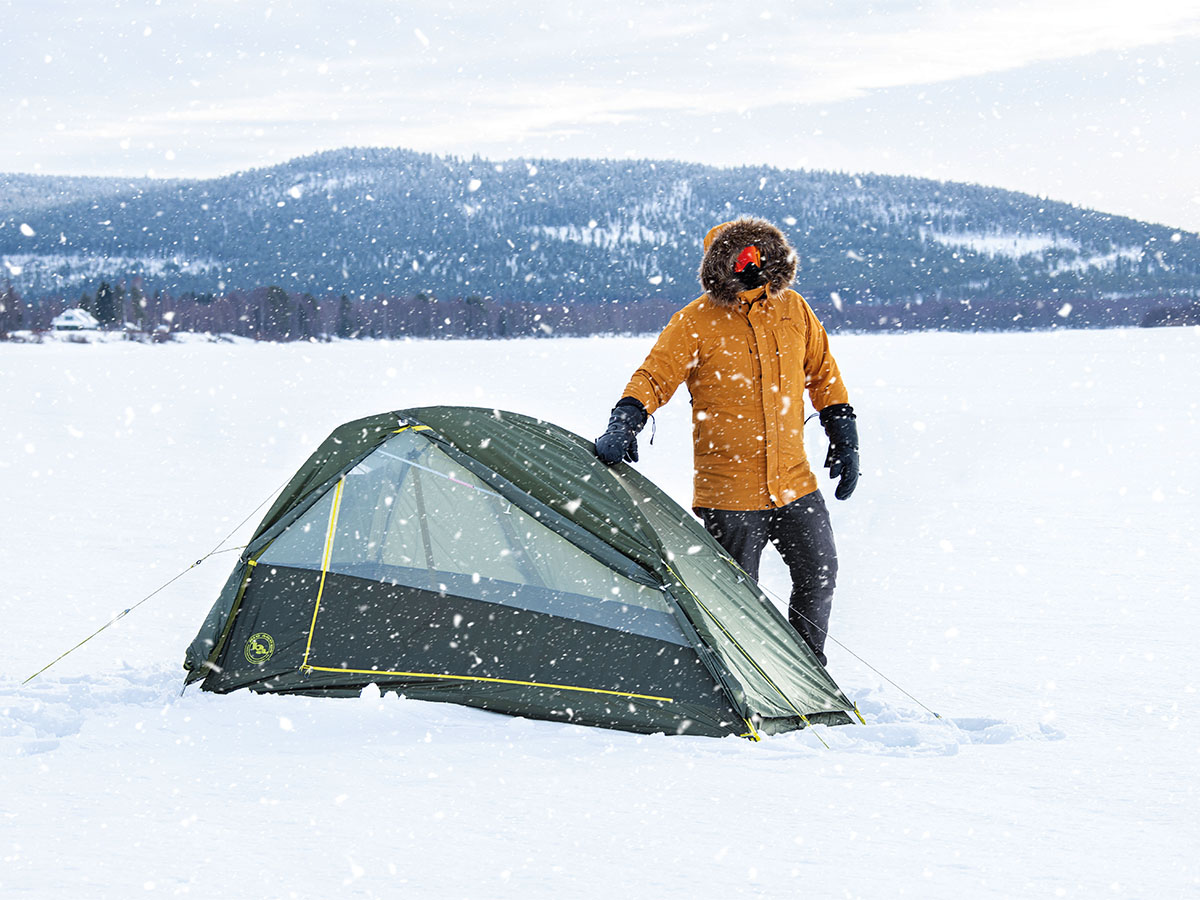
At the beginning of 2025 we began planning our winter expedition to Nordkapp. One thing was beyond doubt: It was going to be bitterly cold, with every possibility of strong winds sweeping in from the Barents Sea. For a journey of that length, fitting the rooftop tent to the Quartermaster made perfect sense. But I have experienced enough storms in rooftop tents to know that whatever I had encountered previously could easily be eclipsed by a full Arctic gale. I needed a contingency plan for the nights when retiring to the roof might simply become impractical.
I already knew that tiny was no longer going to cut it. Winter boots alone consume enough space without adding extra layers and a bulky jacket. Equally, I had no ambition whatsoever to wrestle a heavy canvas tent against a howling Nordic wind. Whatever accompanied us north had to pitch quickly, offer enough room to move around comfortably, pack down small enough to disappear into one of the Quartermaster’s load cases, and allow me to use the vehicle itself as a windbreak when conditions deteriorated.
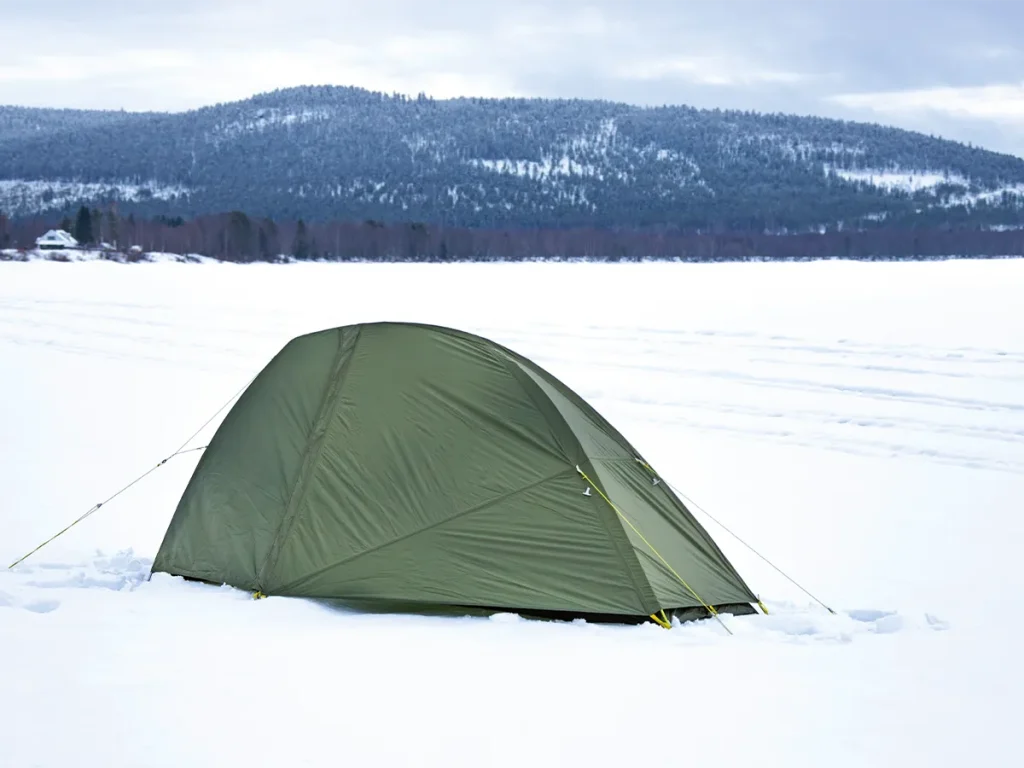
So I started asking questions. Advice came from experienced travellers, friends, and evenings spent reading reviews. Around the same time, I was also searching for an Arctic-capable sleeping bag, and I already knew exactly where to look. Big Agnes offered a bag capable of dealing with the temperatures we expected, while their sleeping mat promised to smooth out frozen ground and add valuable insulation beneath me when needed.
Orders were placed. Parcels arrived.
It was only afterwards that something else began to catch my attention. The deeper my research into tents became, the more often the same manufacturer’s name kept surfacing. Trusted reviewers mentioned it. Experienced campers recommended it. Long-term owners seemed remarkably reluctant to replace theirs. More phone calls followed. More questions were asked. Time, however, was no longer on my side and, in the end, inevitability took over. A few days later, the postman arrived with one final package.
The Crag Lake SL2 sat almost exactly where I had hoped it would. It isn’t an expedition-grade canvas fortress, nor is it one of those ultra-minimalist shelters where every gram saved comes at the expense of comfort. Packed neatly into its storage bag are the inner tent, flysheet, hubbed pole system, and pegs; everything required to pitch a genuine two-person shelter in a package compact enough to disappear into the load space.
Compared with a rooftop tent, which requires little more than a gentle skyward nudge before unfolding into a temporary home, a ground tent inevitably asks a little more of its owner. A practice run in the garden seemed sensible. The last place I wanted to decipher unfamiliar instructions was on a windswept campsite in fading light with the Barents Sea sending icy gusts across the landscape.
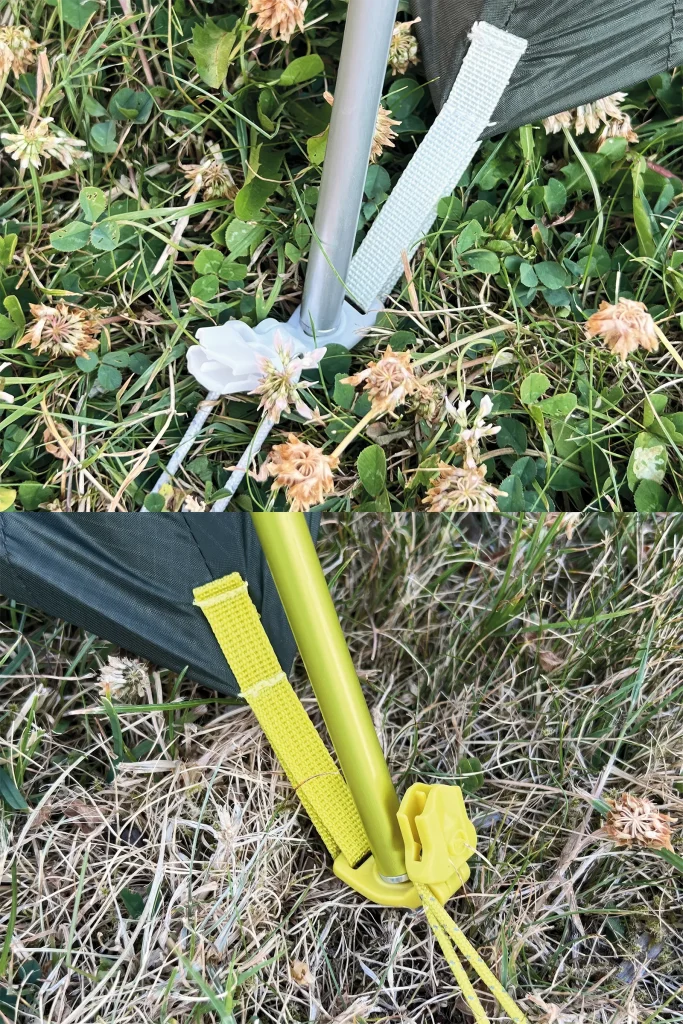
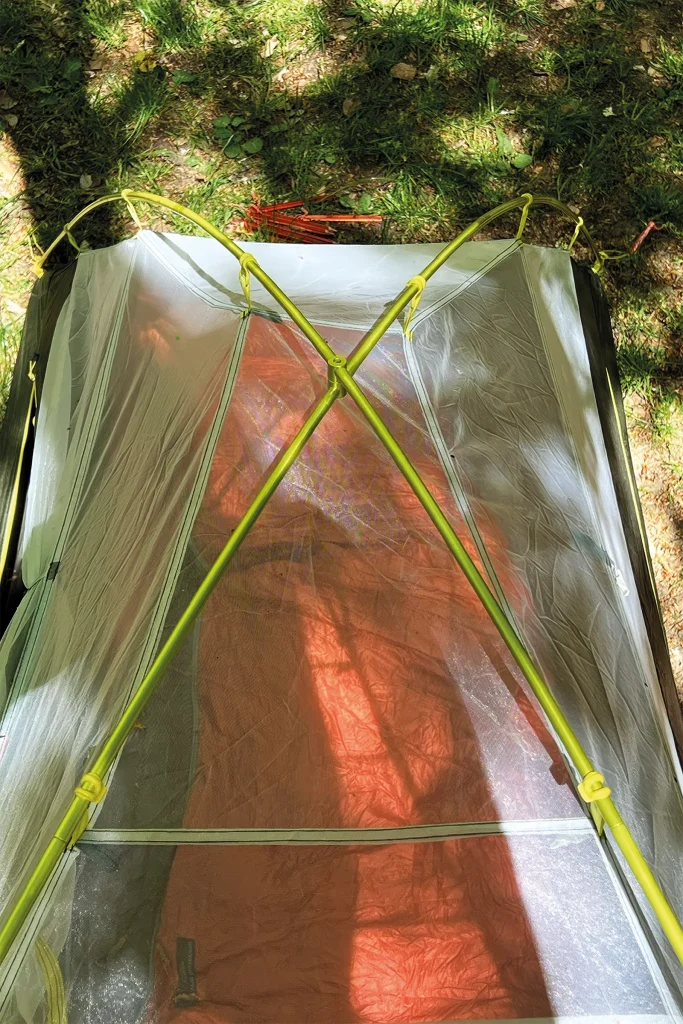
Within minutes it became obvious that Big Agnes had invested considerable time in first impressions. The hubbed pole assembly is wonderfully intuitive, while the colour-coded eyelets remove any lingering uncertainty. Matching yellow to yellow and white to white may sound embarrassingly simple, but simplicity is precisely what you want after a long day. Plastic clips replace traditional sleeves, allowing the inner tent to spring into shape in moments. The flysheet follows just as naturally, and the process is completed with the addition of pegs and guylines.
One person. Ten minutes.
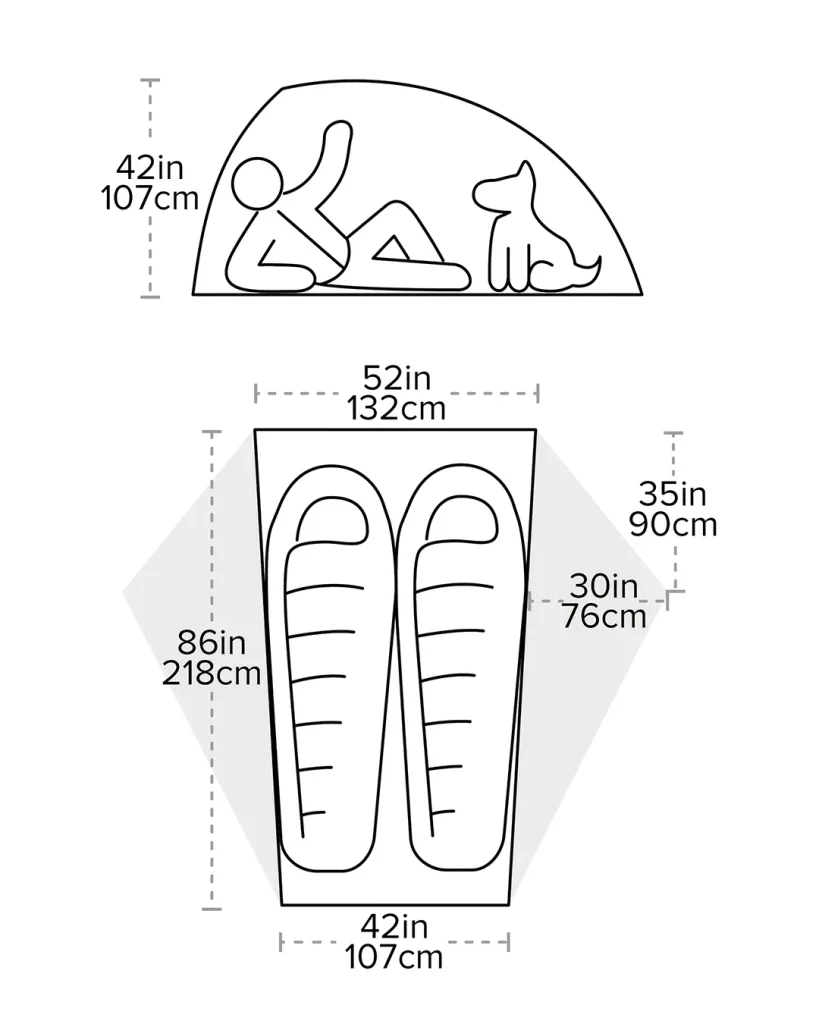
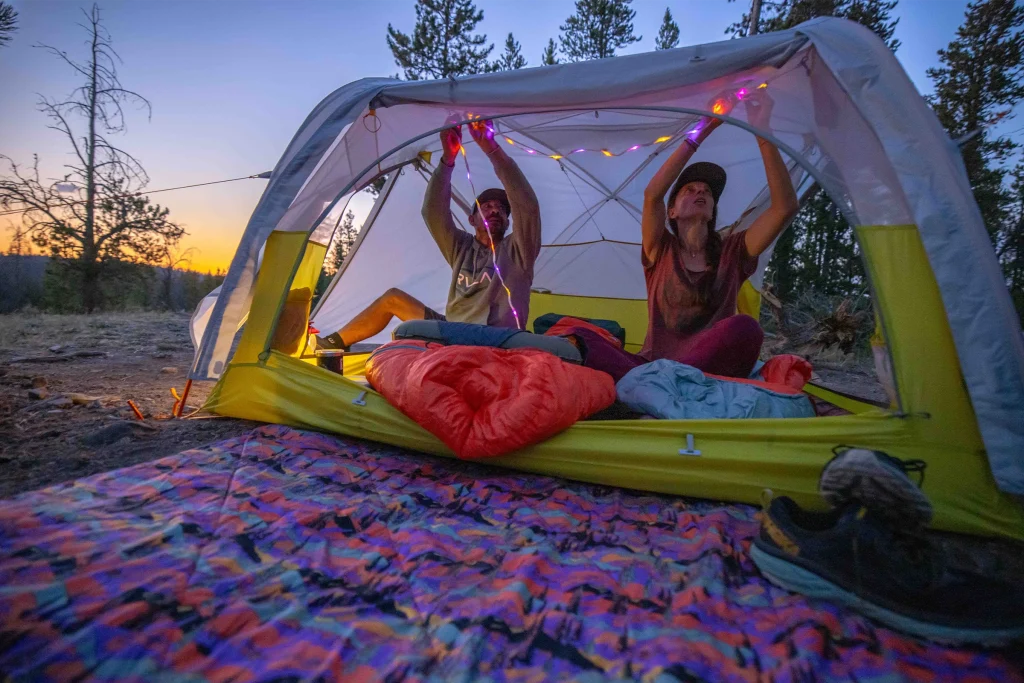
Looking through one of the doors for the first time, my immediate reaction was relief. Although marketed as a two-person tent, the Crag Lake feels positively luxurious for one. There is ample headroom to sit upright, change clothes without performing a circus act, organise equipment, read a book, or simply wait out poor weather. Even a four-legged travelling companion would have no difficulty finding somewhere to curl up for the night.
The twin-door arrangement could almost be overlooked because it works so well. Travelling as a couple, each person has their own entrance, eliminating the midnight crawl-over when nature calls. Travelling alone, one vestibule naturally becomes the storeroom for boots, waterproofs and bulky equipment, while the other remains clear for getting in and out or, on a wet morning, brewing the first tea of the day without inviting the weather indoors.
Then there are the zips. It seems almost absurd to praise a zip until you’ve camped in close quarters where every late-night excursion announces itself to half the field. The Crag Lake’s zips glide quietly enough that your neighbours are unlikely to notice you’ve slipped outside. It is a tiny detail, but one that says a great deal about the thought that has gone into the overall design.
If there is one area where lightweight tents frequently disappoint, it is ventilation. Modern fabrics rely heavily on waterproof coatings that perform brilliantly in persistent rain, but often trap moisture once temperatures begin to fall. I’ve woken in tents where the inner walls resembled a greenhouse by morning and every careless movement resulted in an unwelcome shower, while any clothing or sleeping bag touching the walls soaked up the moisture like a sponge.
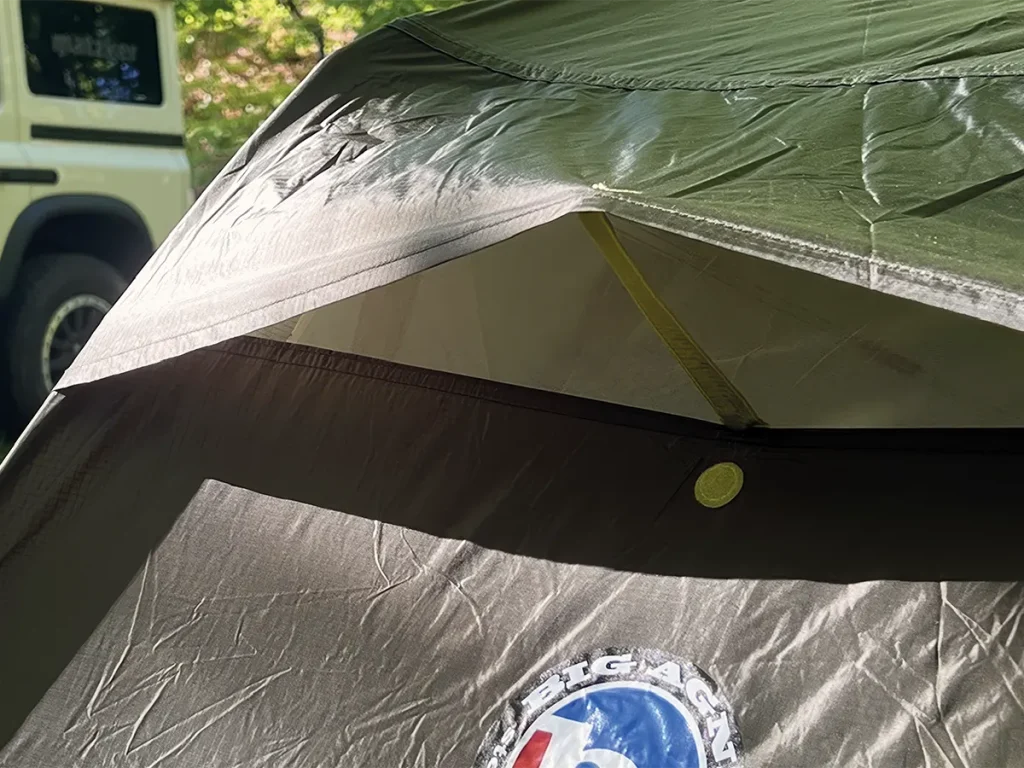
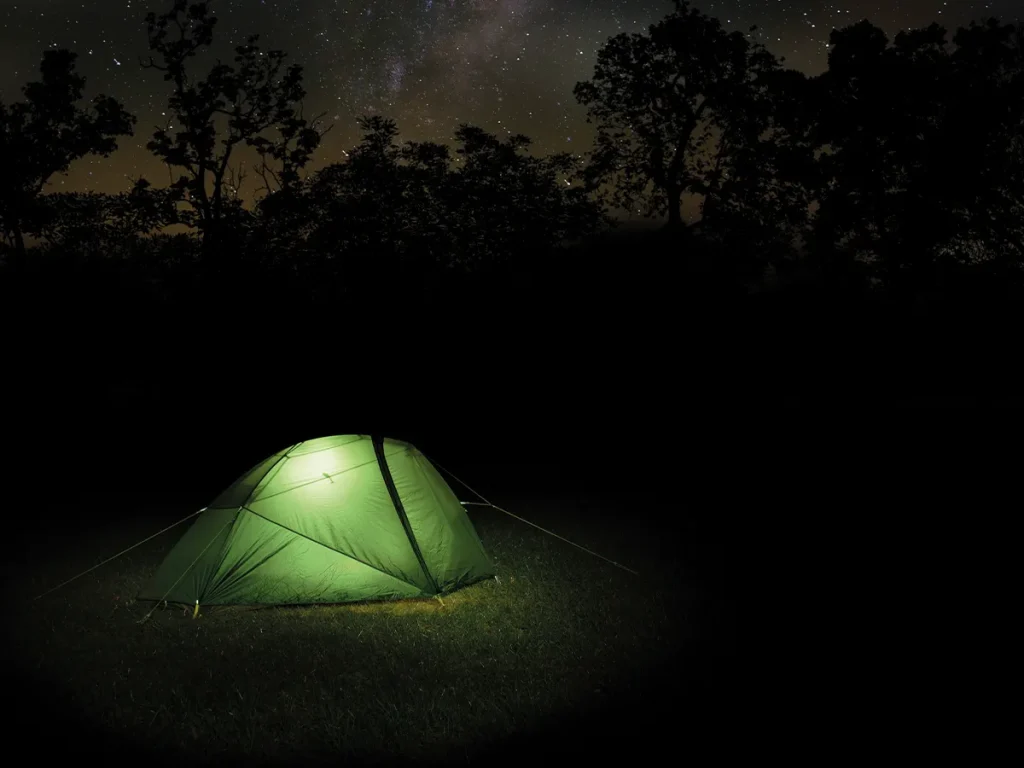
The Crag Lake was refreshingly different. The generous mesh inner, excellent airflow beneath the flysheet, and an unobtrusive roof vent keep fresh air moving through the tent so effectively that condensation never became something I consciously had to manage.
Perhaps the biggest surprise wasn’t how the Crag Lake performed in the Arctic. It was what happened afterwards. Since returning from Nordkapp, the tent has accompanied me on several other journeys where the rooftop tent simply stayed at home because a lightweight, self-contained ground tent was the more sensible choice.
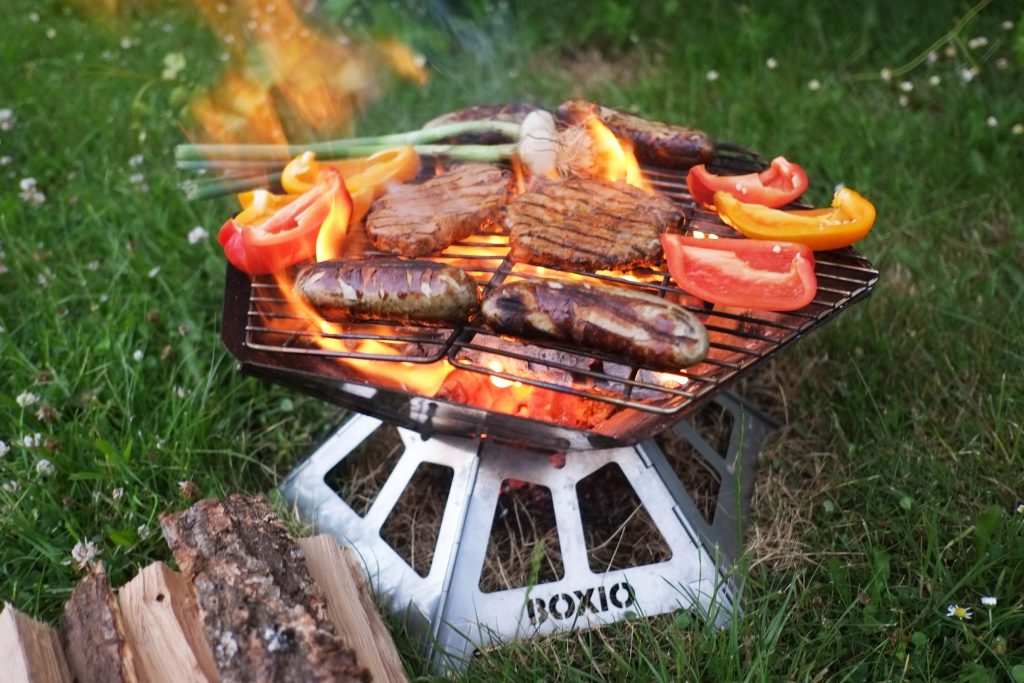
A recent weekend in the Eifel is a case in point. A few of us disappeared into the forest to spend a couple of days putting the BOXIO FIRE through its paces, cooking over wood and charcoal, drinking coffee around the embers, and generally enjoying the sort of unhurried evening that seems increasingly rare. The Crag Lake was the obvious choice. It packed neatly into the vehicle, pitched in minutes and, by the time we’d let the fire die down to mere embers, became home for the night.
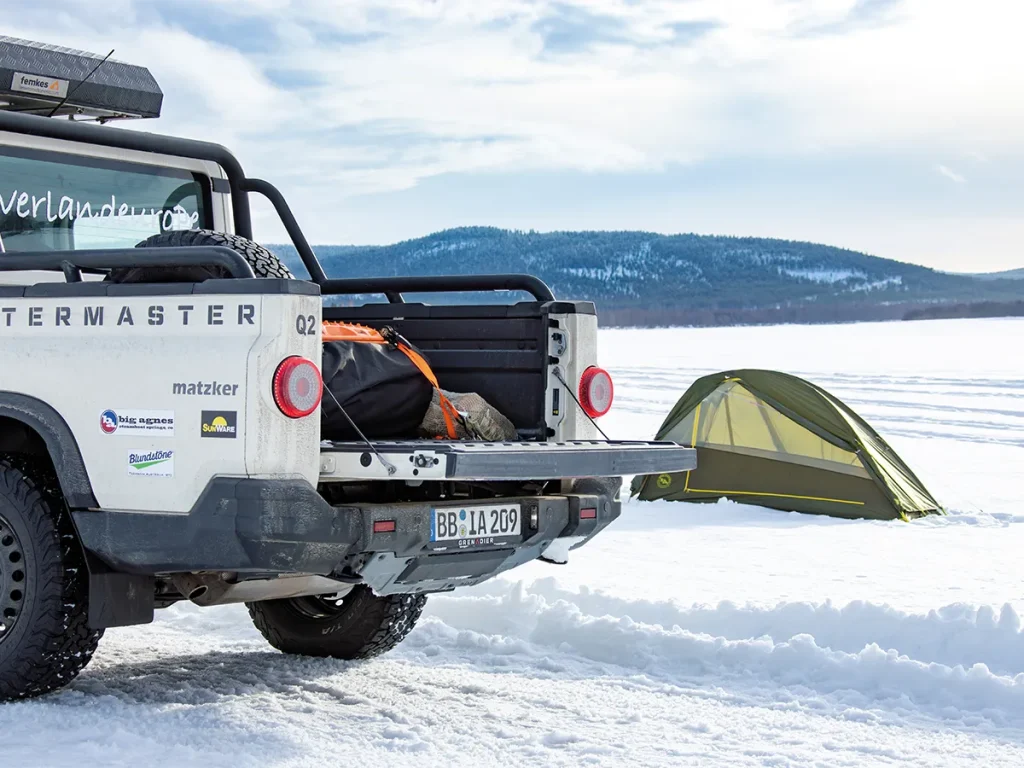
I ordered the Crag Lake SL2 as a contingency plan for an Arctic expedition; a comfortable alternative should a rooftop tent become an uncomfortable place to spend the night in a Barents Sea gale. It fulfilled that role admirably. What I hadn’t anticipated was how often I would reach for it afterwards.
As I write this, summer temperatures are climbing once again. Rather than sealing myself inside a rooftop tent, I find the idea of sleeping beneath nothing more than the Crag Lake’s mesh inner increasingly appealing. Leave the flysheet in its bag, let the evening breeze drift unhindered through the tent, and allow the mesh to deal with the insects while I have a clear view of the stars. It is almost the exact opposite of the conditions I bought the tent for, yet it feels equally at home.
The best outdoor equipment should be able to adapt to more than the purpose for which it was purchased. The Crag Lake SL2 has certainly evolved into something more useful than I had initially imagined.
Have I abandoned my rooftop tent? Not at all. There are still plenty of journeys where sleeping in the attic remains exactly the right answer. But I have to admit, the basement has rather more to offer than I ever gave it credit for.
€400 | BIG AGNES