By Alexander Wohlfarth
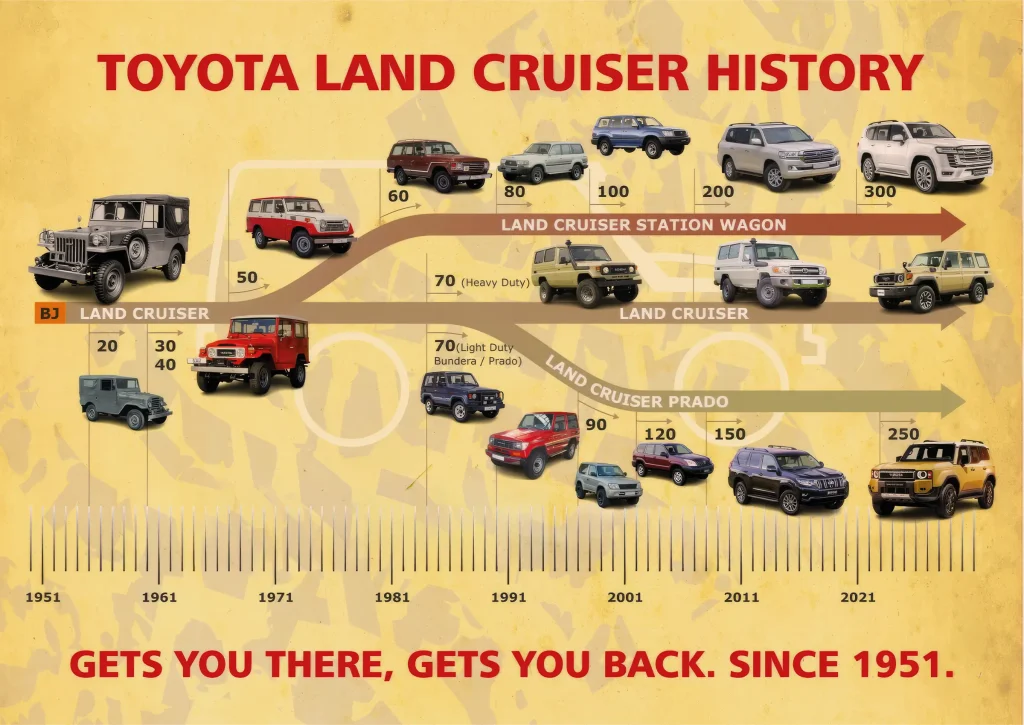
Three parallel model lines, sixteen generations, hundreds of variants, and almost 14 million vehicles built: This year, the Toyota Land Cruiser celebrates its 75th anniversary. It is a tool, a promise, a global citizen and a legend all at once. And, quite simply, it is also the vehicle that helped propel Toyota to worldwide success.
An Impossible Mission
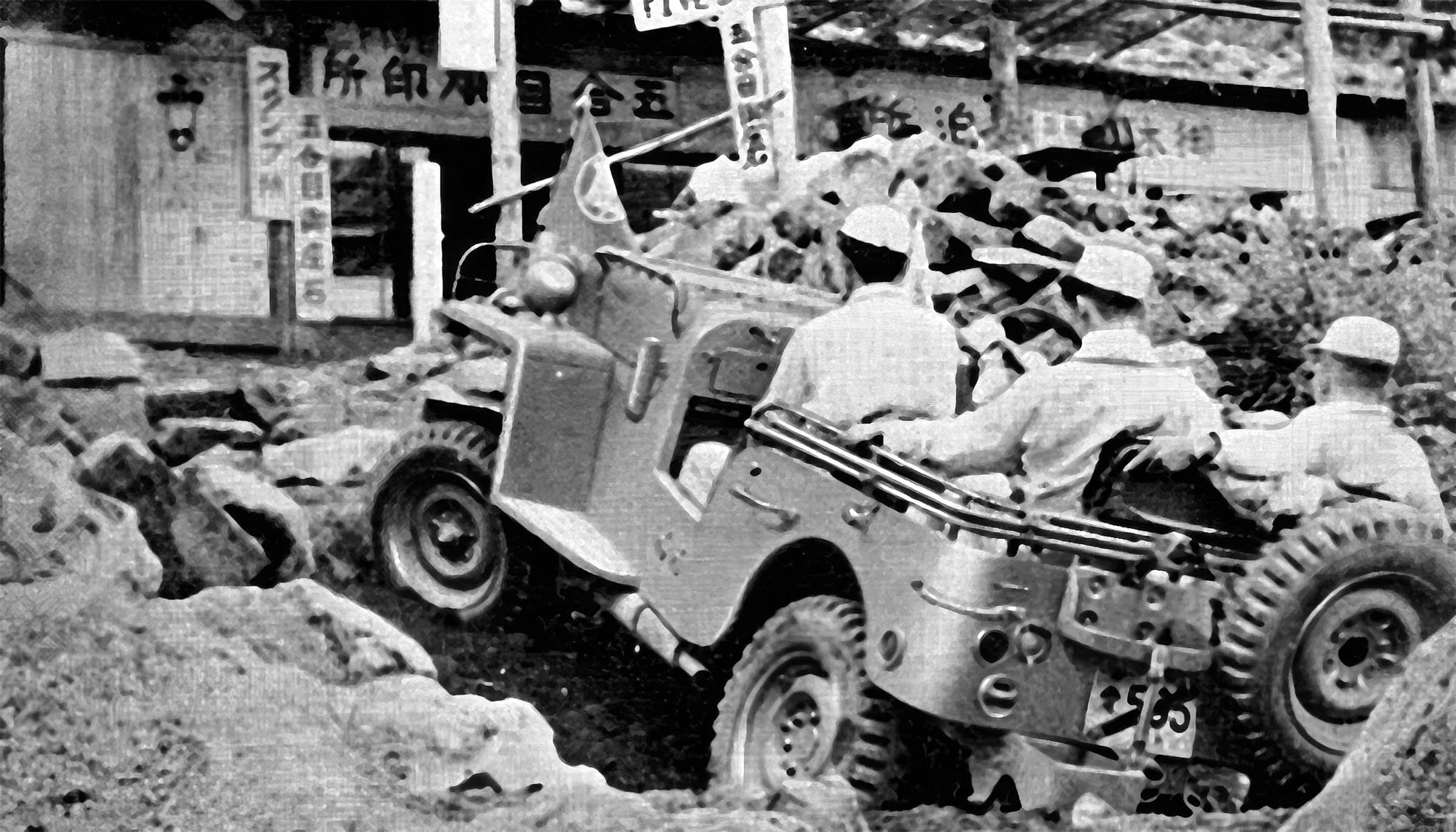
It is July 1951. Although it is still early morning, Ichiro Taira is drenched in sweat. Partly from the physical effort, but mostly from the tension. Beneath the wheels, the loose black volcanic rock shifts and tumbles away. The vehicle lurches violently from side to side, the steering wheel tugging relentlessly at his arms. Behind him lie some 1,300 nerve-racking metres of climbing along the old pilgrimage trail on Mount Fuji. Ahead, the sixth station slowly emerges from the haze. The six-cylinder engine roars, the transmission howls. In front of him lies the goal. Behind him, the abyss. Then, at last, one final surge forward. Success. He has achieved what everyone believed impossible. He has demonstrated what this hastily assembled four-wheel-drive prototype, built in just five months, is capable of. What Toyota is capable of. He and his superior, Hanji Umehara, are convinced: If it works here, the world will be theirs. And all this despite Toyota having only narrowly escaped bankruptcy, while Japan itself is only just beginning to recover from the devastation of war and surrender.
But how did it come to this? On 25 June 1950, North Korea invaded South Korea, triggering a devastating conflict that would last for three years. The United States and the United Nations came to South Korea’s defence. Japan, still under American occupation, became the logistical hub for military operations throughout Southeast Asia. With US forces heavily committed in Korea, the decision was made to allow Japan to establish its own security forces. These new National Reserve Forces required a light, durable off-road vehicle. Japan’s surviving automotive manufacturers were therefore invited to develop one.
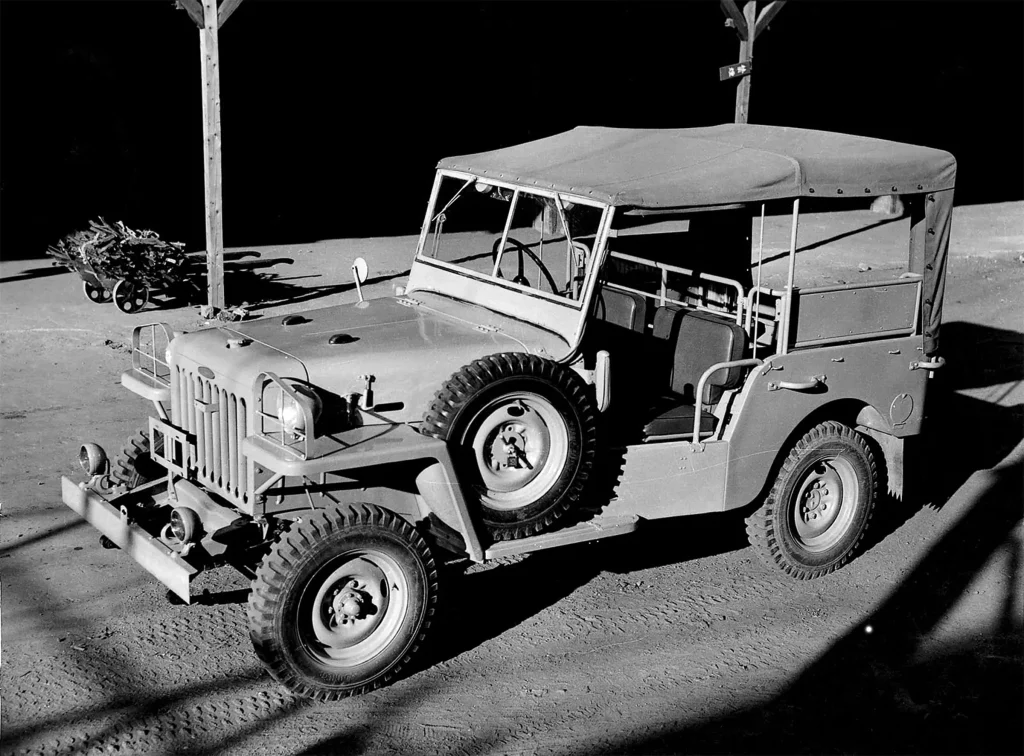
Toyota joined the competition. With both time and materials in short supply, the company simply raided its own parts shelves, combining proven components from several of its commercial trucks. The result was an ingenious, if somewhat oversized, mechanical package. A handful of roughly shaped body panels completed the package. In a moment of inspired simplicity, Toyota christened the B-engine-powered machine, styled unmistakably after the American Jeep, the “Toyota Jeep BJ.”
It was this very vehicle that Taira-san had just driven to an altitude of 2,400 metres. His gamble had paid off. Shortly afterwards, the first orders arrived and limited production began. That legendary first “altitude record” became woven into the DNA of the new vehicle. From that moment on, the promise was simple: It gets you there. It gets you back.
The System: Not one Model, but a Family
The “Toyota Jeep BJ” was the original. In 1954, it was renamed the “Land Cruiser,” and the first vehicles were exported. From there, things gathered pace. Encouraged by its remarkable success in civilian markets and with export ambitions firmly in mind, Toyota’s engineers embarked on a comprehensive redesign of the Land Cruiser BJ. The result was the first true leap forward in the model’s evolution. In August 1955, the Land Cruiser BJ25 made its debut: The “J” now stood for “Land Cruiser,” the “2” denoted the second generation, while the “5” served no purpose beyond distinguishing the various versions within the range. This naming convention has survived to the present day, although Toyota has not always applied it with complete consistency.
The second generation also marked the beginning of the Land Cruiser strategy. With little money available for advertising, Toyota simply drove the vehicle into its target markets and demonstrated it in person. It worked. The J20 was a formidable machine: solid, rugged, immensely capable off-road, and seemingly indestructible. Before long, it was working its way across Pakistan, Egypt, Australia, and Brazil. When it finally reached the United States in 1958, exports gained real momentum.
It was with the second generation that one of the Land Cruiser’s greatest strengths truly took shape: versatility. Offered with different wheelbases, body styles and engines, the Land Cruiser became a platform rather than a single vehicle. Whatever the task, there was a version to tackle it. Customer feedback was taken seriously, and new ideas were quickly incorporated into the range.
PREMIUM ARCHIVE
Continue reading with OverlandEurope membership
This article forms part of more than ten years of independent overland journalism. Learn what membership includes and how it opens the complete archive.
Already a member? Log in to continue.
Log in to continue reading
Enter your member details to continue reading this article without leaving the page.
The complete OverlandEurope archive, published independently since 2016.