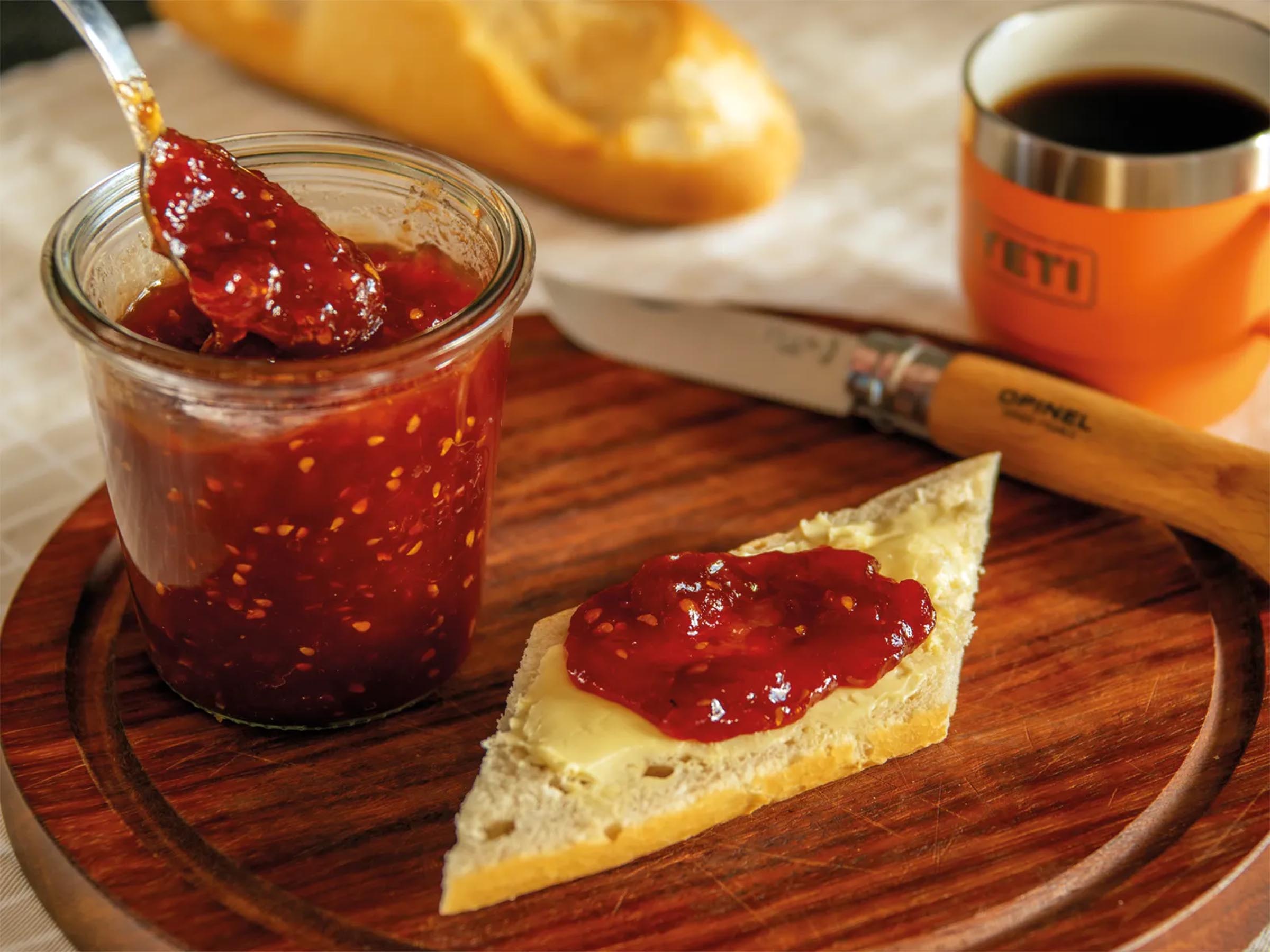
There is always a pause when I hand someone a jar. They turn it in the light. They see the seeds. They hesitate.
“Tomato?”
The word carries baggage. Salad bowls. Pasta sauce. Something savoury and red and practical. Not something that belongs on buttered toast.
Yet the tomato is a fruit. It always has been. Botanically, structurally, culturally … even if we have trained ourselves to forget. When it arrived in Europe in the sixteenth century from the Americas, it was treated with suspicion and grown as an ornamental curiosity. It took time before kitchens trusted it. It took longer before sugar met it in a preserving pan.
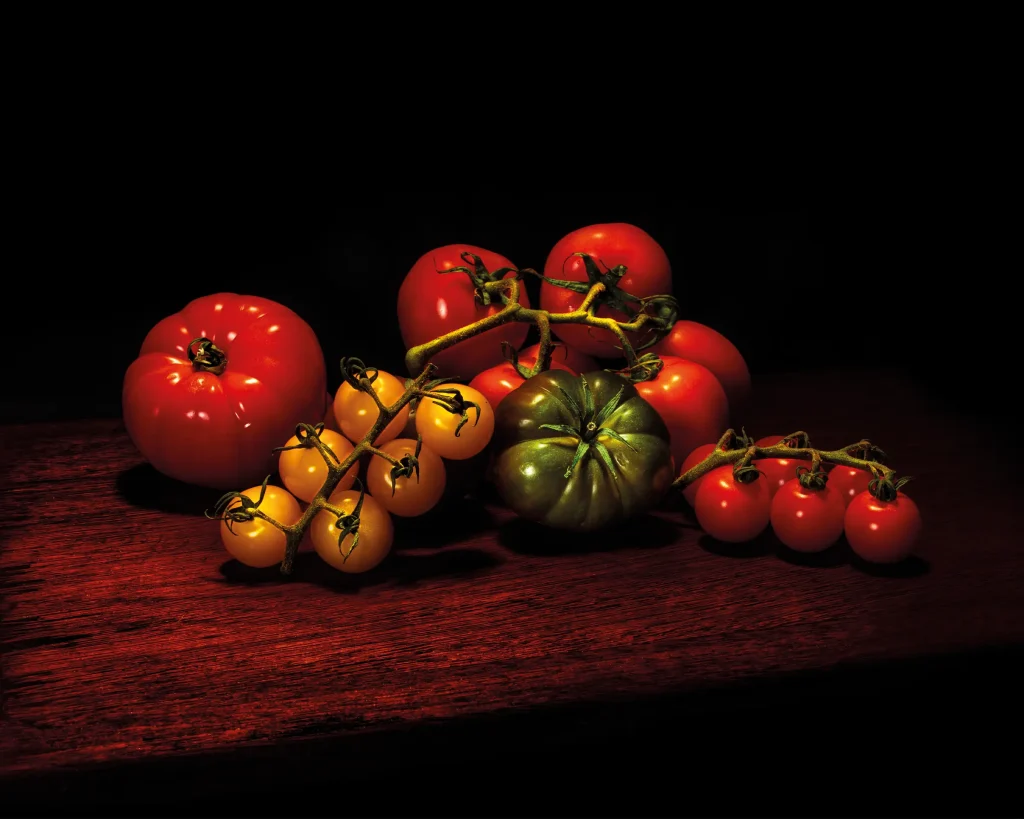
By the nineteenth century, cooks in America were already stewing tomatoes with sugar and reducing them to a glossy preserve. Agricultural journals of the 1840s record tomato jam recipes in plain, functional language: pulp the fruit, add sugar, cook until thick. The motive was not innovation but survival. Tomatoes ripen together and without mercy. What cannot be eaten must be kept.
Portugal understood this instinctively. Sugar work was already embedded in the culture. Convent kitchens had been reducing fruit and sugar into dense preserves for centuries. Quince, fig, citrus. The method required no reinvention. Tomato simply entered the conversation.
The version I make today comes from the mother of a dear Portuguese friend of mine, now well into her eighties … a recipe carried not in notebooks but in habit, adjusted by eye, and repeated each summer without fuss.
Strip it of skins, chop the flesh with seeds intact, add sugar, apply heat and patience, and something shifts. The acidity sharpens, the sweetness rounds, the aroma deepens as water leaves and flavour concentrates. The seeds remain visible in the jar … and they should. Remove them and you discard not only structure but juice, the volatile scent that carries the fruit. The seeds also serve another purpose: they disturb expectation. They force the taster to confront the tomato honestly.
Every jar I have ever given away is returned empty. Scepticism rarely survives first contact.
Why It Exists
Tomato jam was born of abundance.
A glut in August becomes scarcity in January. Sugar binds time. Reduction makes flavour durable. Before refrigeration, before freezers, before industrial processing, there was only concentration and cleanliness. Heat drove off water; sugar restrained decay.
There’s nothing fashionable about that. It is economy, not trend.
On Heat and Chemistry
Tomatoes contain lycopene, the red pigment that has attracted modern nutritional attention. Unlike many delicate compounds, lycopene tolerates heat well. In fact, cooking breaks down cellular walls and can make it more bioavailable. Tomato jam is not a health cure, but neither is it nutritionally empty. It remains fruit, albeit preserved fruit.
The real transformation, however, is sensory. As the liquid reduces, aroma intensifies. What begins as chopped tomato and sugar becomes darker, deeper, faintly caramel at the edges. The line between sweet and savoury blurs.
Doce de Tomate, the recipe
This is the simplest form I know. No spice. No citrus. No embroidery. Just fruit, sugar, water, and attention.
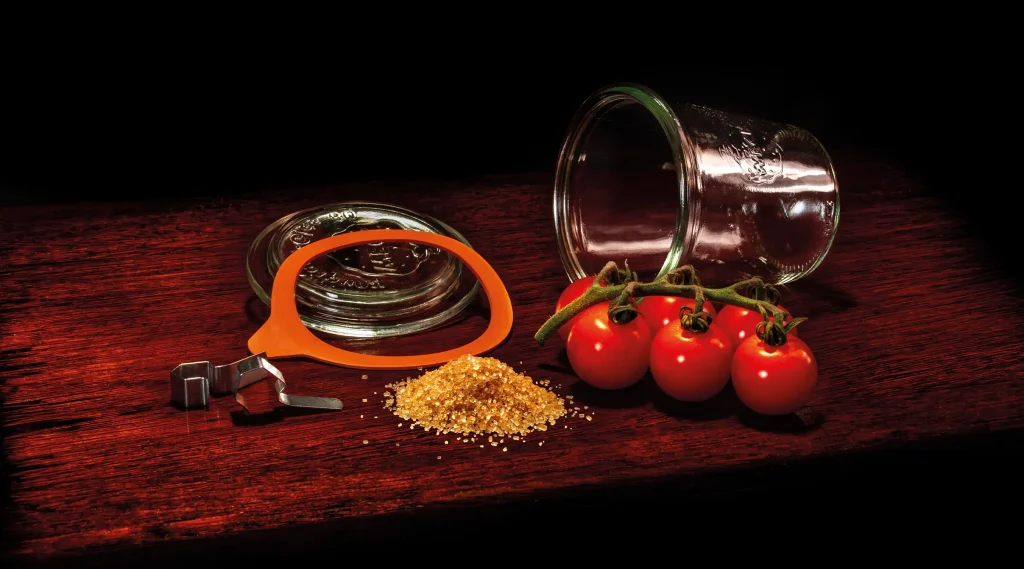
Equipment
Wide, heavy bottomed saucepan, metal spoon, jars for storage
Ingredients
1000 g ripe tomatoes, any size or colour
400 g brown sugar
100 g water
Method
Choose a saucepan wide enough to allow steady evaporation. Weigh it empty, without a lid, and note the weight.
Skin the tomatoes by scoring a shallow cross at their waist. Place them in the pan, cover with water and bring to the boil—you’ll see the skins split. Drain the water and refill the pan with cold water. Leave for a few minutes, then slip the skins away. Do not remove the seeds. Chop the flesh into rough, small, irregular pieces. Precision is unnecessary; reduction will take care of structure.
Place the tomatoes, sugar and water into the pan.
Weigh the pan again. Subtract the weight of the empty pan to determine the starting net weight of the contents. It will be slightly less than 1.500 g because the skins have been discarded.
Bring the mixture gently to the boil, stirring until the sugar dissolves completely.
Reduce the heat to a vigorous simmer. From this point forward, remain attentive. Stir frequently at first and then continually as the mixture thickens. The jam can catch and burn quickly during the final stage of reduction.
Continue cooking until the liquid has visibly thickened and you can draw a clear track through the surface with a spoon.
For accuracy, weigh the pan once more. When the net weight of the contents has reduced to approximately half of the original starting weight, the texture is correct. This is more reliable than guesswork and more precise than folklore. Reduction is measurable.
Pour the hot jam into sterilised jars, seal immediately, and allow to cool before storing in a cool, dark place.
That said, in this house, storage is theoretical. It rarely survives long enough to test longevity.
At the Table
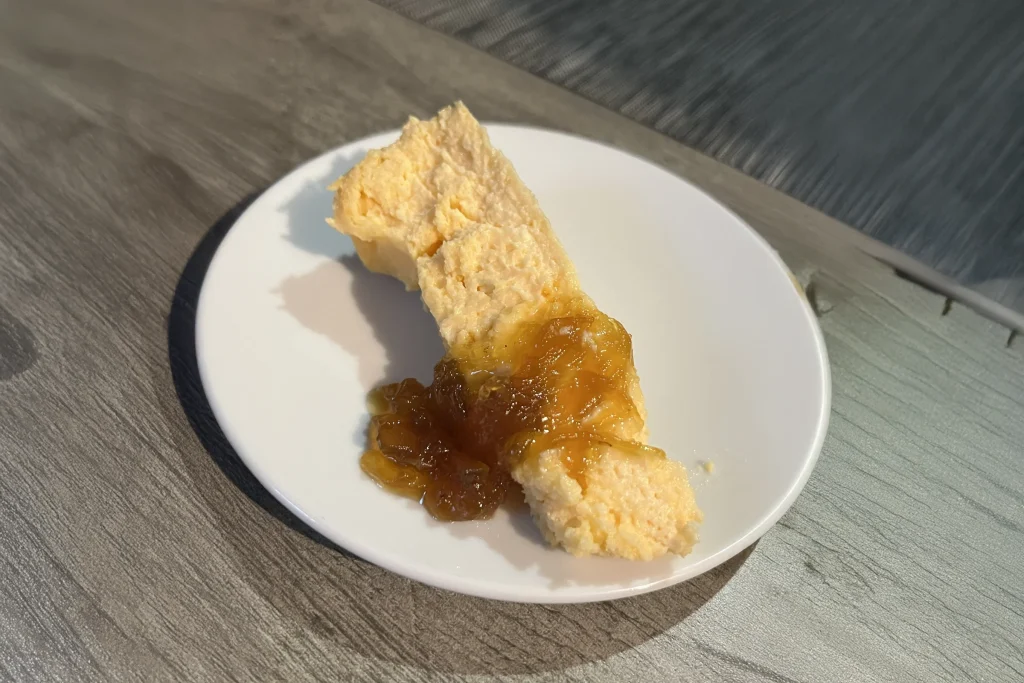
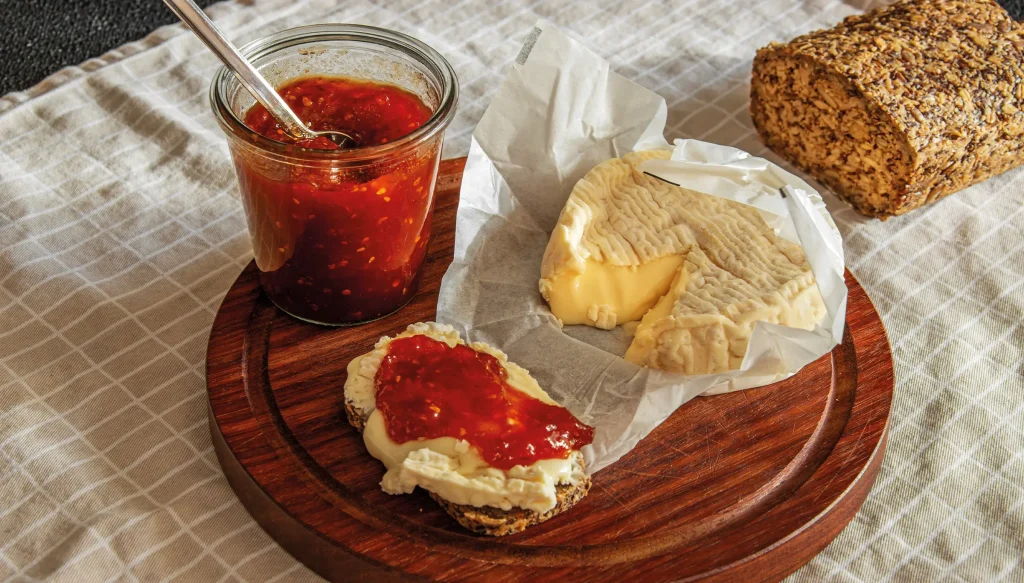
It belongs on toast with butter. On fresh bread. Alongside cheese—particularly young, mild cheeses whose lactic softness needs acidity to wake it. The balance is clean and unexpectedly direct.
The first reaction is almost always curiosity.
The second is silence.
The third is a request for another jar.
Tomato jam occupies that quiet space between categories. It reminds us that fruit and vegetable are not absolutes but habits of thought. In a jar, reduced to half its weight and sharpened by sugar, the tomato reasserts what it always was: a fruit. And a surprisingly persuasive one.
Make this jam at home in the kitchen with the aid of scales. Get used to the look and feel of the reduced mass. Then you can eyeball it when you’re travelling, for some civilised goodness in the wild.
Photography: Tristan Brailey