
About OverlandEurope
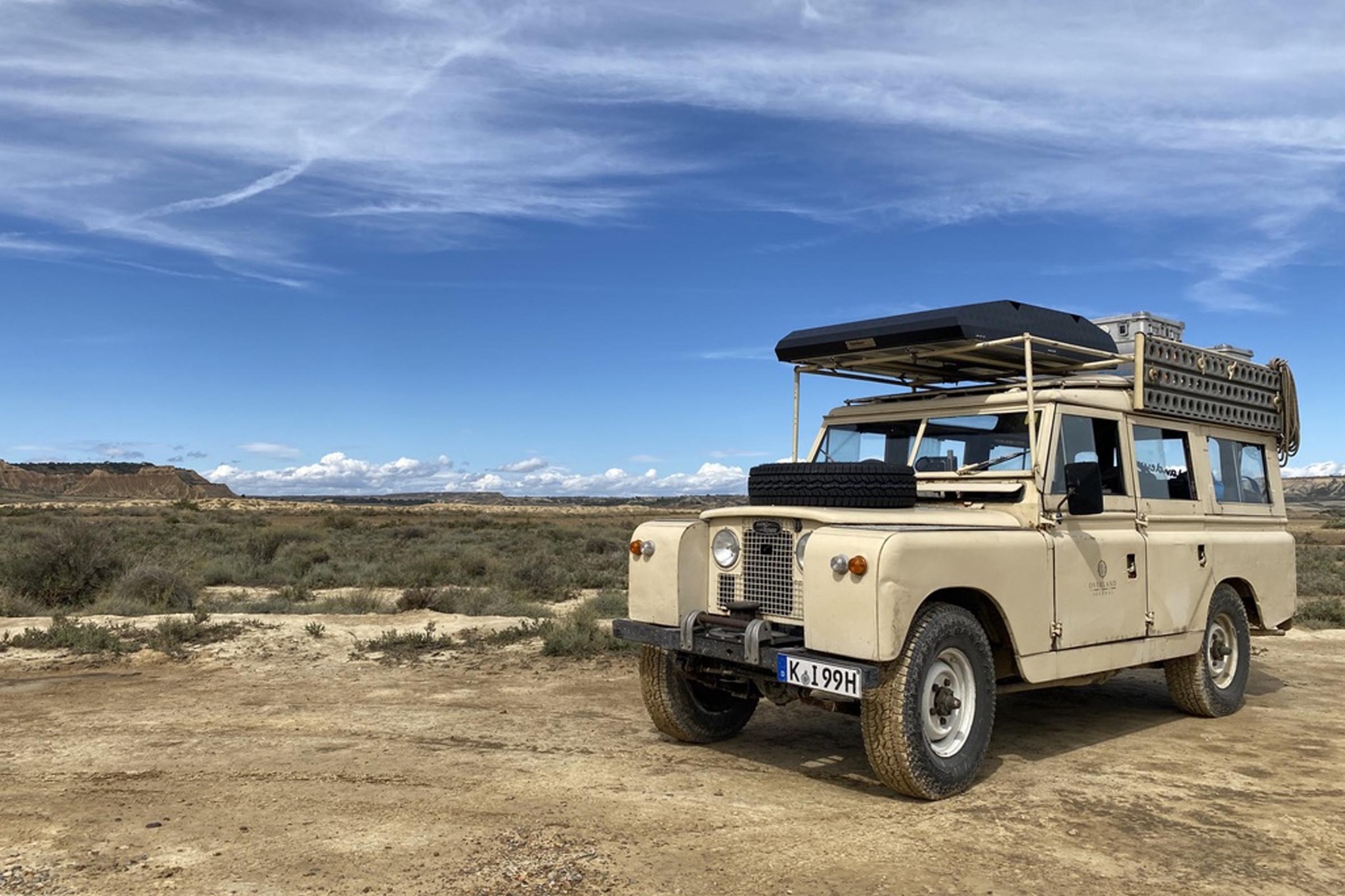
OverlandEurope was born in 2016, largely from a personal need for change. I wanted to leave the corporate rat race, spend more time with my family and explore new countries. But there was another reason: vehicle-supported travel was changing. Overlanding was becoming increasingly associated with expensive vehicles, ever more equipment and a growing social-media culture in which the journey sometimes seemed secondary to the photographs, likes and followers. There is nothing inherently wrong with any of that. It simply wasn't the travelling I knew.
I was interested in people who travelled with vehicles they could afford and understand, equipment that had proved itself over time, and maps spread across tables. People motivated by exploration, history, culture and the people they met along the way. Travelling slowly enough to notice where they were. Taking a turn because a road looked interesting rather than because a GPS said so.
That was the idea behind OverlandEurope.
Travel does not begin with the equipment
I drive a 1963 Land Rover. It has no electronics, very little power and no interest whatsoever in climbing a steep hill quickly. But it still gets me where I want to go. That may sound outdated to some, but the travellers who laid the foundations of modern overlanding often worked with far less. Richard B. Pape drove an Austin A90 from the Nordkapp to Cape Town. Tim Slessor and five other Oxford and Cambridge students drove two early Land Rovers from London to Singapore. They had no electronic driver assistance, satellite navigation or catalogue of specialist overland equipment. They had maps, mechanical understanding, curiosity and a reason to keep going. That still matters to us.
Spend it on the journey
OverlandEurope has never been about telling people that adventure requires the newest vehicle or the latest equipment. We would rather spend money as the adventure unfolds than break the bank before leaving home. That might mean keeping an older vehicle running, choosing equipment that has proved itself over time, eating somewhere local, staying another night, taking the slower road or changing direction because somebody you met suggested somewhere interesting.
We test what a reader can actually buy. A stove that performs beautifully in Colorado is no use to someone breaking down outside Ljubljana with no dealer for three hundred miles. So before anything earns a place in these pages, we ask a duller question first: can you get it here, and can you get it fixed here? Everything else follows from that.
The vehicle matters. Equipment matters. But neither is the reason to travel.
The stories are out there
OverlandEurope isn't one person. It is a group of writers, photographers, travellers and contributors who share a curiosity about the world beyond the touristic hubs. Sometimes that leads us to vehicles and engineering. Sometimes to remote landscapes, history, equipment or expeditions. And sometimes it leads to a nearly forgotten village and a conversation with one of the few people who still lives there.
There is a question we are asked more than most: where, exactly? We understand the asking. What we do not do is answer it with a pin on a map. A landscape that survives on account of being difficult to find rarely survives the finding. So we tell you what happened, who was there, what the light did to the hills … and we leave the coordinates out of it. If that means you drive past without knowing quite where we stood, that is rather the point.
Forty-six magazines later
Since 2016, OverlandEurope has published 46 magazines and hundreds of stories from Europe and beyond. Along the way we have watched vehicles and equipment evolve, lived through a pandemic that brought much of international travel to a halt, and changed the way we publish. The magazine moved from print to digital. The website became a larger part of OverlandEurope. The podcast gave us another way to have conversations and tell stories. And now print is finding its way back into the OverlandEurope world. The format has changed, the reason for doing it hasn’t.
Independent since 2016
OverlandEurope remains independently published. We do not publish sponsored content disguised as editorial. Products are judged through experience and use. Advertising and editorial remain separate. Access to a vehicle, journey or piece of equipment does not buy a favourable conclusion. We publish what we find interesting, useful and worth knowing.
Ten years after we began, OverlandEurope is still made by people who would rather take the interesting road than the quickest one.