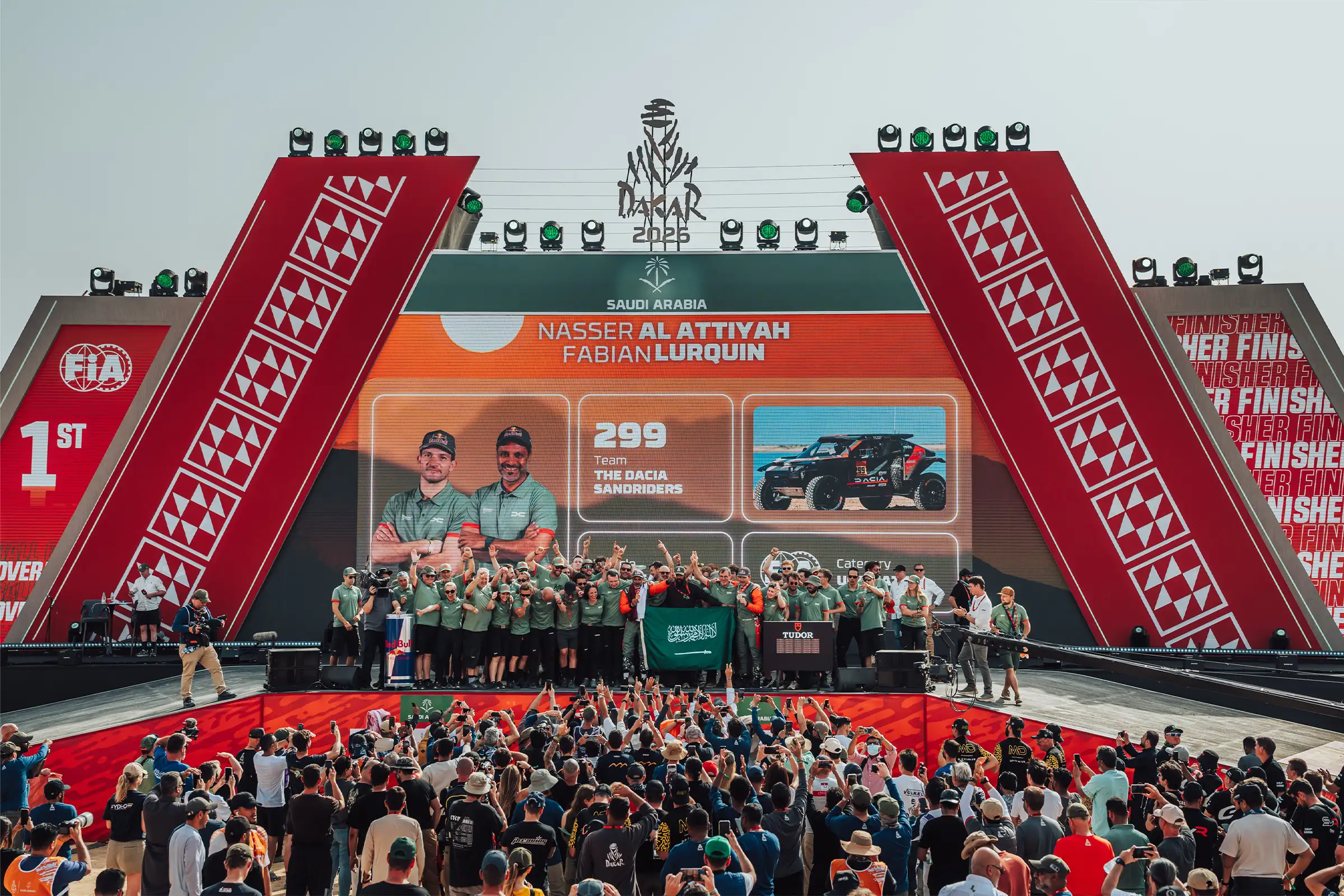
The 2026 Dakar Rally has delivered a result few would have predicted twelve months ago. In only their second appearance at the world’s toughest off-road event, the Dacia Sandriders have taken overall victory, with Nasser Al-Attiyah and Fabian Lurquin controlling the rally from the front and sealing the win on the final stage in Saudi Arabia.
After nearly 8,000 kilometres of desert, rock, dunes and high-speed pistes, the Qatari–Belgian pairing finished just under ten minutes clear of the field. More telling than the margin, however, was the consistency behind it: all four Dacia crews reached the finish, all inside the top eleven.
In modern Dakar terms, that is not luck. It is execution.
A measured final act in Yanbu
The final day around Yanbu was never going to be dramatic. Al-Attiyah and Lurquin started Stage 13 with over sixteen minutes in hand and drove accordingly. The organisers warned of tight gravel sections through mountainous terrain, and the leading crew treated it as a preservation exercise rather than a sprint.
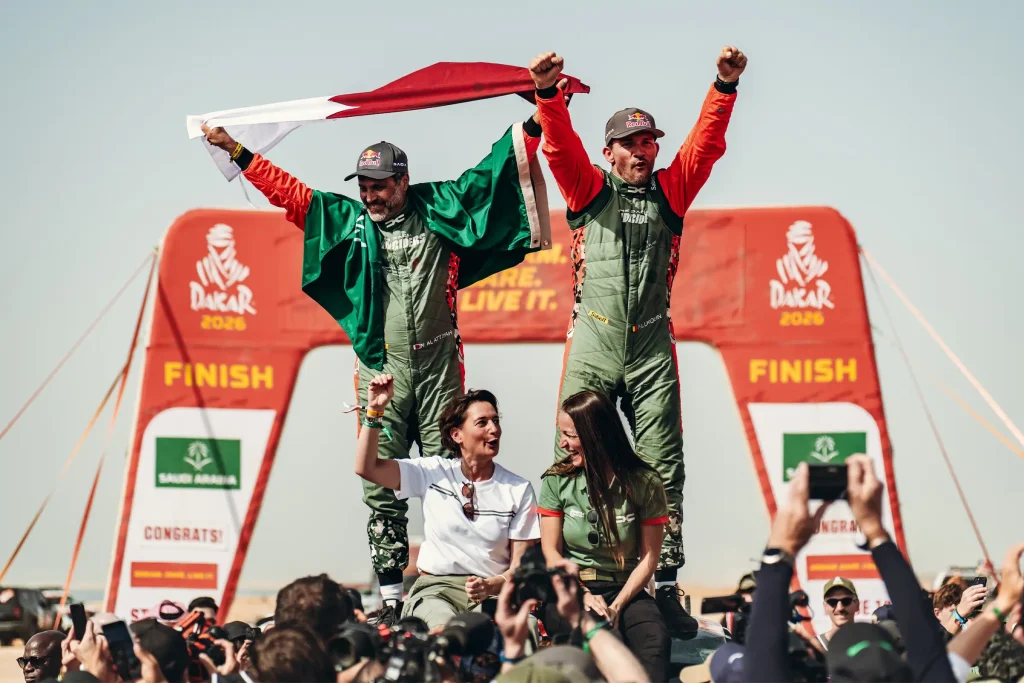
They finished 36th on the stage, allowing faster cars through and keeping risks to a minimum. The result was a calm, almost understated confirmation of victory by 9 minutes and 42 seconds — a professional end to a rally that had already been won on judgement rather than heroics.
Behind them, the battle for the remaining podium places remained tense.
Loeb falls short, Moraes settles, Gutiérrez climbs
Sébastien Loeb and Édouard Boulanger arrived at the final stage just 29 seconds off third overall. It was a rare moment of vulnerability for a driver who has spent much of his Dakar career circling the top step without quite landing on it.
They pushed hard, missing the stage win by eight seconds, but the gap was not enough. Fourth place, just 37 seconds short of the podium, was a frustrating but fair reflection of a rally shaped by punctures and time losses rather than lack of pace.
Lucas Moraes and Dennis Zenz, contesting their first Dakar together with Dacia, ended seventh overall after a penalty-adjusted run. It was a quiet but important result for a pairing still finding rhythm at this level.
Cristina Gutiérrez and Pablo Moreno moved up one place on the final day to finish eleventh, completing a clean sweep of Dacia cars in the upper end of the classification.
No retirements. No late drama. Just four cars at the finish line.
Thirteen days, one system, no collapse
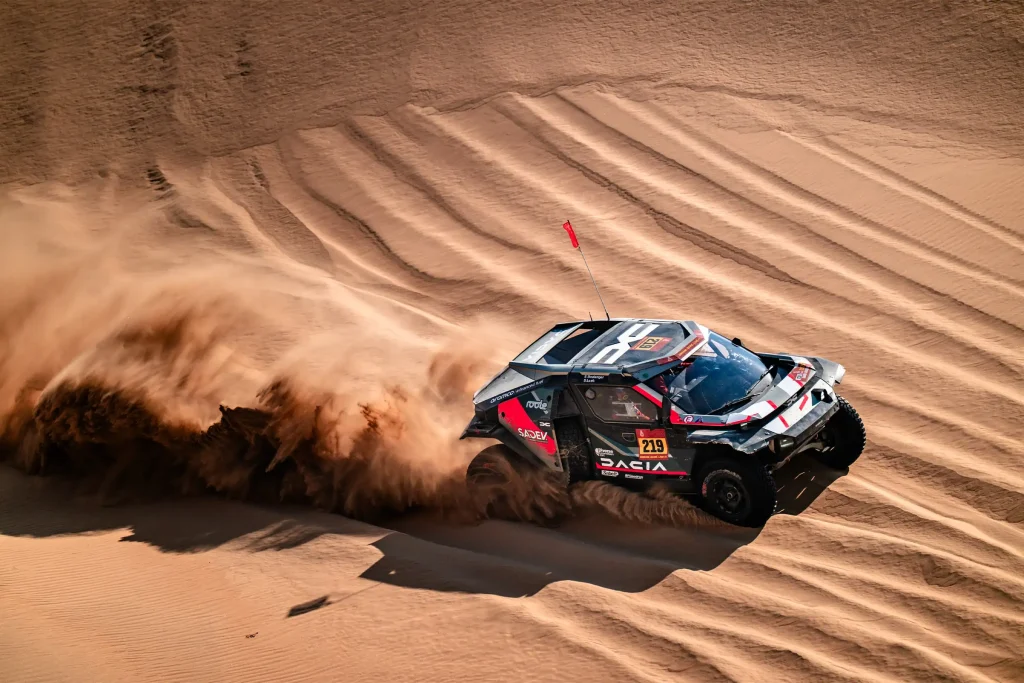
Across 13 stages, the Sandriders claimed two stage wins and dropped out of the overall top three only once. The terrain offered everything Dakar can throw at a crew: rock-strewn tracks, soft dunes, fast open sections and long navigational days where concentration mattered more than outright speed.
What stood out was not aggression but restraint. Al-Attiyah and Lurquin rarely needed to chase. When others faltered, they consolidated. When conditions turned hostile, they survived.
In a rally where mechanical failures and navigational errors still decide more outcomes than raw horsepower, Dacia’s programme looked unusually settled for a team still in its infancy.
Al-Attiyah’s sixth, Lurquin’s first
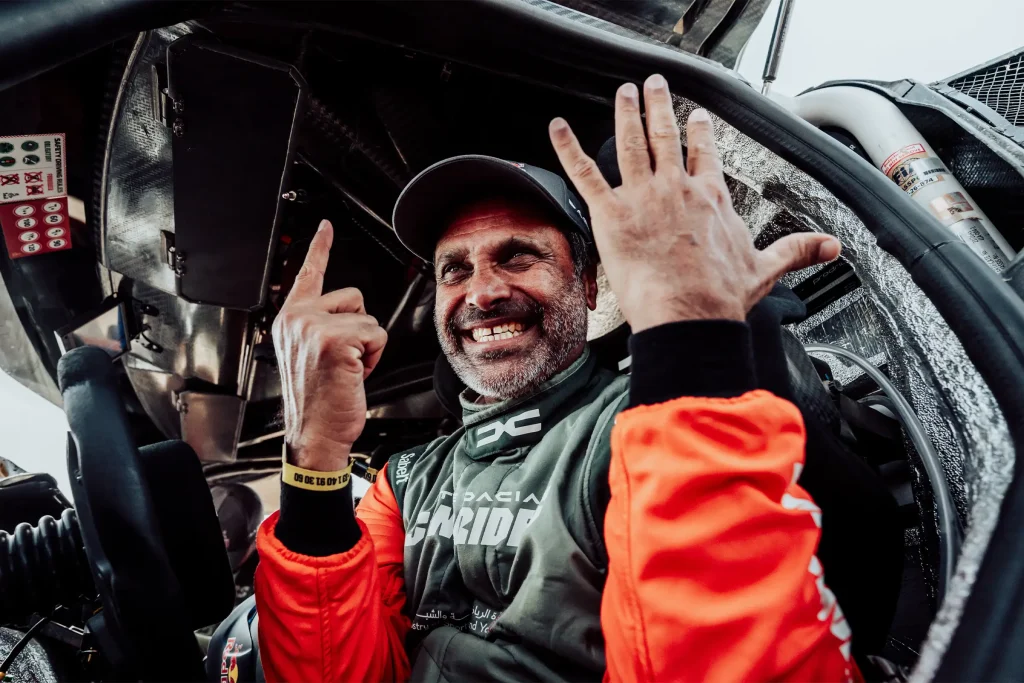
For Al-Attiyah, this was familiar territory. The 2026 win marks his sixth Dakar victory and his third since the rally moved permanently to Saudi Arabia. Few drivers in modern rally-raid have combined longevity and relevance in quite the same way.
For Lurquin, it was something else entirely.
After three previous Dakar podiums — second in 2022 and 2023, third in 2024 — this was his first outright win, and the first ever Dakar victory in the car category for a Belgian navigator. A milestone not just personal, but historical.
The bigger picture
Perhaps the most significant aspect of this result is not the win itself, but how it was achieved.
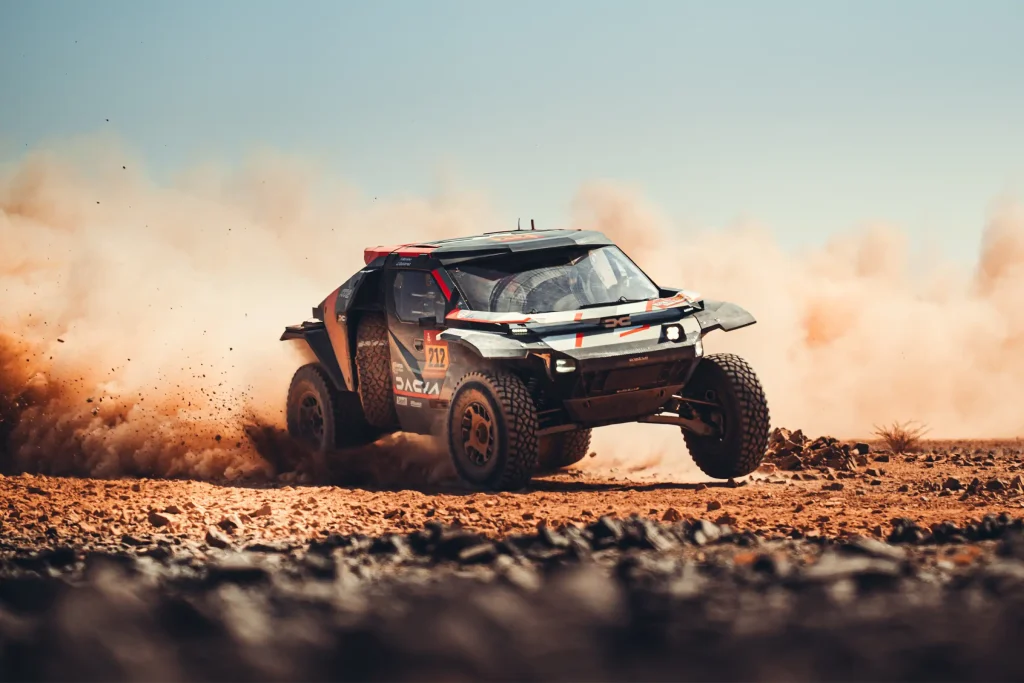
Dacia entered the Dakar as a newcomer, without the decades of institutional memory that define teams like Toyota, Prodrive or Audi. Yet after only two seasons, they now sit as Dakar winners and four-time W2RC champions.
That shift matters.
It suggests a programme built around process rather than spectacle — logistics, engineering depth, and a driver line-up selected for experience rather than marketing appeal.
The fact that all four cars finished in the top eleven tells a clearer story than any trophy.
This was not a single heroic run. It was a system that worked.
Dakar 2026, in numbers
- 6 – Dakar victories for Nasser Al-Attiyah
- 1 – First Dakar win for Fabian Lurquin
- 4 – W2RC titles for the Dacia Sandriders
- 11 – All four Dacia crews inside the top eleven
- 50 – Al-Attiyah equals the all-time stage-win record
- 7,976 km – Total distance covered
- 13 stages – Plus prologue and rest day
Dakar remains the ultimate stress test of modern motorsport — not for speed, but for endurance, systems thinking, and the ability to avoid disaster when everyone else eventually finds it.
In 2026, Dacia didn’t just survive it.
They controlled it.