
Catalonia isn’t just a destination. It’s a place that rewards curiosity.
You go for the landscape first. The Pyrenees in the north, sharp and quiet, where tracks disappear into forests and the air feels cleaner with every kilometre. Then, the land softens as it rolls south through vineyards, olive groves, dry stone walls, before finally breaking open along the Mediterranean, where light, salt, and history sit side by side.
But it’s the people who make it stick.
Catalonia has a strong sense of identity. Not loud, not performative—just present. You feel it in small conversations in a bar de poble (village bar), in the way food is prepared without fuss, in the quiet pride behind local traditions. This isn’t a place built for tourists. It’s a place that lets you in slowly, if you pay attention.
For someone who travels to understand, not just to see, it works.
You can follow old trading routes into the mountains, park up beside a forgotten monastery, or sit with a winemaker who’s been working the same land for generations.
There’s space to move, but also depth if you stop.
Catalonia offers both: distance and detail. And that combination is rare.
Is it then surprising that after a day exploring backcountry trails, we rolled into Capmany to find a restaurant and let the day’s events settle into something we could actually hold onto?
The tracks had led us down out of the Albera foothills, tyres dusted white, the heat still shimmering off the bonnet. Capmany didn’t announce itself. It simply appeared. Stone walls, a church tower, the low hum of a place that had been here long before anyone thought to write about it.
We parked without much thought and walked in, following instinct rather than a map, until we found Cal Ferrer. A restaurant built into arched foundations. Five tables outside on the pavement, a few more inside a bare-bricked room.
Modern, yes. But no theatrics. No menu engineered for passing trade. Just honest food that belonged to the land we’d been driving through and wine that hadn’t travelled far at all. The kind of place where conversation sits low, where time loosens its grip, and where the day, dust, distance, small discoveries start to make sense.

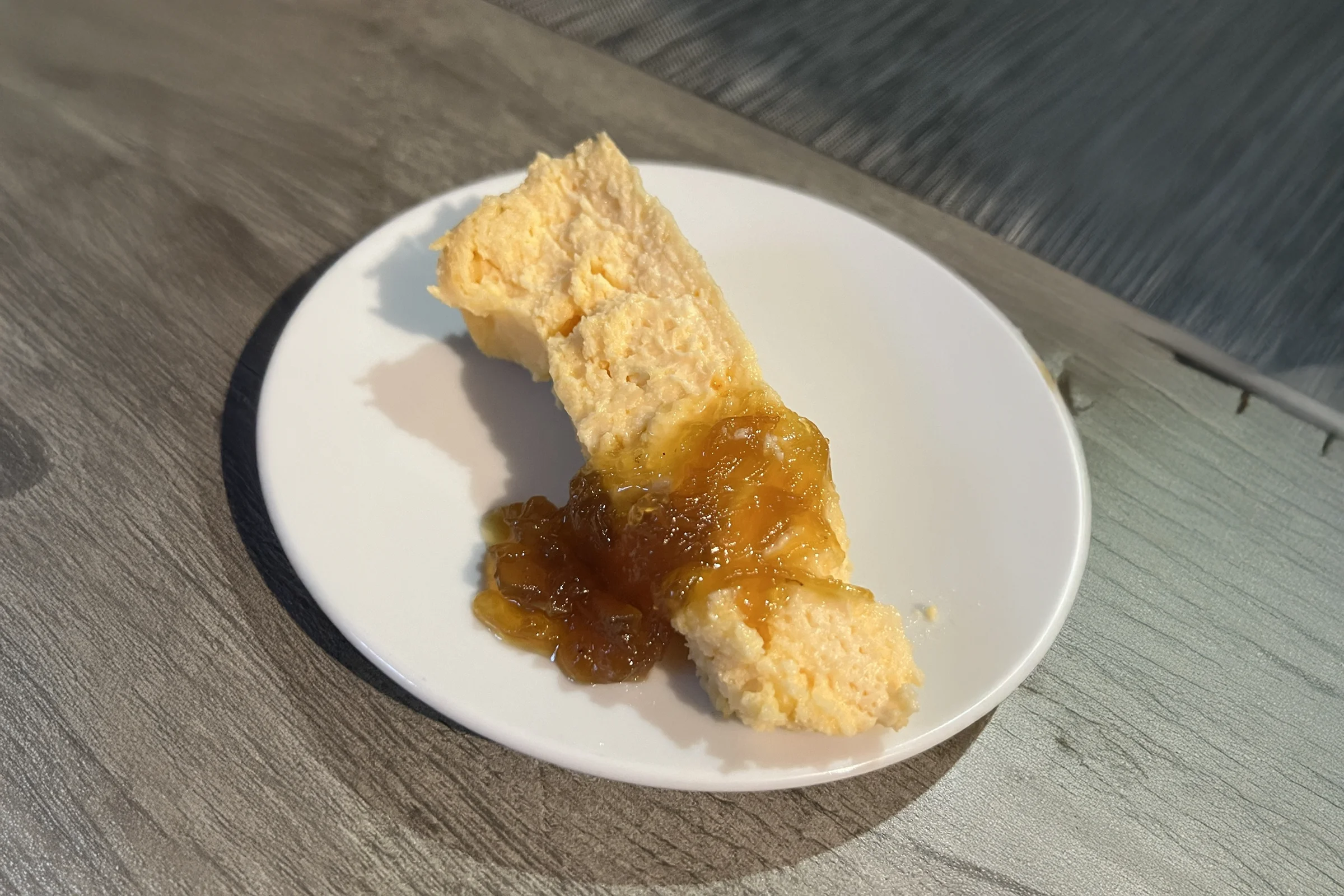
This is where we found it. A simple, remarkable dessert. Creamy cheesecake, served with a spoonful of jam. Luscious. And, to my surprise, crustless… a quiet win for anyone with gluten intolerance.
That detail stayed with me. Because it meant this wasn’t adapted. It wasn’t reinvented. It had always been this way.
And that’s the thing about places like this. Recipes don’t change much.
To put the icing on the cake, so to speak, if you have a GROVE or Omnia oven and are prepared to sacrifice a little gas, you can pull this five-ingredient dessert together wherever your wheels stop turning for the day.
Treat the recipe below as a practice run at home. Then downsize the ingredients for travel and the oven you use.
Tristan Brailey has made this more than a few times. It never misses.
Serves 8-10
Cook time 25-30 min
Equipment Large bowl, whisk, springform or round baking pan (or Omnia silicone baking mould, as in the photo)
Ingredients:
1 kg Philadelphia (or any other cream cheese)
360 g sugar
7-8 eggs
1 teaspoon vanilla essence
some brown cane sugar (for a slightly caramelised crust)
Preheat the oven to 170°C.
Using a whisk, combine all the ingredients in a large bowl until smooth and creamy.
Line a 10-inch (26 cm) springform pan or round baking pan with butter, oil, or enough parchment paper that it extends past the edges of the pan. This will help you remove the cheesecake from the pan later on, and will prevent it from sticking. (You can use a smaller pan for a higher cheesecake but may need to bake longer so that the center isn’t too runny.)
Bake on the centre rack for about 25-30 minutes (in the Omnia: for about 30 minutes at medium-low heat.
Note Because of the smaller size of the mould, I used a lesser amount of the cream cheese mixture). The cake will rise quite a bit but don’t worry, it will settle when it’s out of the oven.
Let it start to cool gradually by leaving it out on the counter. After an hour or so, move the cake to the fridge to cool completely. Let the cake cool fully before taking it out of the cake tin. After a few hours in the refrigerator, your cheesecake should be chilled enough to cut. (I recommend making this the day before you want to eat it, as it really benefits from a night in the fridge.)
Enjoy with a glass of sherry!