There comes a point when the car has not changed, but the person behind the wheel has.
The steering is no heavier than it was when the vehicle left the factory. The pedals have not moved, the turning circle has not become wider, and the gear lever still requires the same deliberate hand. Yet, the effort involved begins to feel different. Manoeuvring into a narrow parking space demands more determination than it once did, a three-point turn becomes something to plan in advance, and the prospect of threading a heavily laden vehicle through the narrow passages of a historic mountain village begins to lose some of its charm.
My own 1963 Land Rover Series IIA is still very much a travelling vehicle rather than an exhibit. I have lived with it for years, know all of its noises and peculiarities, and have never regarded heavy steering as something that needed fixing. It was simply part of the vehicle, no more remarkable than the long, indirect throw of the gear lever or the heat radiating from the floor. My wife, however, cannot drive it comfortably at all. At low speed, the steering is simply too heavy, which means the person beside me could not easily take over if I became tired, injured or otherwise unable to continue.
At 65, it is also difficult to ignore the possibility that what feels manageable now may not feel quite so manageable in another ten years. The question is, therefore, not whether a Series Land Rover should have power steering … it is whether a discreet and sympathetic modification might allow the vehicle to remain part of everyday life for longer.
That question eventually led me to Ruud and Robi at EZ Electric Power Steering in the Netherlands.
Ruud had spent his working life as a mechanic and ran a workshop restoring, repairing and selling classic cars. The business that would eventually become EZ Electric Power Steering did not begin with detailed market research, a production forecast, or a carefully polished concept. It began with an old school friend, Roger, his Opel GT and his wife, who could not drive it.
Roger had already wondered whether electric power steering from a modern car might be adapted to the Opel and asked Ruud to find a way of doing it. What ensued wasn’t a universal motor hung beneath the dashboard, but a steering column developed specifically for the car. Ruud and Roger installed it, drove it … and found themselves impressed by how naturally the assistance worked. More importantly, they realised that once the engineering had been solved properly, the result could be duplicated. One column might become five, ten or more.
The next development vehicle happened to be a Volvo Amazon because one was readily available. Conversations on owners’ forums then brought requests for a P1800 and a 140, followed by enquiries from owners of Jaguars, Aston Martins and other classics. Between 2007 and 2009, Ruud developed systems for roughly ten different models. Then came the Toyota Land Cruiser, and the 40 Series would go on to become one of the company’s strongest-selling applications.
Ruud suspects the reason is quite simple: an extraordinary proportion of the Land Cruisers ever built are still driving somewhere. Whatever the explanation, the model helped carry EZ beyond sports cars and saloons into the world of working vehicles, expedition machinery and older four-wheel drives.
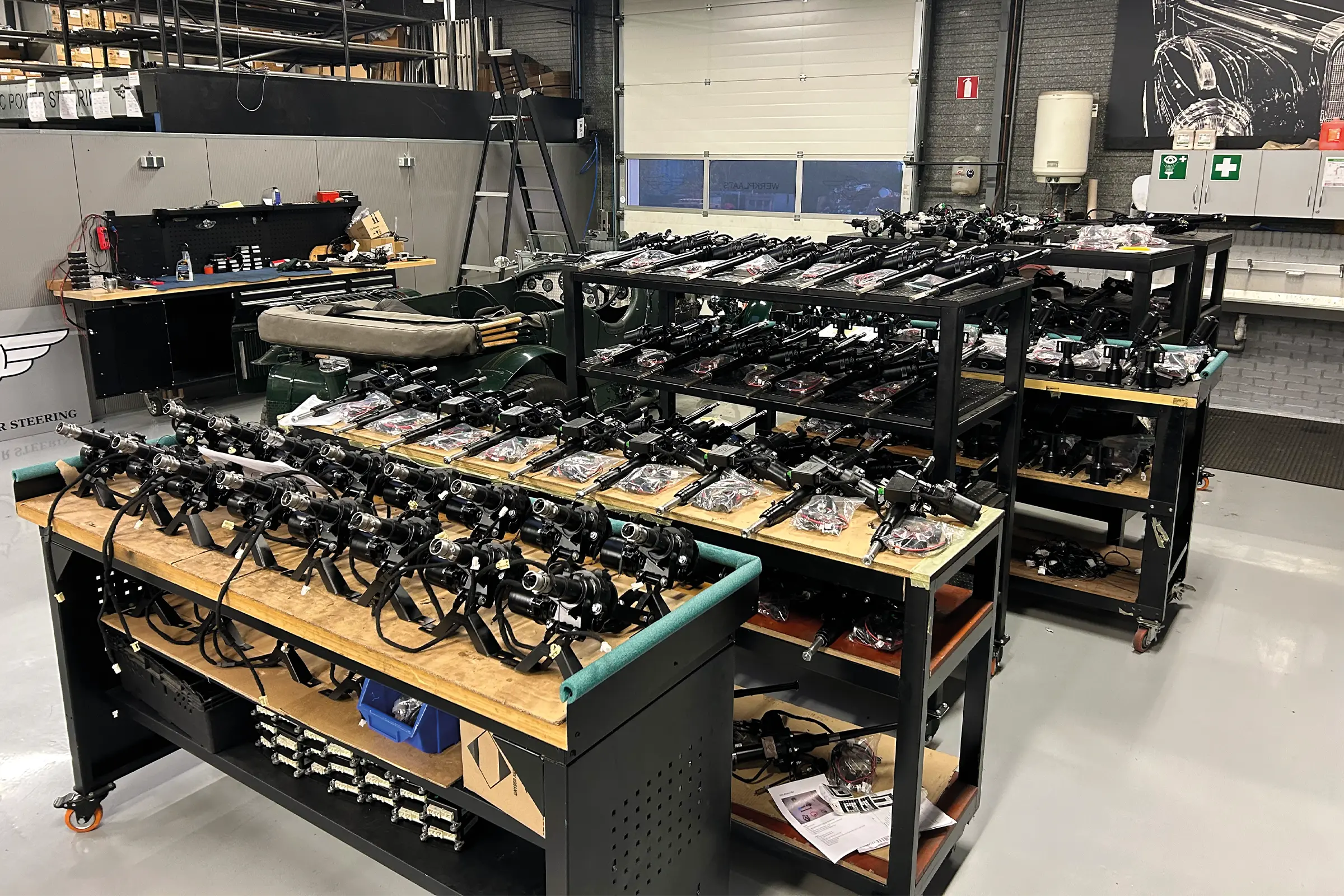
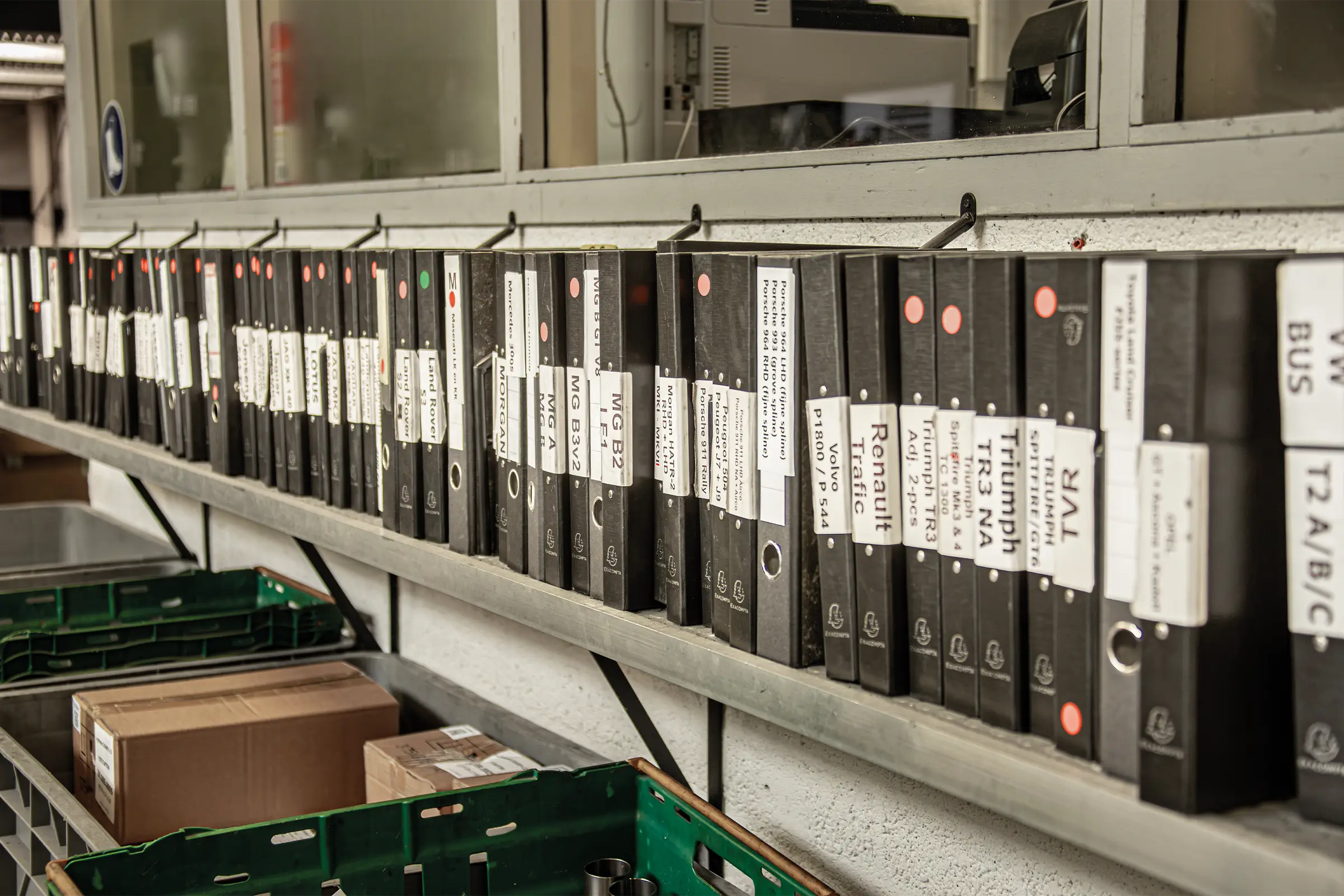
What began with one Opel has since developed into a company employing 17 people and holding the measurements, drawings and production information for several hundred different steering columns. Ruud remains the technical centre of the operation, but the company no longer depends upon one mechanic solving one vehicle at a time.
Robi joined EZ in 2020 after almost 25 years with KLM. His background was not in machining columns or rebuilding steering boxes, but in operations, organisation, and the kind of large-company systems that small specialist businesses often acquire only after painful trial and error. His role has been to take what Ruud and the workshop already know and turn it into something more repeatable: clearer processes, more efficient production, larger batches of the most popular systems, and a company less reliant upon improvisation.
It is an unusual combination, but a sensible one. Ruud brings decades of mechanical experience, accumulated drawings, and an instinctive understanding of how an old car has been put together. Robi brings the discipline needed to prevent that knowledge from remaining trapped in one person’s head.
The range now stretches far beyond the cars usually seen beneath the polished lights of a classic motor show. EZ produces systems for Jaguars, Aston Martins, Ferraris and Alfa Romeos, but also for Opel Mantas and Asconas, Ford Capris, Volkswagen Golf Mk1s, early BMWs, and many others. Its four-wheel-drive applications include Series Land Rovers and Defenders, several Toyota Land Cruisers, Unimogs, Pinzgauers, Volvo C303s, and older Magirus-Deutz and Mercedes trucks.
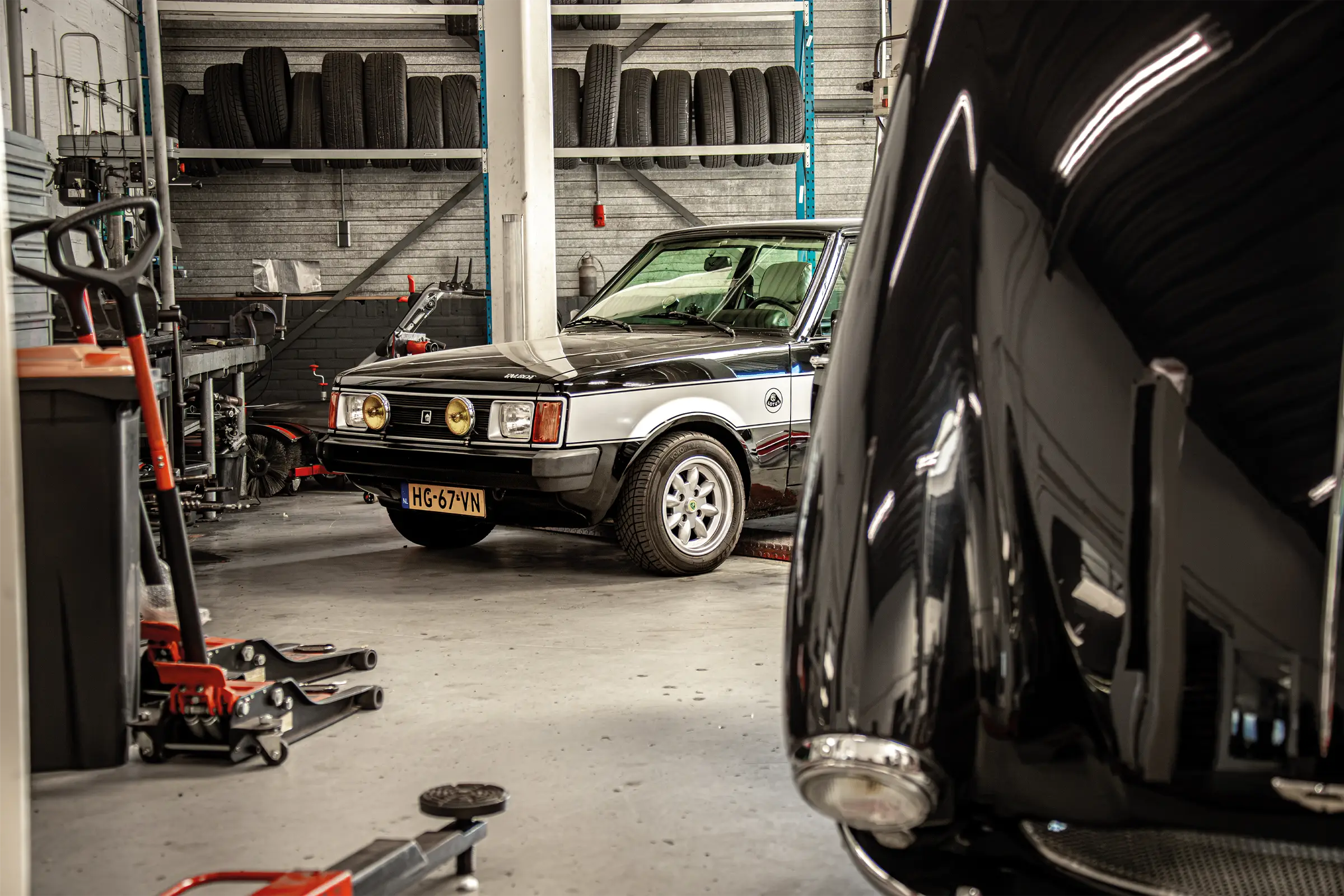
Four-wheel drives account for perhaps ten to fifteen per cent of annual sales, yet they form an important and unusually demanding part of the range. Large tyres, heavy front axles and slow steering place different demands upon an assistance system than the light front end of a small sports car. Space behind the dashboard also varies enormously. In some vehicles, the original column can be replaced almost as a complete unit. In others, the installation requires far more thought.
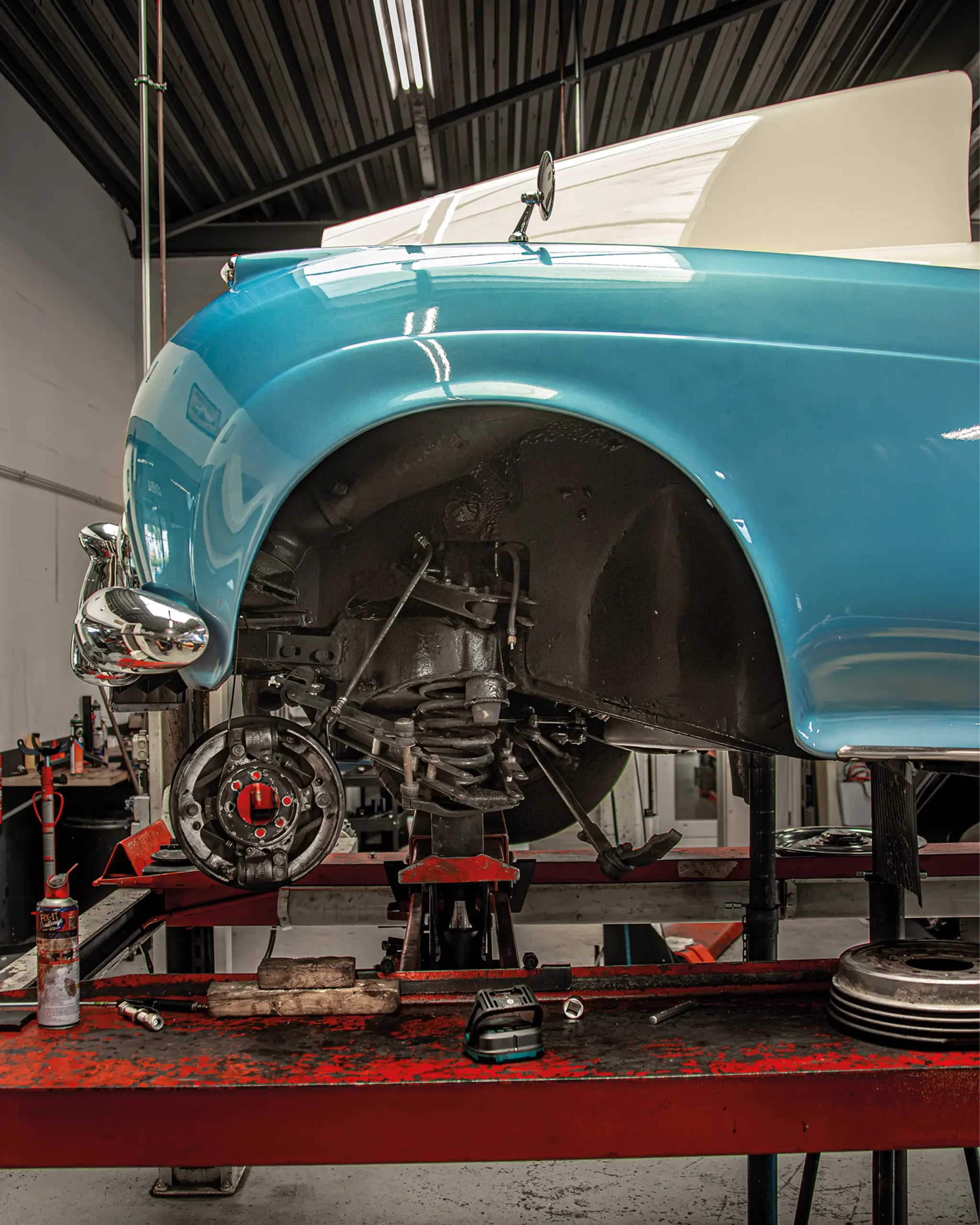
The underlying principle remains remarkably straightforward. EZ uses electric power steering motor units originally designed for modern vehicles as the basis for new columns engineered around older cars. These are drawn from a mixture of new stock, new old stock, and professionally refurbished units, in much the same way as the wider motor industry has long relied upon remanufactured starter motors, alternators, ignition components and steering boxes. The accompanying control unit remains matched to the motor, while the tubes, shafts, brackets, adaptors and application-specific components are developed and manufactured in the Netherlands.
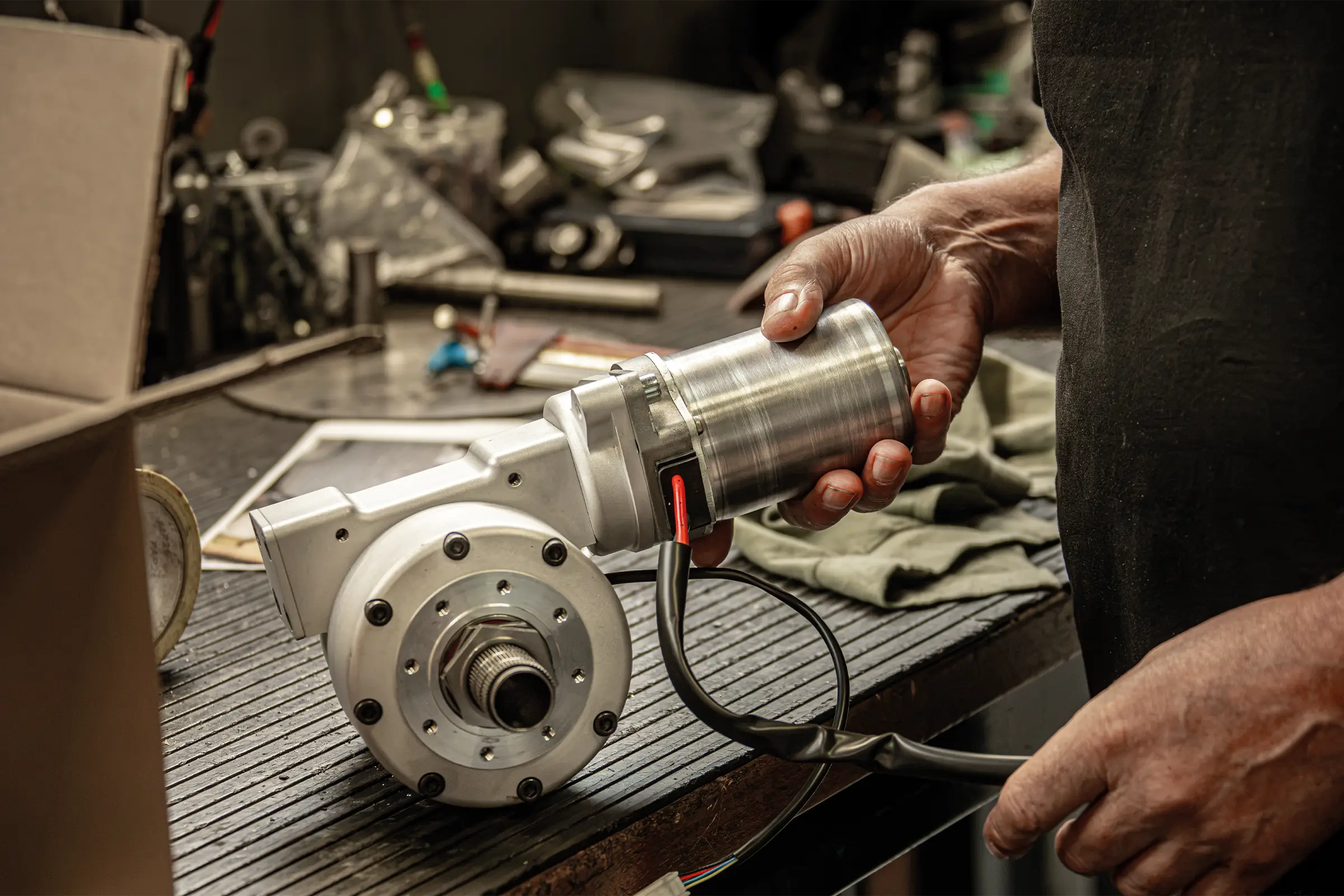
EZ currently works with around fifteen or sixteen different motor configurations, selected according to the space available, the power required, and the behaviour expected from the completed system. This is where Ruud’s experience plays the greater role. A motor that is too small may overheat or cut back under load. One that is too powerful, or poorly matched to the torsion characteristics of the system, can make the steering feel nervous or unnatural. A lightweight sports car requires a different response from a working four-wheel drive on large tyres, even though both use the same basic principle.
Inside the assistance unit, a torque sensor measures the effort and direction being applied through the steering wheel. A torsion bar allows a small amount of controlled movement between the input and output sides of the shaft, enough for the system to determine whether the driver is turning left or right and how much assistance is needed. The electric motor then contributes torque to the lower part of the steering column.
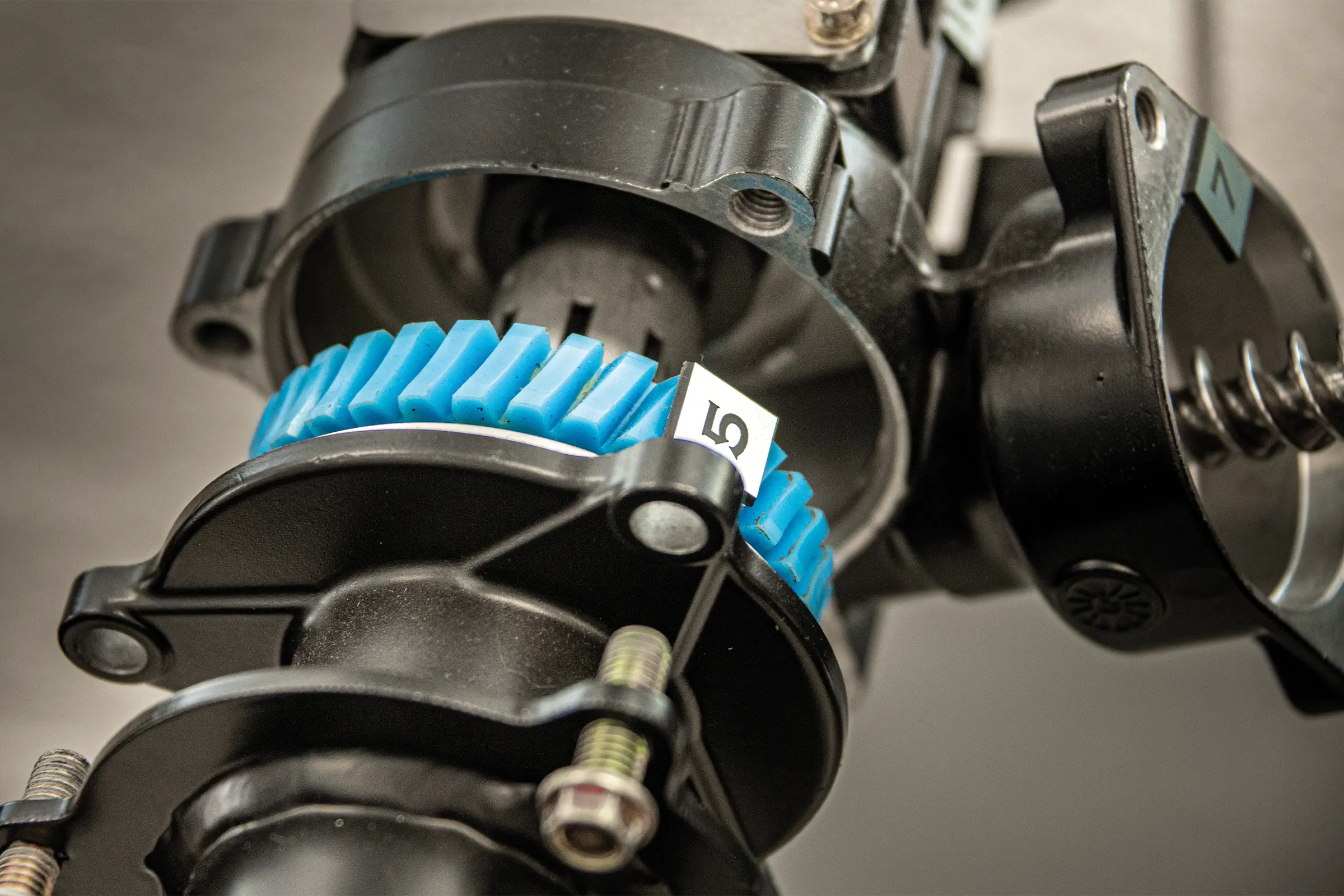
The assistance follows the load. At parking speed, when the tyres resist movement and the driver has to work harder, the motor contributes more. Once the vehicle is moving and the steering naturally becomes lighter, the assistance reduces. On cars with very direct steering, road speed can be used as an additional input to make the system feel more settled as velocity increases. Ruud considers this unnecessary on vehicles such as an old Land Rover or Land Cruiser, where the steering is slow enough for load sensitivity alone to work well.
A potentiometer can also be fitted, allowing the driver to adjust the amount of assistance according to preference. The objective need not be a steering wheel that can be turned with one finger. In many older vehicles, the better result may be simply to remove enough effort to make parking and slow manoeuvring comfortable, while preserving the weight and feedback that give the vehicle much of its character.
What the system does not do is equally important. It does not alter the steering ratio, change the geometry, or cure mechanical wear. According to Ruud, if a car steers badly before the conversion, it will still steer badly afterwards, albeit more lightly.
A worn steering box, loose linkage, damaged ball joints or incorrect alignment remain exactly what they were before the motor was installed. At EZ’s own workshop, a suspect steering box is repaired before any conversion begins. Assistance should reduce the work required from the driver, not disguise faults in the system beneath it.
The mechanical connection through the steering column also remains intact. If a fuse blows, a connector fails or the motor stops working, the steering does not disappear. The vehicle simply returns to unassisted operation. The wheel becomes heavy again and the driver must provide the full effort, but the physical link between steering wheel and road wheels is still there.
For a vehicle used on long journeys or far from home, the relative simplicity of electric assistance has an obvious appeal. A bolt-on hydraulic system does not interfere with the underlying mechanical steering, and a failure would still leave the vehicle steerable, but it adds a pump, drive belt, hoses, fluid and a reservoir beneath the bonnet. Those components bring their own maintenance requirements, from checking fluid levels and leaks to adjusting or replacing the belt, while the pump continues to draw power from an engine that was hardly over-endowed with it in the first place.
Many moons ago, my own Series IIA arrived with a dismantled hydraulic power-steering system among its spare parts, but I was never tempted to reinstall it. There are already enough things capable of going wrong on an old Land Rover, and removing another fraction of its limited horsepower would do little to improve relations with the drivers gathering behind me on long climbs.
The electric system is largely maintenance-free. Ruud says the motor brushes show very little wear because the motor only works while assistance is required, rather than running continuously. In heavier applications, peak demand can reach around 40 amps, but only briefly and under substantial steering load. When the vehicle is travelling straight or making small corrections, consumption falls considerably. A battery and charging system in sound condition are, therefore, more important than fitting an oversized alternator, and the short current spikes created during heavy steering should not trouble a healthy electrical system.
EZ offers systems for both 12- and 24-volt vehicles, together with a 24-to-12-volt converter where necessary. That makes the technology relevant not only to civilian classics, but also to ex-military Land Rovers, Land Cruisers and commercial vehicles that retain their original 24-volt systems.
Off road, the steering receives forces from both directions. The driver turns the wheel on one side, while rocks, ruts and changes in traction feed movement back through the tyres from the other. Electric assistance does not isolate the driver from that movement, nor would complete isolation be desirable. A wheel striking a rock can still move the steering, but the system reduces the physical effort needed to hold or correct it.
The same torque sensor that recognises the driver’s input can respond when force arrives from the road wheels. For a rally vehicle moving quickly over broken ground, the assistance can make it easier to hold a straight line. For an overland vehicle travelling more slowly, it can soften the sudden effort required when a tyre drops into a rut or clips an obstacle. The total force needed to move the road wheels remains broadly the same; the motor simply shares the work that would otherwise be left entirely to the driver.
Ruud also cautions against trying to restrain every movement of the steering wheel off road. Even with assistance, allowing some movement through the system can be kinder to both driver and vehicle than gripping the wheel rigidly and fighting every kick.
For many years, the most obvious customer for electric power steering was an older enthusiast determined to continue driving a car that had become physically demanding. Ruud and Robi estimate that a substantial part of their customer base is now in their late sixties or beyond. Sometimes the owner can still manage the steering, but a husband, wife or partner cannot. The vehicle remains usable by one person rather than something both can share.
Another group is beginning to emerge as younger enthusiasts are increasingly drawn to the cars of the 1970s, 1980s and early 1990s: Volkswagen Golf Mk1s, Opel Mantas, Ford Capris and the early BMWs that once filled European roads. Many of these buyers have never driven a car without power steering. They may want the shape, character and relative simplicity of a youngtimer, but they do not necessarily feel obliged to accept every hardship that comes with it.
That does not mean they want to turn an old car into a new one. It means they want to use it.
Ruud and Robi see growing demand for early Golfs and BMW E21s or E30s, where production numbers were many times greater than those of traditional prestige classics. Younger buyers are reaching the age at which they can afford the cars they remember from childhood, or perhaps the cars their parents once owned, but their expectations have been shaped by a lifetime of assisted steering, reliable brakes and everyday practicality.
In the world of classic cars, discomfort is sometimes seen as proof of authenticity. However, a car that is perfectly original yet rarely driven may be less successfully preserved than one that has been discreetly modified for use by another generation.
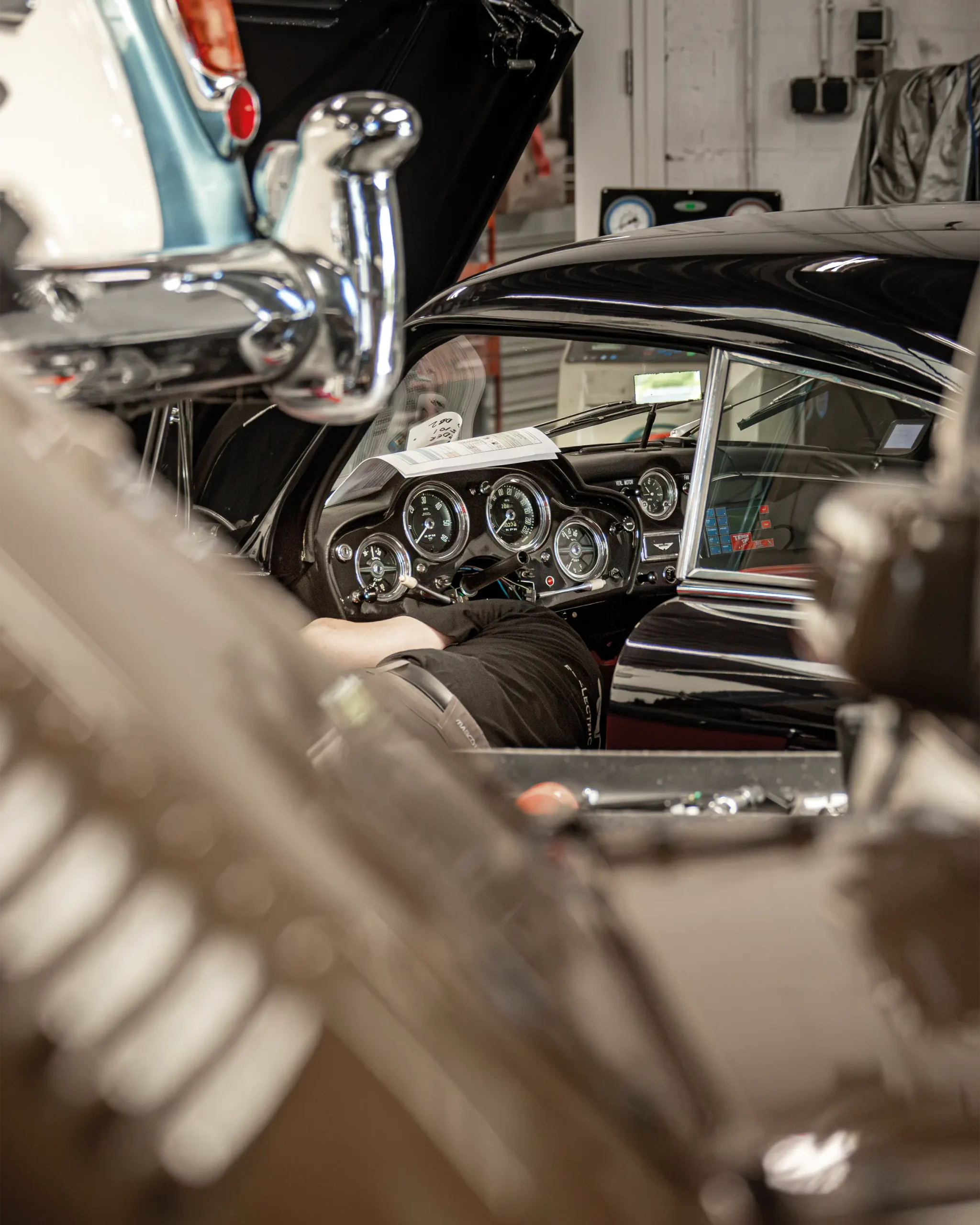
EZ’s answer is not merely to sell a motor. The company produces a replacement column designed around the original dimensions, mounting points and vehicle-specific fittings. The old column can often be removed intact, stored and reinstated later. The new assembly fits where the original did, seldom requiring the surrounding car to be modified around it.
Universal systems have their place, particularly where a skilled installer is prepared to design and fabricate the necessary mounts and connections. EZ’s approach is to complete as much of that vehicle-specific engineering as possible in advance. The column, motor size, torsion characteristics, brackets and connections have already been worked out for the car in question.
The Toyota Land Cruiser is one of the clearer examples. EZ currently lists systems for early vehicles built between 1958 and 1972, the BJ and FJ40 Series from 1972 to 1984, and FJ55 Series models built up to 1980. Many of these use a split steering column, allowing the upper section to be removed and replaced by a new assisted assembly connected through the existing joint. The installation still demands careful alignment and sound electrical work, but the steering box itself does not necessarily have to be opened.
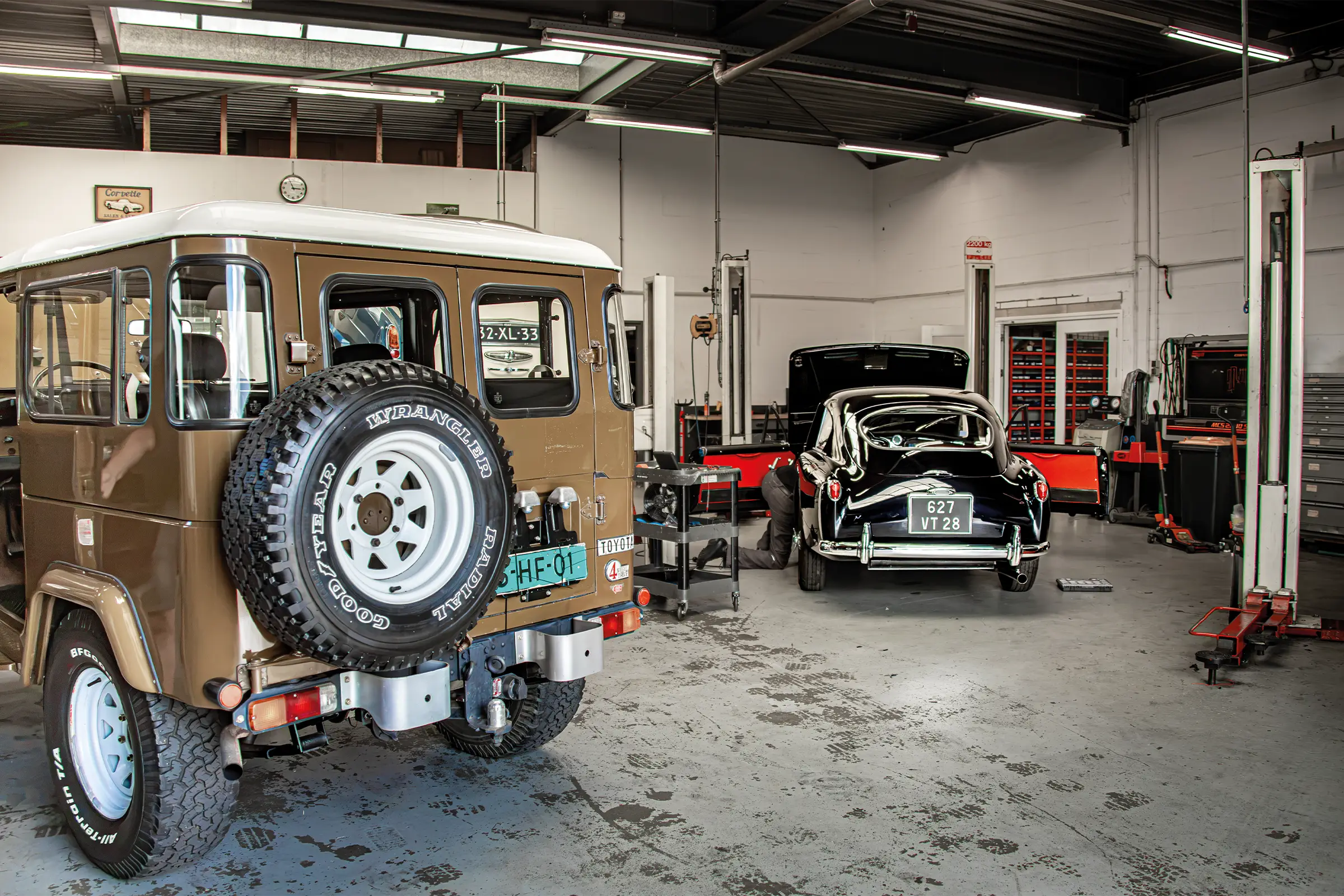
Depending upon model, vehicle condition and workshop experience, Ruud suggests that some Land Cruiser installations can be completed in roughly five or six hours. As with any work on an old vehicle, however, such figures are no more than a rough estimate. Corroded fasteners, earlier modifications, and decades of improvised repairs can quickly turn an apparently straightforward job into something considerably more complex.
EZ systems for applicable Land Cruiser models currently begin at €1,549 excluding VAT.
Series II and IIA Land Rovers present a different challenge because they do not possess a convenient split column. The steering shaft runs in one piece from beneath the steering wheel directly into the steering box. It represents the simple and robust arrangement originally conceived by Spencer and Maurice Wilks, but one that prevents an assisted upper column from being bolted straight into place.
To address the wear commonly found in ageing Series steering systems, EZ’s solution includes a new steering worm and the components required to overhaul the original steering box. The box is dismantled, the new worm is fitted, and the upper assisted section is connected through a purpose-made adaptor. The current package includes the electric power steering assembly, steering worm and steering-box rebuild components, with versions available for the different column and steering-wheel arrangements found across Series II and IIA models.
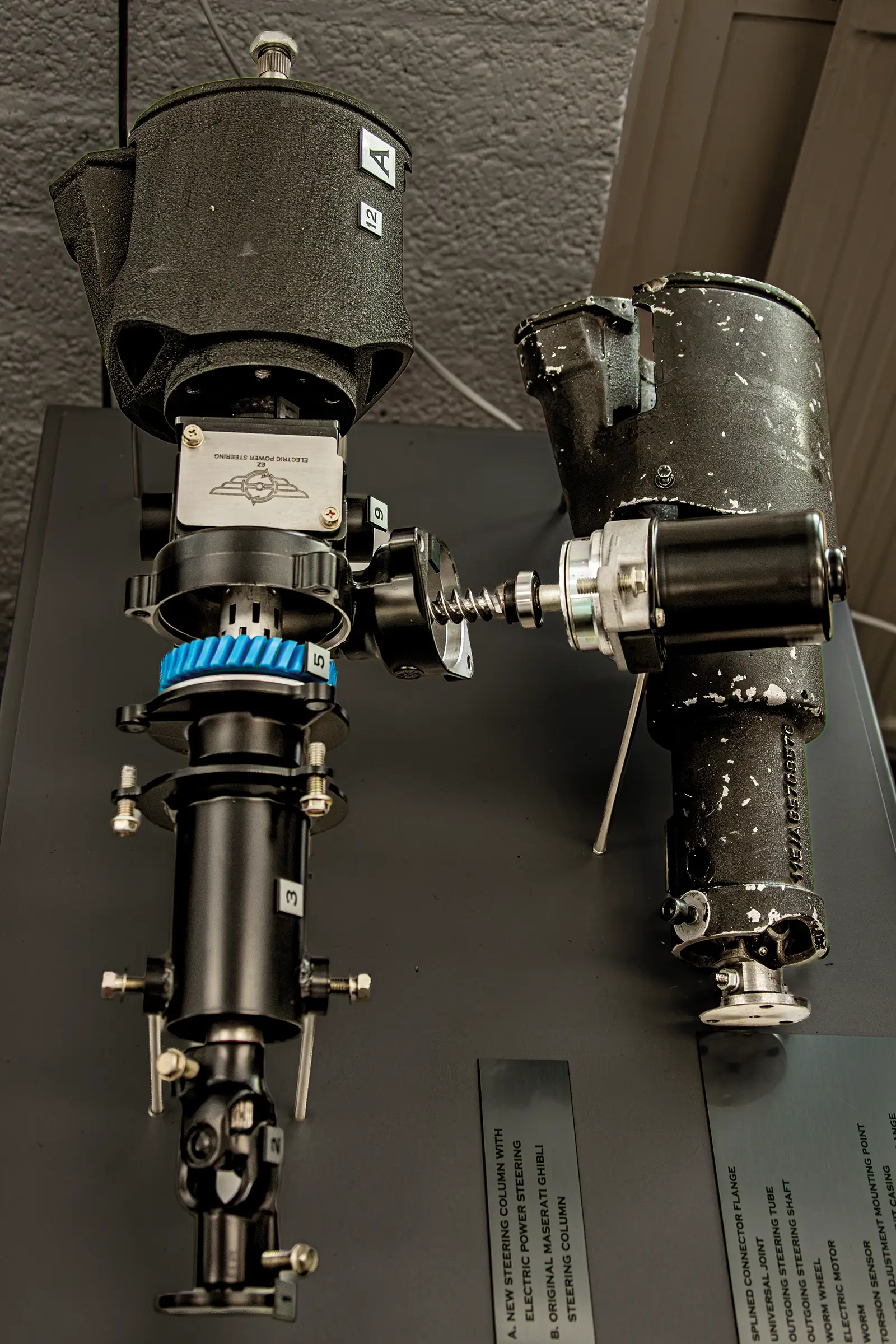
Prices currently begin at €1,942 excluding VAT.
The motor is integrated into the upper section beneath the dashboard and the external appearance of the Land Rover remains unchanged. Unless someone knows what they are looking for, there is little to announce that assistance has been added.
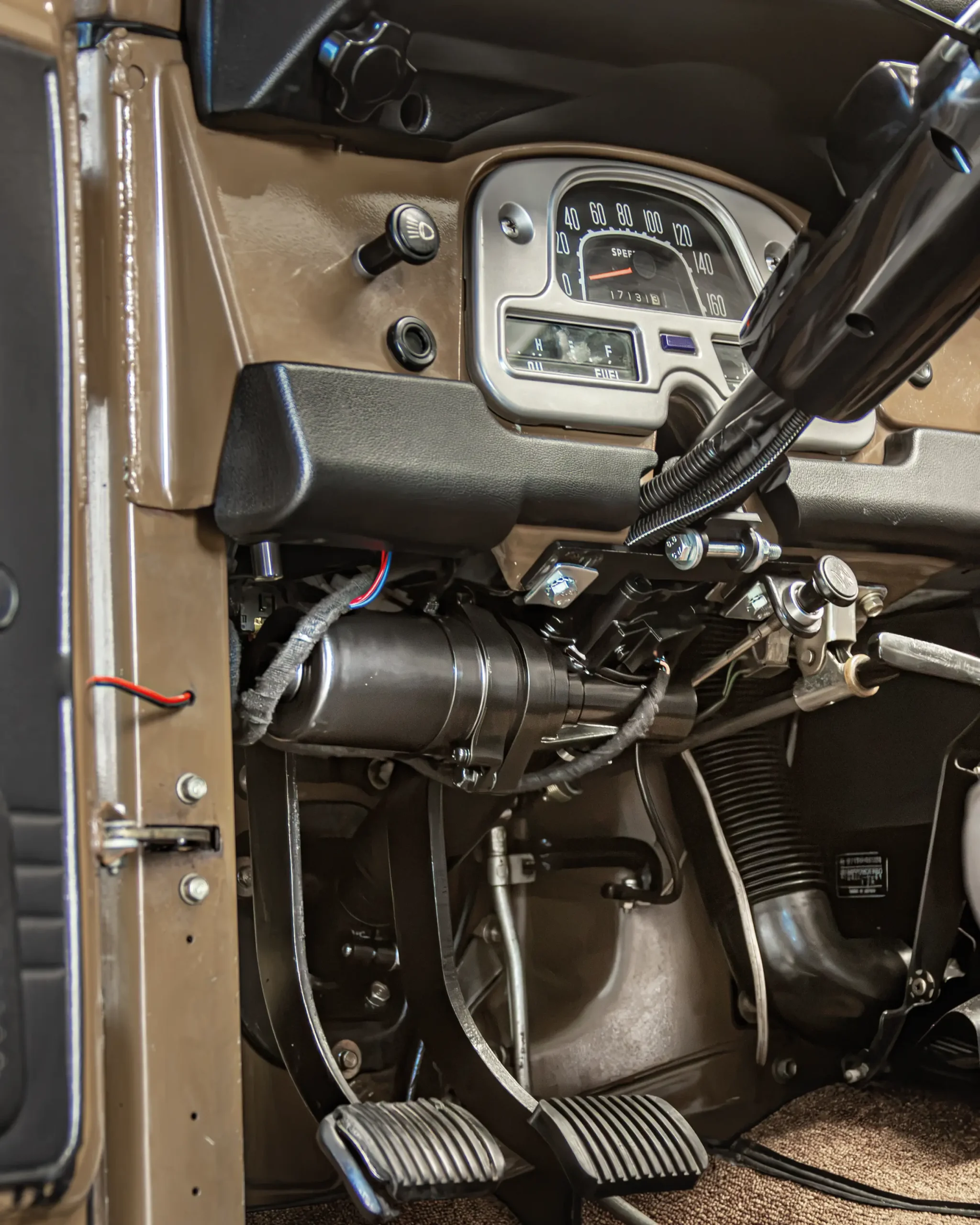
The necessity to open the steering box may initially appear to be the principal drawback of the Series installation. In practice, it may be one of its strongest arguments. Many Series steering boxes have now been working for more than 60 years. Some have been rebuilt carefully. Others have been adjusted repeatedly to compensate for wear, topped up when they leaked and left alone because a full overhaul is inconvenient and time-consuming. Adding assistance to a worn steering box would make the wheel easier to turn, but it would not remove play, damage or poor adjustment.
Indeed, this makes the Series conversion more involved, but a competent owner familiar with maintaining their Land Rover may be able to carry out the work at home. Stripping and correctly adjusting a steering box requires more than enthusiasm and a socket set, however, and owners uncertain about that part of the job would be better served by a workshop or specialist with experience of Series steering systems.
Ballpark estimates suggest that a complete installation, including a proper steering-box overhaul, may occupy around twelve hours. The real figure will depend on the condition of the vehicle, the experience of the person doing the work, and how much repair becomes necessary once the box is on the bench. A clean demonstration vehicle and a Land Rover that has spent decades in mud, salt and damp garages are unlikely to tell the same story.
EZ works with several workshops in both Germany and the United Kingdom that can install its systems. Wolfgang Huettner represents the company in Germany and can help owners identify a suitable workshop or clarify the approval process with the responsible inspector. All systems are supplied with a standard two-year warranty, irrespective of market.
Before any owner reaches for the tools, there remains another practical question. Altering a vehicle’s steering may have implications for technical approval, registration and roadworthiness requirements, and owners should clarify the position that applies to their vehicle before installation.
In Germany, Wolfgang describes the approval as an individual inspection under §19(2). In practice, the process is manageable, but not necessarily at every TÜV station or with every inspector. Approval is most straightforward at a selected inspection centre familiar with the system, and the inspector may also consider who carried out the installation. Wolfgang can often discuss the conversion with the inspector in advance and clarify the documentation required, although his assistance and experience apply specifically to Germany.
In the United Kingdom, owners should confirm the applicable requirements with their installer or the relevant authority before carrying out the conversion.
There will always be owners who believe a Series Land Rover should remain exactly as Solihull built it. That position is understandable, particularly where a rare or historically important vehicle is concerned. Electric power steering alters the vehicle, and it would be dishonest to suggest otherwise.
Originality, however, is seldom absolute. Replacement chassis, modern tyres, electronic ignition, improved seats, and upgraded brakes are already common across the Series Land Rover world. Each owner draws the line in a different place, usually according to what the vehicle is expected to do.
A Land Rover driven only to local shows places different demands upon its owner than one used for long journeys, towing, off-road travel, or everyday transport. The value of a hidden modification may not lie in making the vehicle more modern, but in allowing it to continue performing the role for which it was bought.
My Series IIA does not need electric power steering to preserve it. It may, however, need electric power steering to remain a vehicle that my wife can drive and that I can continue to use as the years go by. I have not yet decided how or when that question will be put to the test.
For now, the bigger picture should be enough: keeping classic cars on the road may depend less on preserving every hardship than on deciding which parts of the original experience are worth carrying into the future.
ezpowersteering.nl
Photography by Tristan Brailey