The first thing Adrian tells me is that he does not really know who Adrian is.
“If I could tell you who Adrian was,” he says with a laugh, “I’d either be a billionaire or a very insightful person.”
It is not the answer I expected, but perhaps it should have been.
On paper, Adrian Stratta appears straightforward enough. Sixteen years in the British Army’s Parachute Regiment. Overseas deployments. Leadership roles. An MBA. A successful civilian career that followed. International travel. Boardrooms. Aviation. Business transformation. As if that were not enough, he has recently added author to the list, drawing on a journey that took him and his wife Catherine across Africa in a Land Rover Defender and eventually became the basis of a book.
The neat version of the story fits comfortably onto a single page. The real version rarely does.
Over the course of an afternoon, our conversation wandered through military life, Africa, marriage, leadership, Land Rovers, aviation, business, ageing, and the curious challenge of reinventing yourself more than once. Looking back afterwards, what struck me was how little time we spent discussing success. There were no grand claims, no carefully rehearsed lessons, and very little appetite for looking backwards through rose-tinted spectacles. Instead, the conversation seemed to circle repeatedly around movement. Not travel in the conventional sense, although there has been plenty of that, but movement as a way of life. The constant progression from one challenge to the next. One role to another. One chapter into the next before the previous one has fully settled.
For some people, life follows a relatively predictable path. Education, career, family, retirement. The milestones may vary slightly, but the overall shape remains familiar. Others seem permanently drawn towards the horizon. They are not necessarily restless or dissatisfied. Quite often they are perfectly content. Yet, they possess an internal momentum that keeps pulling them forwards. New places. New projects. New ideas. New challenges. Looking at Adrian’s life, it is difficult not to suspect that this instinct has been present from the beginning.
Military service was certainly not an accident. One grandfather survived Dunkirk before fighting through North Africa and Italy with the Eighth Army. Another spent much of his life at sea. Yet, there is little sense that Adrian was pushed towards a military career by family expectation. If anything, he seems to have found his own way there through temperament rather than tradition. School cadets appealed immediately. So did the outdoors. Challenge. Responsibility. Teamwork. The sort of activities that demanded participation rather than observation.
Later, while studying at university, he joined the Officer Training Corps. There, a Parachute Regiment officer looked at him and delivered a piece of advice that would quietly shape the next sixteen years of his life.
“The only regiment for you, my son.”
After graduating, Adrian joined the Parachute Regiment expecting to stay for perhaps a couple of years. Instead, he found himself pulled into a world that suited him rather better than he had anticipated. Within weeks he was parachuting into Oman. Then came Kenya, Belize, Cyprus, Canada, Northern Ireland, and a succession of exercises, operations and postings that carried him from one corner of the globe to another, with scarcely enough time to unpack in between.
“My feet barely touched the ground,” he recalled. “I was having a great time.”
Listening to him describe those years, one quickly realises how poorly civilian stereotypes often capture the reality of military life. The popular image tends to focus on shouting, hierarchy and blind obedience. Adrian describes something altogether different. Competence. Professionalism. Accountability. The expectation that people would think for themselves and continue functioning when circumstances became difficult.
“The physical side matters,” he told me. “But what goes on in the grey cells matters far more.”
It is a theme that would surface repeatedly throughout our conversation. The best soldiers, in his view, were rarely the loudest men in the room. Nor necessarily the strongest. What mattered was judgement. The ability to remain calm while circumstances deteriorated around you. To make decisions with incomplete information. To adapt when plans inevitably stopped behaving like plans.
Looking back now, it is easy to see how many of those qualities later transferred into civilian life. At the time, however, another influence was quietly shaping the future: Africa.
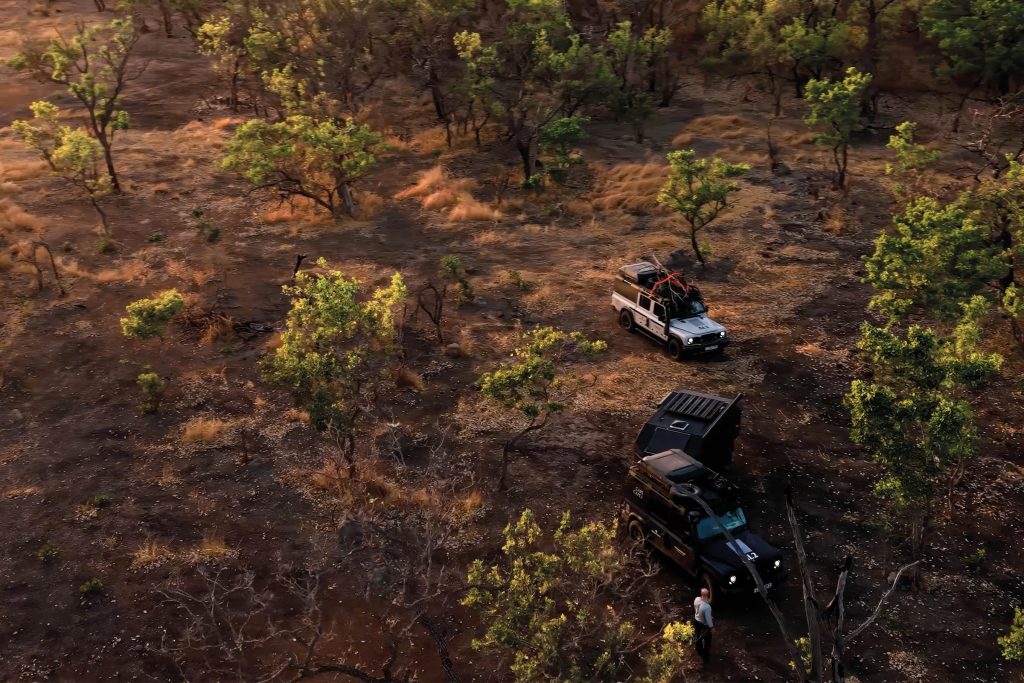
His first encounter came during military exercises in Kenya during the late 1980s. Like many people who spend time there, he struggles to explain exactly what stayed with him afterwards. It was not a single landscape, nor a particular event. More a feeling. A sense of scale perhaps. Or possibility. Whatever it was, it remained long after the flight home.
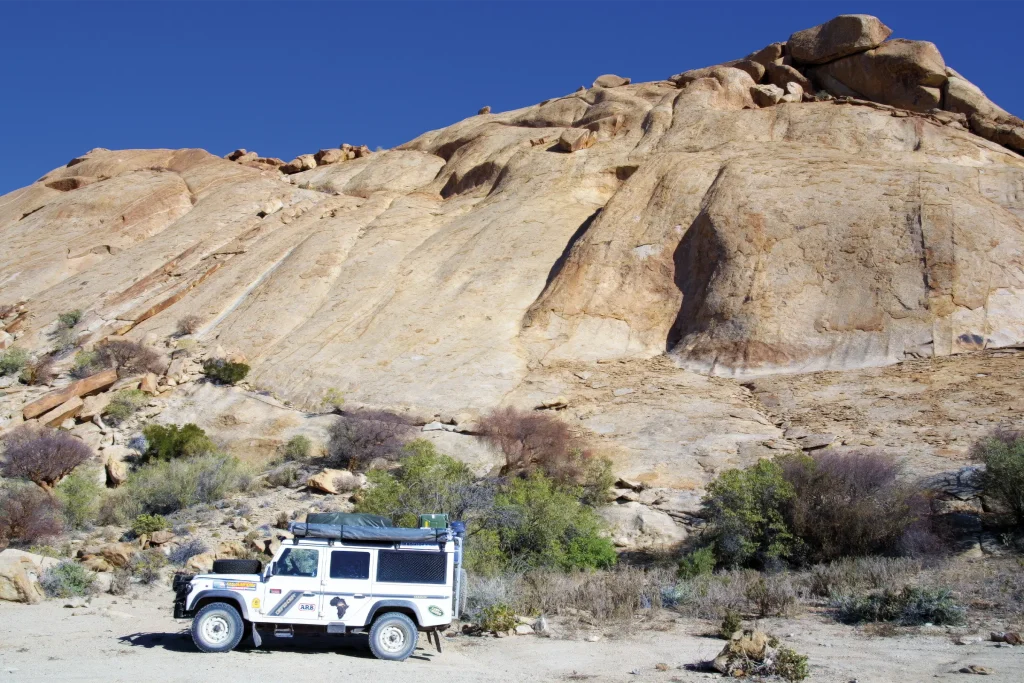
Years later, after finally marrying Catherine—a woman he had first met at university more than a decade earlier—the couple travelled through Botswana, Zambia and Zimbabwe on their honeymoon. For Catherine, it was largely a first introduction. For Adrian, it felt more like a return. The journey left its mark on both of them and, whenever life allowed, they found themselves heading back to Africa. Different countries. Different routes. Different reasons. The attraction was difficult to explain but impossible to ignore. Then, one evening in the Serengeti, as the African light slowly faded across the plains, the course of their future changed direction without either of them quite realising it.
There is something about evenings in Africa that encourages speculation. Perhaps it is the scale of the landscape. Perhaps it is the way the light lingers after sunset. Whatever the reason, conversations seem to drift naturally towards possibilities that would sound ridiculous elsewhere.
The couple were enjoying sundowners while sitting on a Kopje, absorbed by their surroundings, when Adrian voiced a thought that had been quietly occupying his mind.
“What if we drove from London to Cape Town?”
To him, it was little more than an idea. A dream. One of those improbable conversations that seem perfectly reasonable in the moment before reality resumes control and he forgot about it soon afterwards. Catherine did not.
“She thought it was gospel.”
As it turned out, life had other ideas. By the time the opportunity finally presented itself, Adrian’s last military posting had taken him to South Africa. The original dream of driving from London to Cape Town would therefore unfold in reverse, carrying them from Cape Town back to Britain instead. The direction changed. The adventure did not.
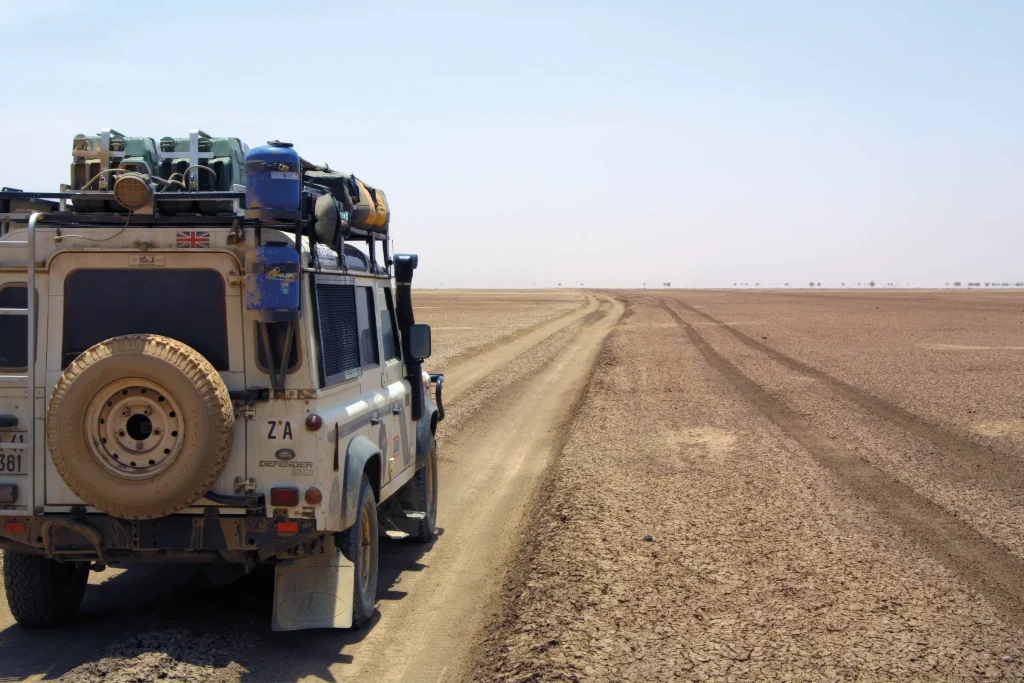
At the time, however, it did not feel like an adventure.
Looking backwards, it is tempting to impose a sense of inevitability on events. The human mind likes tidy narratives. We convince ourselves that turning points were obvious and that major decisions arrived accompanied by fanfare and significance. The reality is usually much messier.
For Adrian and Catherine, the journey began not with departure, but with preparation: find and prepare the right vehicle, organise the equipment, consider the routes, and answer countless practical questions. The internet existed, of course, but it was a very different world to the one travellers inhabit today. Information was harder to find. GPS navigation was still far from universal. Online travel communities existed only in their infancy. Much of the planning relied upon maps, guidebooks, conversations, and educated guesswork. Perhaps that uncertainty was part of the attraction.
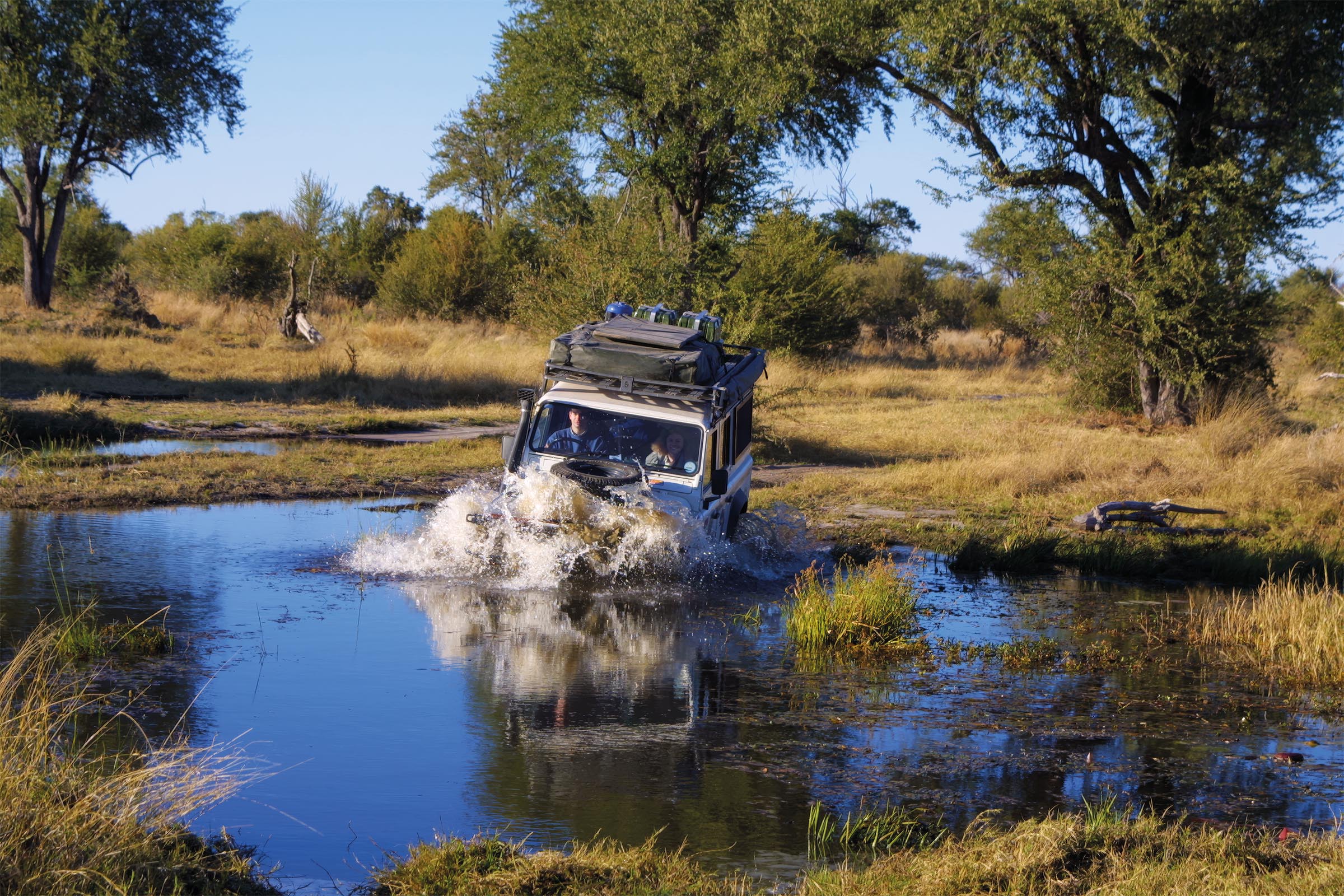
Modern travel has become extraordinarily efficient. Distances have shrunk. Information arrives instantly. The unknown has become increasingly difficult to find. In the early years of the twenty-first century, however, large parts of Africa still felt genuinely remote. Borders changed. Situations evolved. Roads shown on maps did not necessarily exist on the ground. A route that appeared perfectly sensible in theory could become impossible overnight. The further Adrian and Catherine explored the practicalities of the journey, the more they realised that flexibility would be every bit as important as preparation. The vehicle itself reflected that philosophy.
Adrian had spent years around Land Rovers. Military Land Rovers had carried him across training areas and operational environments on several continents. He understood their strengths and their shortcomings equally well. They were not luxurious. They were not especially refined. They were occasionally infuriating. What they were, however, was simple. Simplicity mattered.
When travelling through remote regions, simplicity often becomes a form of reliability. Components can be repaired. Problems can be understood. Solutions can be improvised. Modern vehicles may be more comfortable, but comfort is of limited value when the nearest dealership is several countries away. The Defender therefore felt like an obvious choice. It was a vehicle suited to the journey and, perhaps more importantly, suited to the travellers themselves.
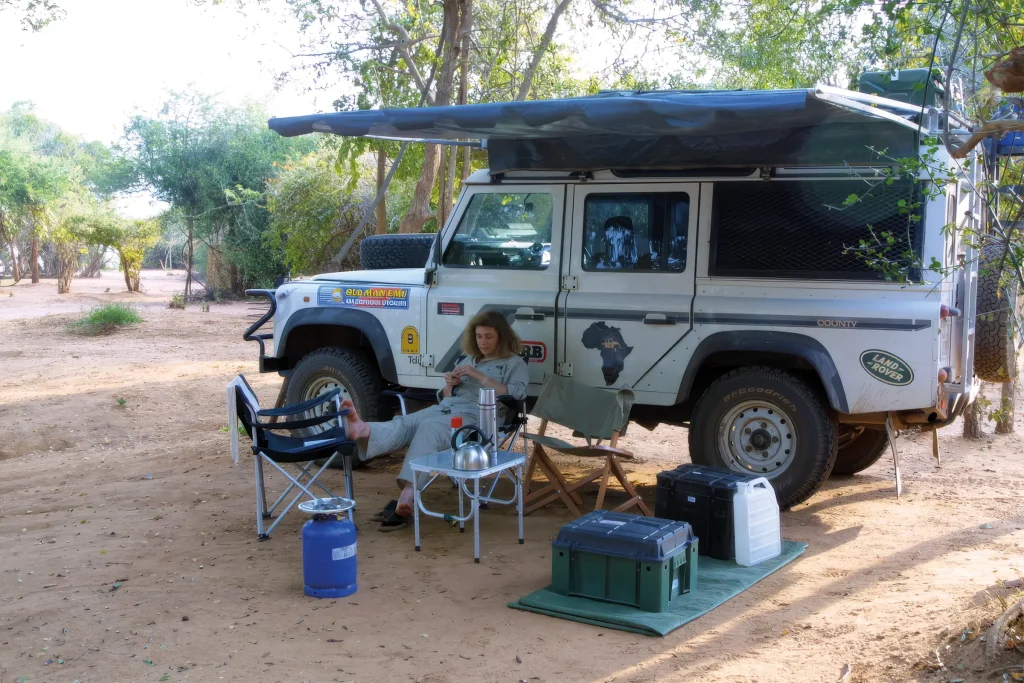
As preparations gathered pace, another realisation slowly emerged. The expedition was becoming something more than a holiday.
For sixteen years, military life had provided a framework around which everything else revolved. Postings arrived. Objectives were assigned. New responsibilities emerged. The next step was usually visible, even if the destination itself remained uncertain. The system carried momentum of its own. Now, for the first time in a very long while, Adrian found himself standing beyond that framework.
The army had given him experiences he would never forget. It had carried him around the world. It had introduced him to remarkable people. It had demanded more of him than he had imagined possible when he first joined as a young officer. Yet every chapter eventually reaches its final page. What came afterwards remained unclear. There would be opportunities, certainly. Adrian possessed considerable experience, strong qualifications, and an obvious aptitude for leadership. Rationally, there was little reason to worry. Still, transitions are rarely governed by logic alone.
Military service shapes more than careers. It shapes routines, friendships, identity. Even the way people understand themselves.
Many veterans speak of the day they leave the armed forces as though somebody quietly removes a familiar compass. The skills remain. The experiences remain. Yet the direction that once felt so obvious suddenly becomes harder to identify.
Listening to Adrian reflect on that period, one senses remarkably little bitterness or anxiety. If anything, there is curiosity. A willingness to step towards uncertainty rather than retreat from it. Even so, the timing of the African journey now appears significant. Without consciously planning it, he had created a bridge. Instead of stepping directly from one life into another, there would be nine months in between. Nine months to think. Nine months to travel. Nine months to decompress. Nine months during which the future could remain unresolved without demanding immediate answers.
At the time, of course, none of this was visible. There was simply excitement. A Defender sat waiting, a route stretched north across an entire continent, and beyond the horizon lay countries neither of them had seen before.
PREMIUM ARCHIVE
Continue reading with OverlandEurope membership
This article forms part of more than ten years of independent overland journalism. Learn what membership includes and how it opens the complete archive.
Already a member? Log in to continue.
Log in to continue reading
Enter your member details to continue reading this article without leaving the page.
The complete OverlandEurope archive, published independently since 2016.