Munich is not a place that trades heavily on nostalgia. Progress tends to matter more than memory. Yet every so often, even BMW Motorrad pauses long enough to look back, not out of sentiment, but to understand whether an idea has endured. Fifty years of the RS series is one of those moments, and it is worth examining because the concept has not just survived—it has remained relevant.
The RS badge has always carried a dual meaning. In its earliest form, it stood for Rennsport, rooted firmly in competition. That changed in 1976 with the arrival of the BMW R 100 RS, when BMW reframed the abbreviation as Reise und Sport—travel and performance combined into a single purpose. What might sound like a simple redefinition was, in reality, a shift in how motorcycles could be used. The RS was no longer about chasing lap times. It was about covering serious distance at speed, without exhausting the rider in the process.
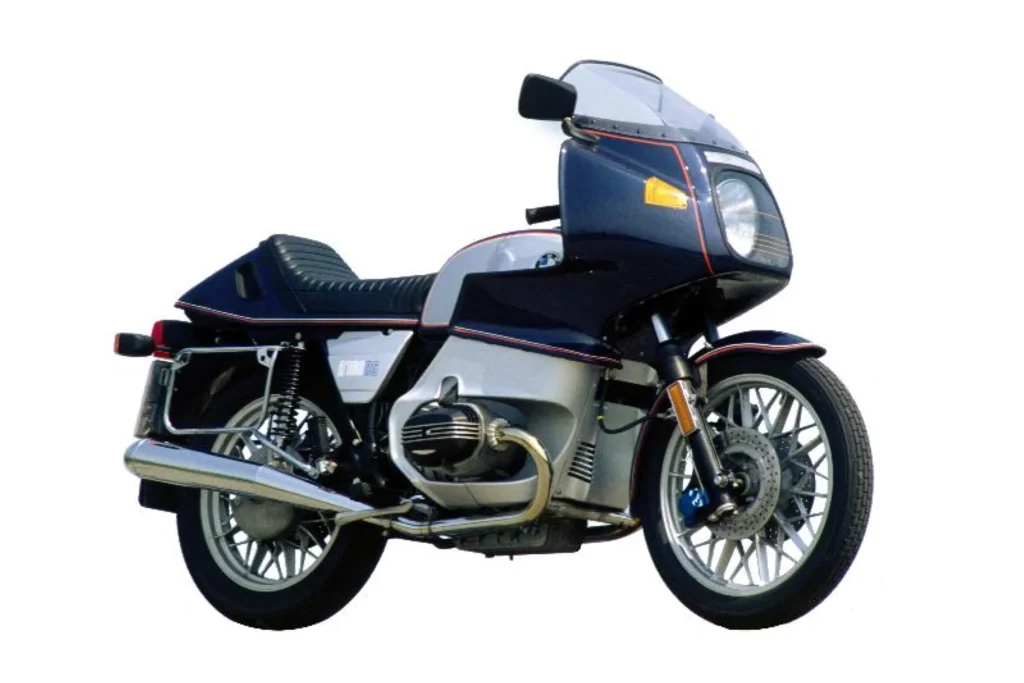
The R 100 RS made that philosophy tangible. It introduced a frame-mounted full fairing developed in the wind tunnel, something no large-scale production motorcycle had offered before. The result was not just visual identity, but function. Wind protection improved stability and reduced fatigue, allowing riders to maintain higher average speeds over long distances with far less effort. In practical terms, it changed what a day in the saddle could look like. The RS did not simply move faster; it made sustained speed usable.
That distinction became clearer a year later at Nardò. BMW took a modified RS onto the high-speed test track in southern Italy and pursued endurance records rather than outright velocity. The machine exceeded 220 km/h and set multiple records across distance and time categories, including 10 kilometres, 100 kilometres, and extended runs over six, twelve, and twenty-four hours. The exercise was not about spectacle. It demonstrated that the RS concept could hold together under pressure, maintaining pace over time rather than peaking briefly before fading.
Through the decades that followed, BMW refined the RS without losing sight of its purpose. The core remained the boxer twin, a configuration that delivered usable torque and a mechanical simplicity that suited long-distance travel. When demand grew for its return in the mid-1980s, the reintroduced BMW R 100 RS Monolever confirmed that riders were not interested in novelty for its own sake. They wanted continuity, provided it continued to work.
The 1990s brought more substantial technical change. With the BMW R 1100 RS, BMW moved to four-valve technology, air/oil cooling, and modern fuel injection. Power increased significantly, but the more important development lay in control. The introduction of the Telelever front suspension reduced dive under braking and improved stability, particularly in real-world riding conditions where surfaces and speeds varied. The RS became more precise without becoming demanding.
Subsequent generations followed the same pattern of measured evolution. The BMW R 1200 RS introduced a liquid-cooled boxer engine and semi-active suspension, allowing the motorcycle to adapt dynamically to changing conditions. This was not technology for its own sake, but an extension of the original idea: maintaining performance across distance, regardless of terrain or load. The BMW R 1250 RS built on this with ShiftCam variable valve timing, improving torque delivery across the rev range and reducing the compromises typically associated with engine tuning.
Alongside the boxer lineage, BMW explored the RS concept with four-cylinder K-series models. Machines such as the BMW K 100 RS approached the same problem from a different angle, offering smoothness, stability, and high-speed capability with a distinct engine layout. Despite their differences, these motorcycles adhered to the same principle: combining sustained performance with the ability to travel comfortably over long distances. The RS identity proved flexible enough to accommodate both approaches without losing coherence.
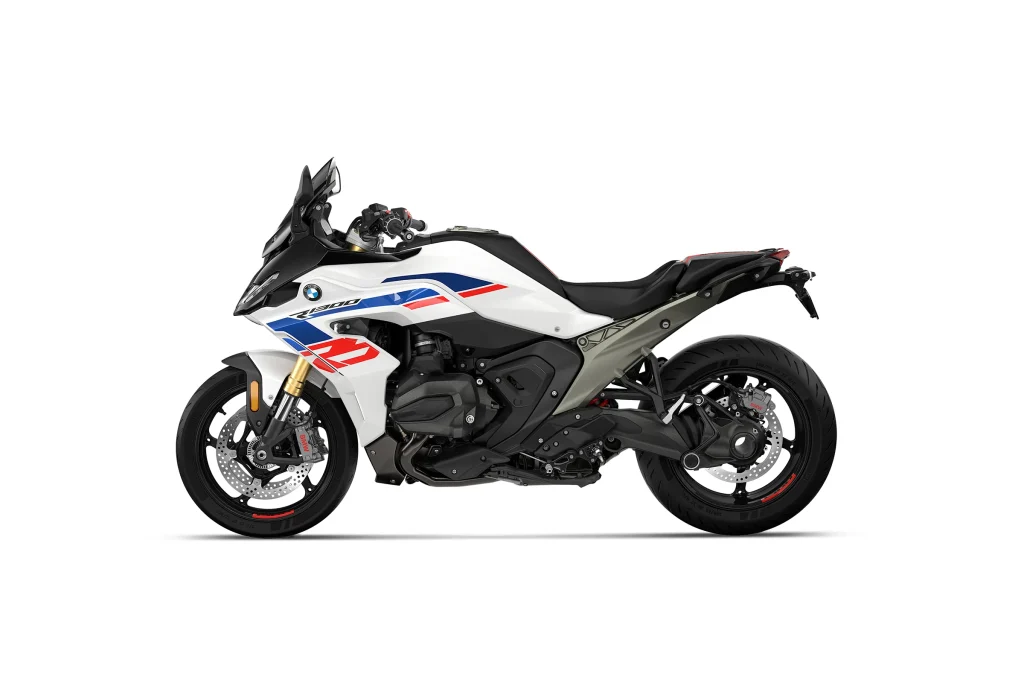
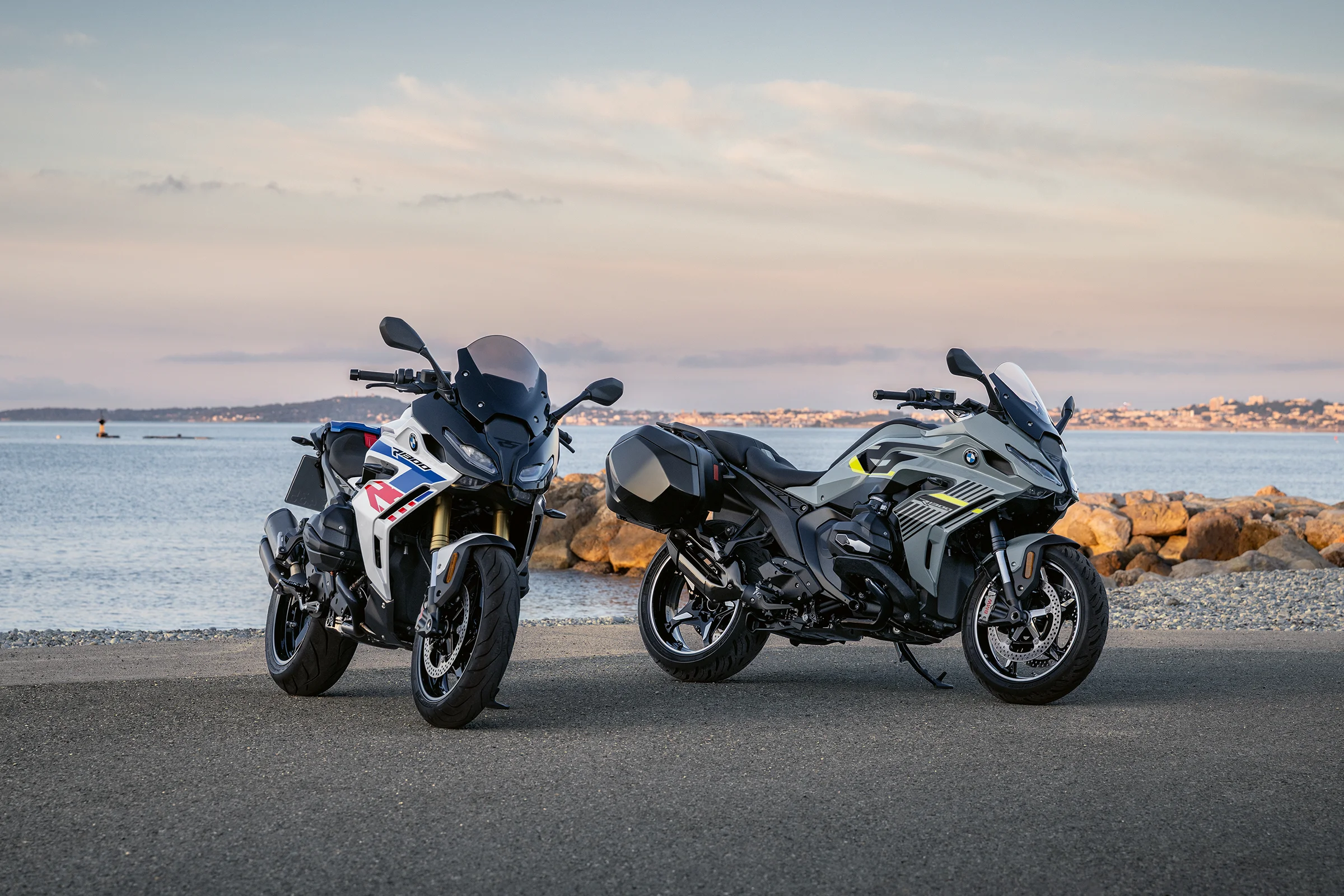
The current expression of this philosophy is the BMW R 1300 RS. On paper, it represents a significant step forward, with a 1300 cc boxer engine producing 145 horsepower, making it the most powerful production boxer BMW has built to date. However, the figures alone do not define the motorcycle. The more telling changes lie in the integration of systems that refine how that performance is delivered. A new chassis and updated aerodynamics improve precision at speed, while electronic systems such as riding modes, engine drag torque control, and optional automated shifting enhance usability rather than overshadow it.
What emerges from this progression is a clear pattern. The RS series has never pursued extremes for their own sake. It has avoided becoming either a pure sport machine or a dedicated tourer, instead occupying the space between. This is a more difficult position to maintain because it requires balance rather than specialisation. The challenge lies not in achieving peak performance in a single area, but in ensuring that no aspect undermines another.
Fifty years on, that balance remains the defining characteristic of the RS. The motorcycles carrying this badge continue to address the same fundamental requirement: enabling riders to travel long distances at meaningful speed, with a level of control and comfort that makes the journey sustainable. There are machines that are faster, and others that are more comfortable in isolation, but few manage to combine both qualities without compromise.
That is why the RS designation still matters. It has not been preserved as a historical reference, nor diluted into a marketing label. It continues to describe a practical solution to a real problem, one that has not changed significantly since 1976. The road is still long, the distances still demanding, and the desire to cover them efficiently remains. The RS endures because it was built around that reality from the beginning.