Baking, Roasting, BBQ… Some Grove It Hot!
I am not, by nature, drawn to short tests. A weekend with a product, a handful of photographs taken in good light, a verdict delivered before the thing has even had time to develop a patina—that has never sat well with me. So, when I unpacked the Grove HORST and its companion burner, HELGA, on the kitchen table, the plan was straightforward enough: evaluate the build, weigh up the value for money, write it up. What actually happened is that the early impression was good enough to pull me into something longer, and the review you are reading now is the result of more than twelve months of returning to it, again and again, in a dozen different configurations.
The photographs that follow will not look as though they were taken five minutes after the box was opened, because they were not. There is scorching on the grill plate, a wheat-yellow bloom creeping across the stainless where the heat has worked on it longest, and at least one component that has, at a certain point in this story, been very much the wrong shape. That is what twelve months of actual use looks like, and I would rather show you that than a showroom finish.
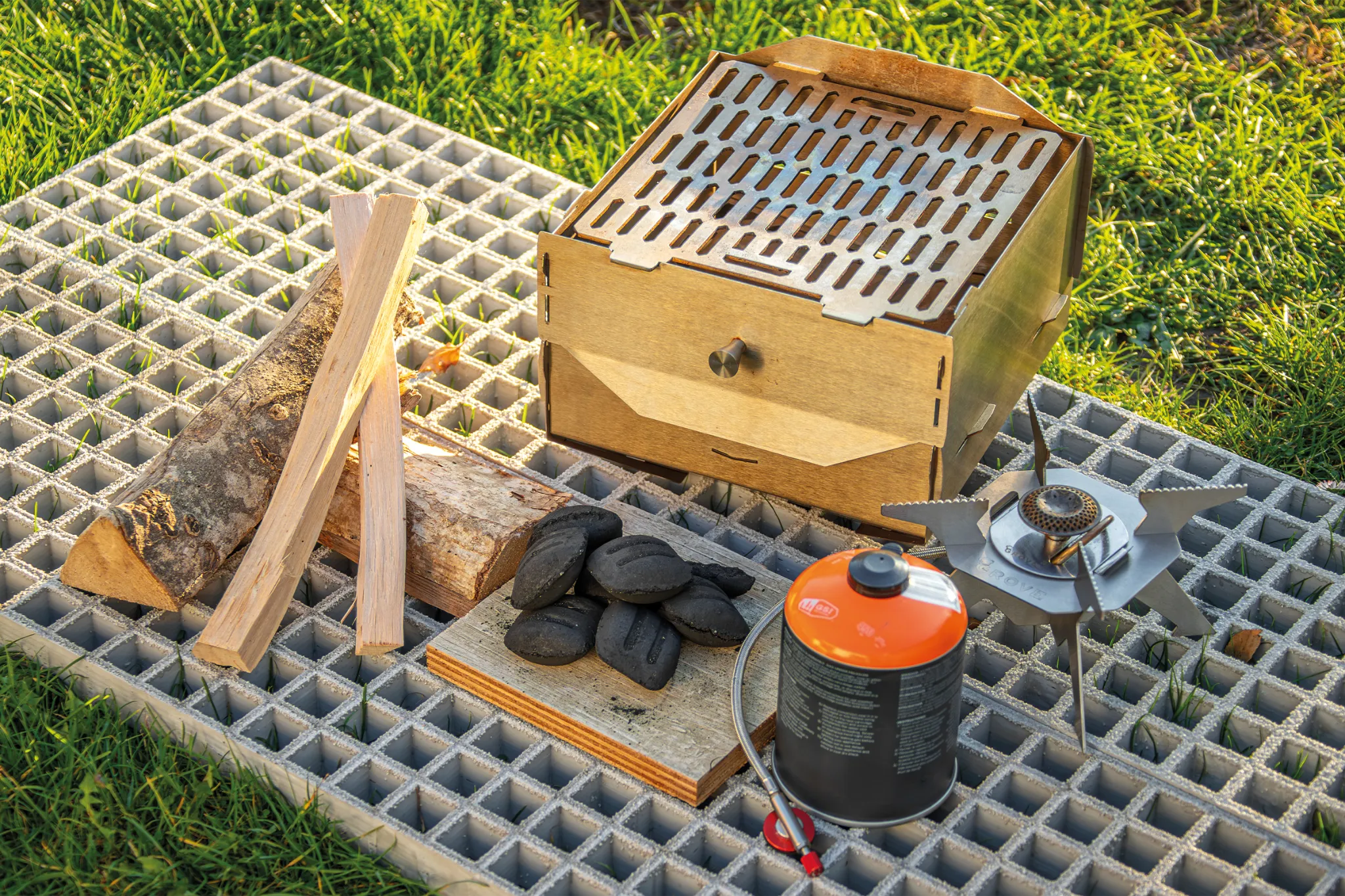
The first thing I noticed, lifting the pieces out, was the weight and the finish of the metal: thick-gauge stainless, cleanly folded, none of the flex or the tinny give you sometimes find in gear built down to a price. HORST is made in Germany, in comparatively small numbers, under the instruction of Grove’s founder, Fabian, who designed his product after a road trip through Germany, France, Italy and Austria in 2019 left him missing the ability to bake a decent pizza somewhere away from civilisation.
I know Fabian a little, fleetingly rather than closely, and it is worth saying so plainly before going any further. He’s a good-natured, down-to-earth sort, and the German manufacturing decision reads less like a marketing angle and more like the honest consequence of running a small operation at a scale that suits him. He plants a tree for every oven sold, which is a small thing, but a specific and checkable one, and I mention it for that reason rather than as a line pulled from a brochure.
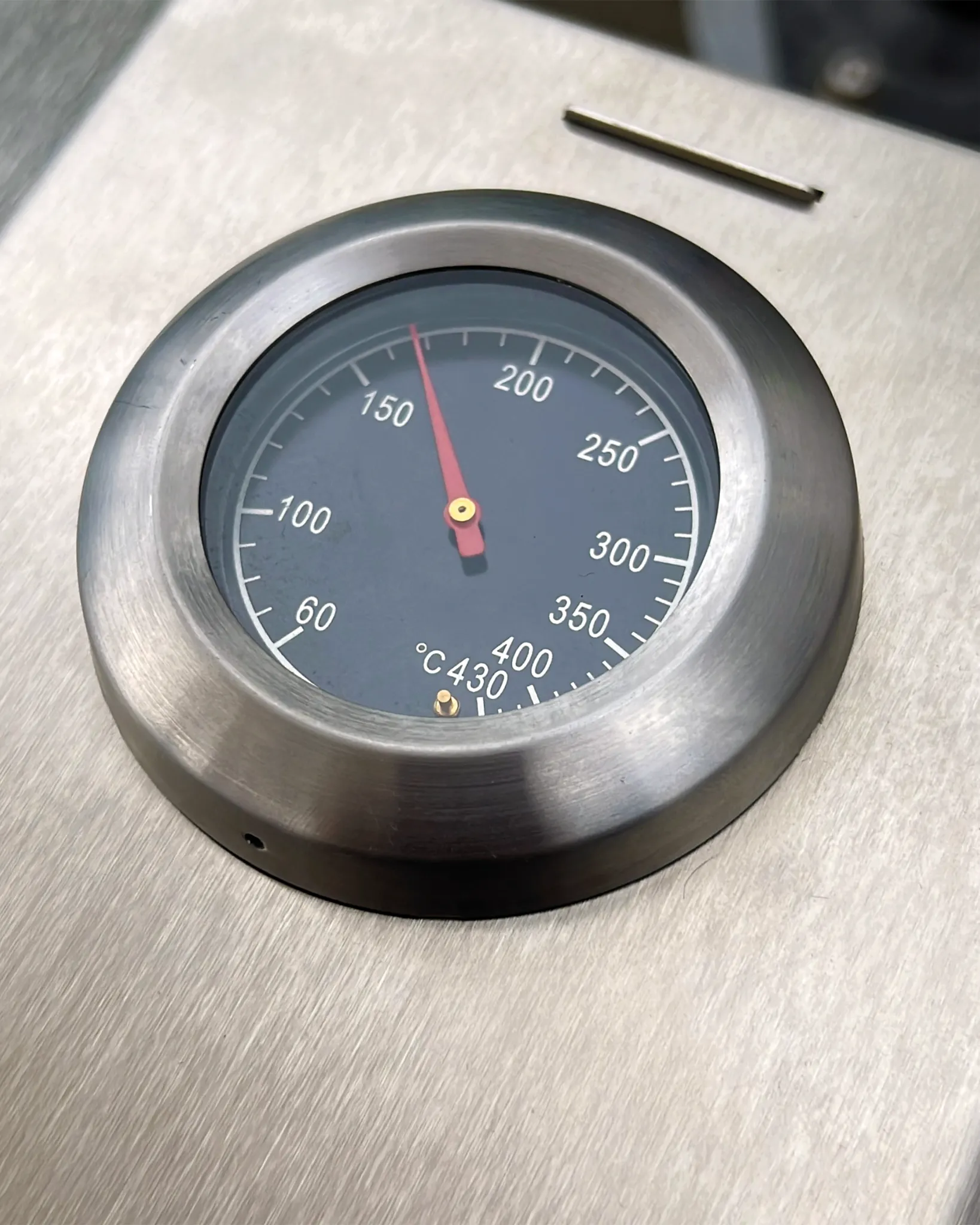
Grove pitches HORST first and foremost as an oven, and reviews found elsewhere online treat it in the same way. Therefore, it seems right to begin there rather than with the grill, even though the grill is arguably where it earns its everyday keep. The first proper test was mundane by design: a batch of shop-bought gluten-free rolls in for a reheat, alongside a batch of ordinary rolls for Tristan and Elisabeth, on a mild 23-degree morning. The oven temperature climbed to 200 degrees almost before I’d finished setting the tray down … well past the 170 I’d been aiming for, and I expected to have to fight it back down. I did not. With the gas flow reduced and left alone, it drifted back to 170 of its own accord and was controllable for the duration of the bake. It is a small thing, a single data point, but it gave me a first impression as to how the oven behaves under a low flame.
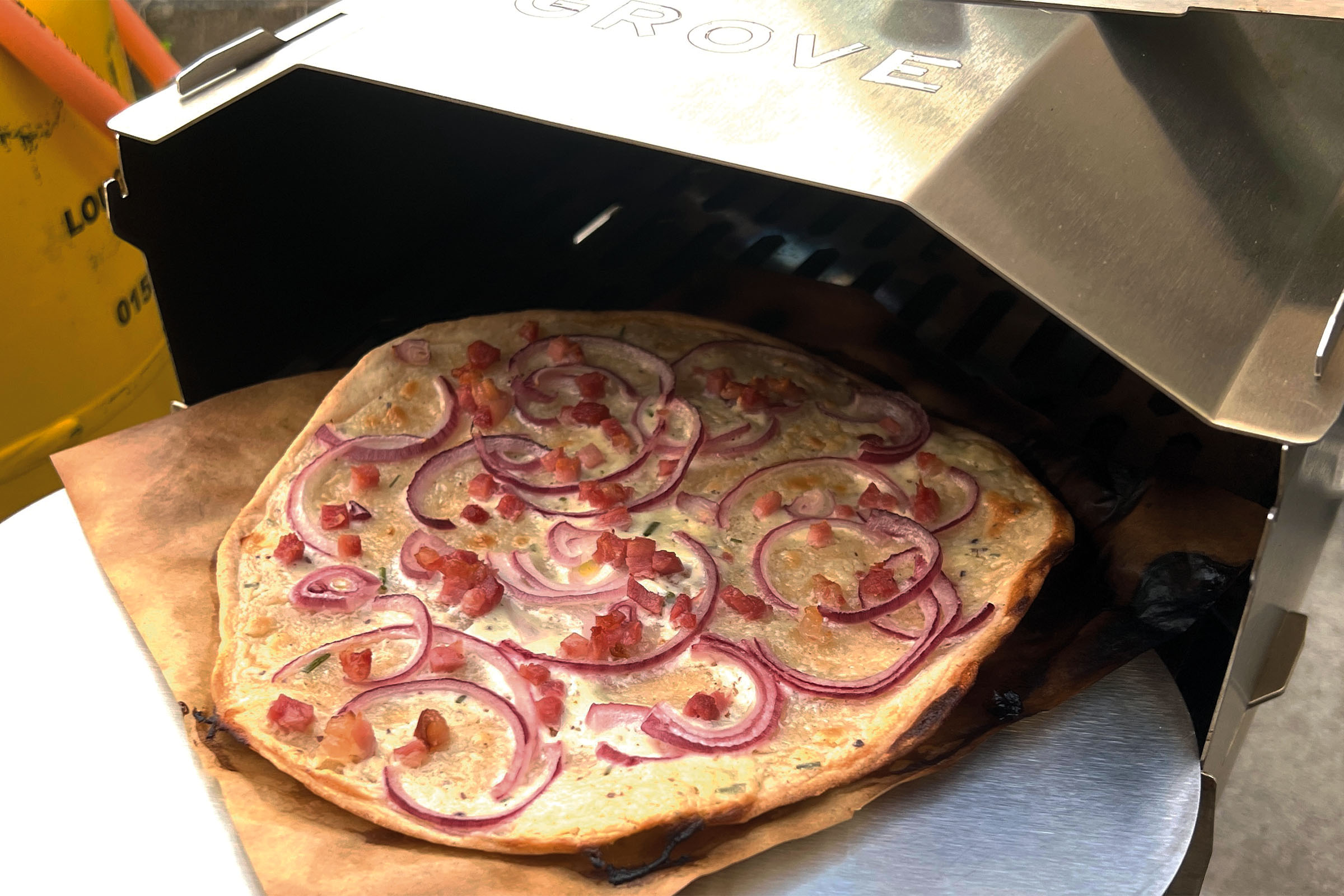
The more demanding test came a few nights later, when Tristan suggested Flammkuchen instead of the pizza HORST was originally built for. Thin gluten-free dough rolled to a few millimetres, sour cream, bacon, red onion, and on a second batch, considerably more garlic than onion. At 250 degrees for ten minutes each, the results were exactly what a Flammkuchen, or tarte flambée, from the Elsass should be: a crisp, dry base underneath ingredients that hadn’t dried out themselves. The complication was scale. Each one is small, which meant thirteen of them for a small group of people, which meant well over two hours of sequential baking. Fun in the end, a spontaneous kitchen party thrown together because a gale outside had pushed the whole operation indoors—but not something I’d want to repeat as a matter of routine. The fix, worked out afterwards rather than on the night, is to up the temperature considerably to 300+°C and bake for approximately three minutes.
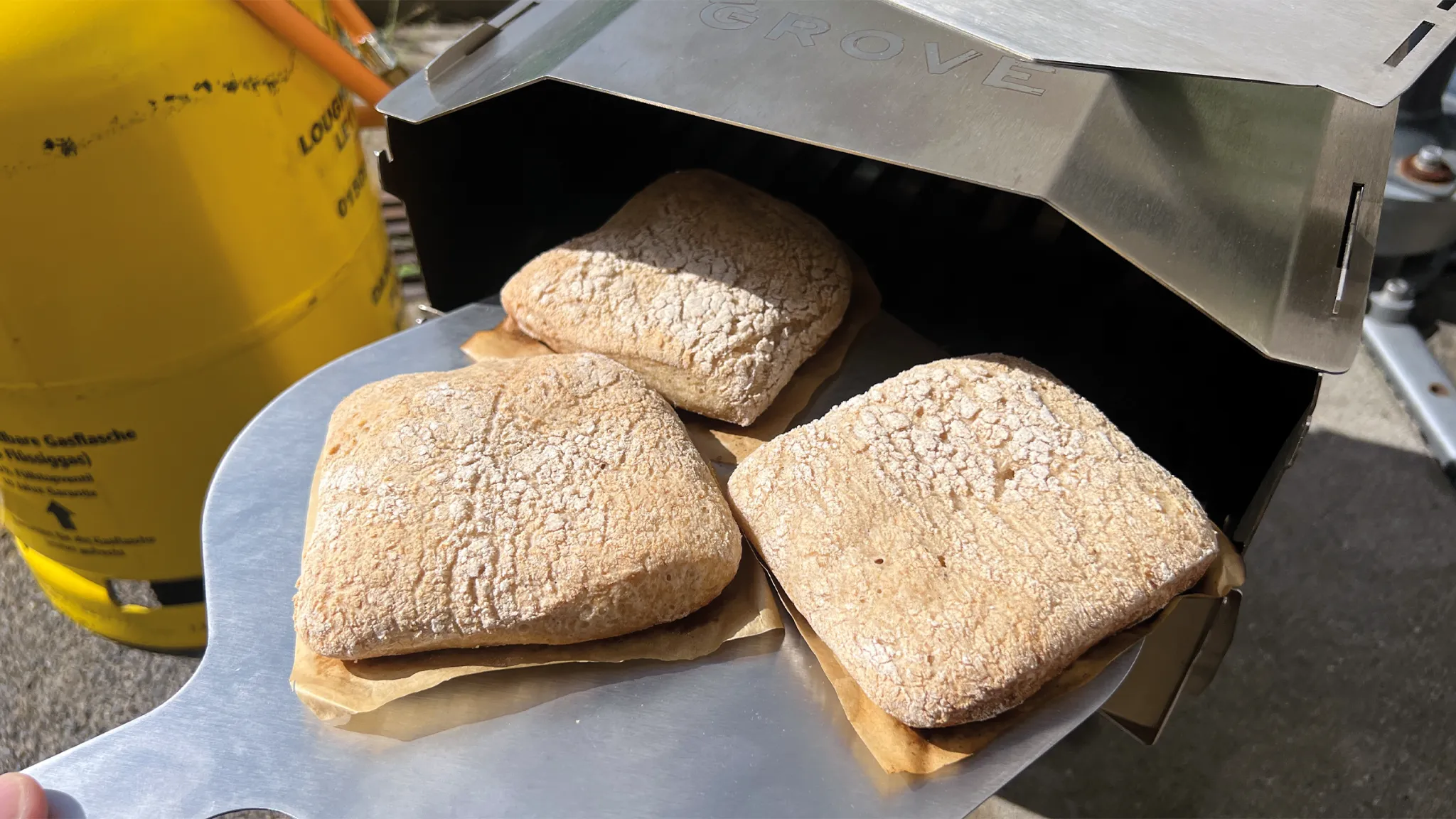
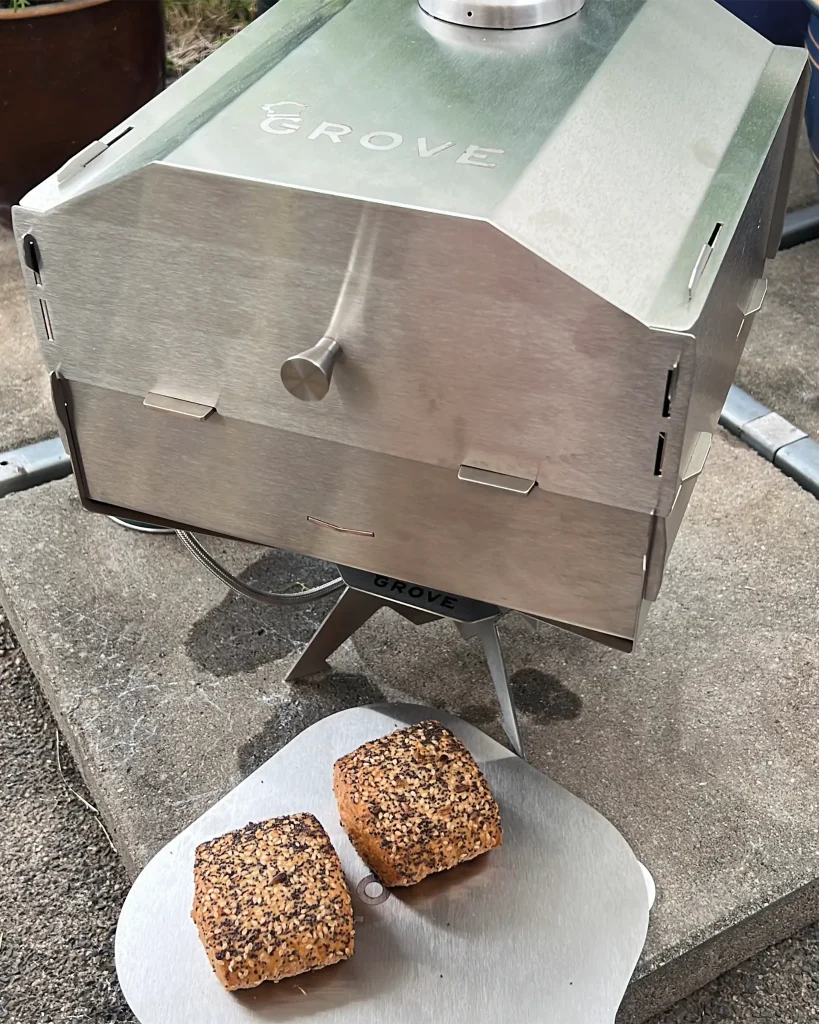
Focussing on my own personal needs for a moment, my first batch of gluten-free ciabatta was a game-changer. Eight rolls, baked in two batches of four, twenty minutes each. I can’t eat ordinary bread rolls, and gluten-free ones are not something you can rely on finding in every town or village on a longer trip, so the ability to produce a batch from scratch, on the road, that everyone at the table actually wanted to eat, regardless of dietary needs, is not a minor result. It is, if I’m honest, the single most useful thing HORST has done in the whole test.
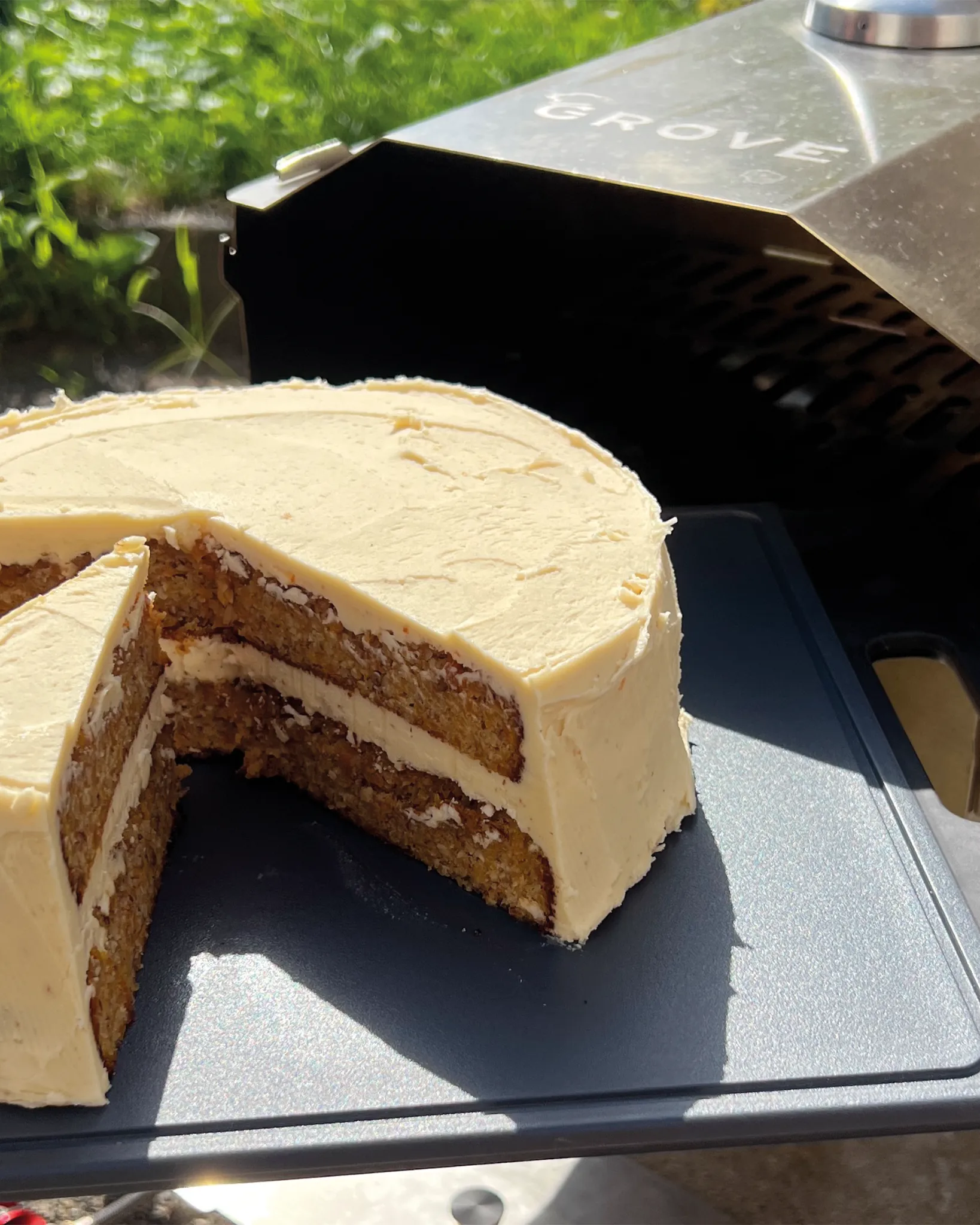
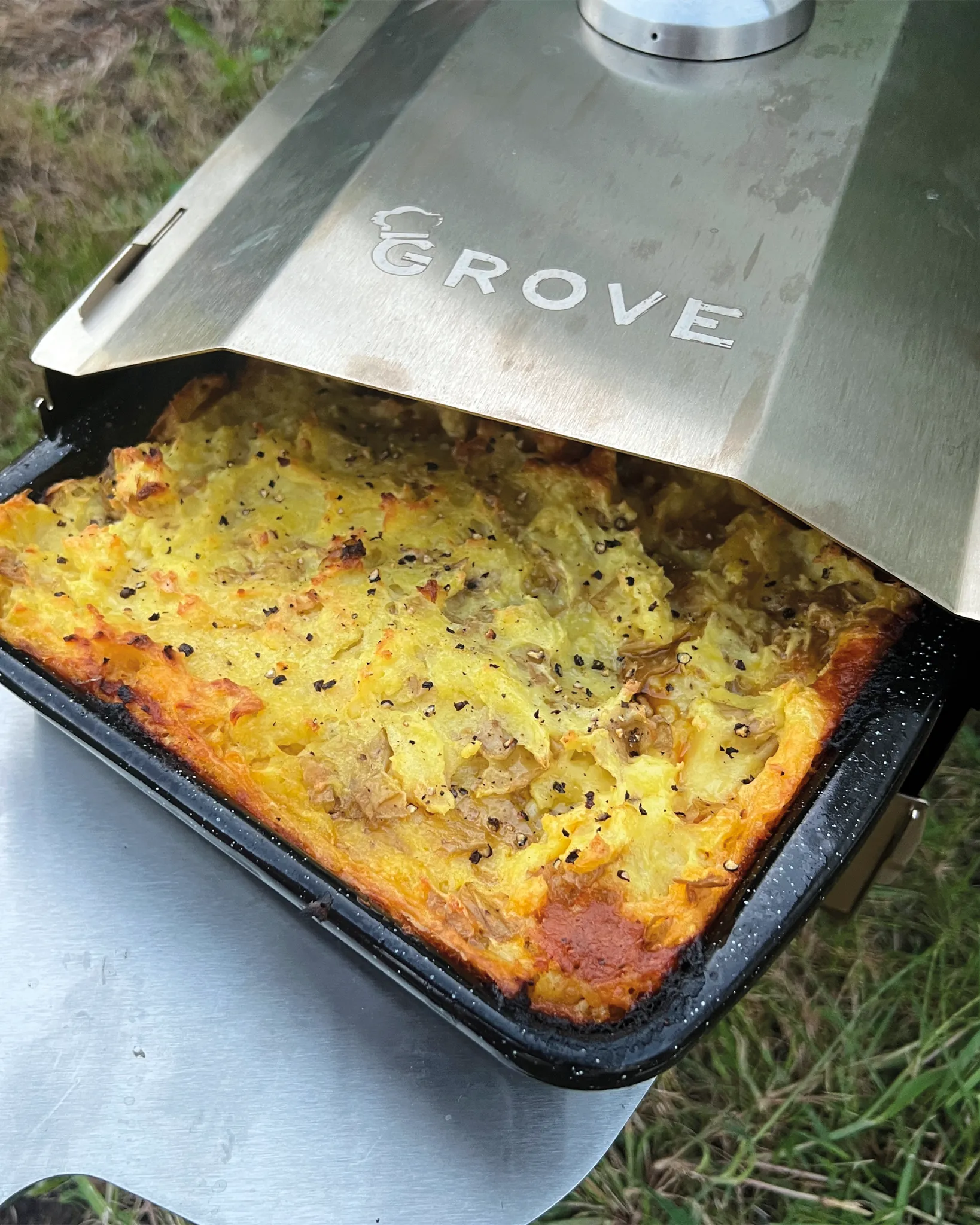
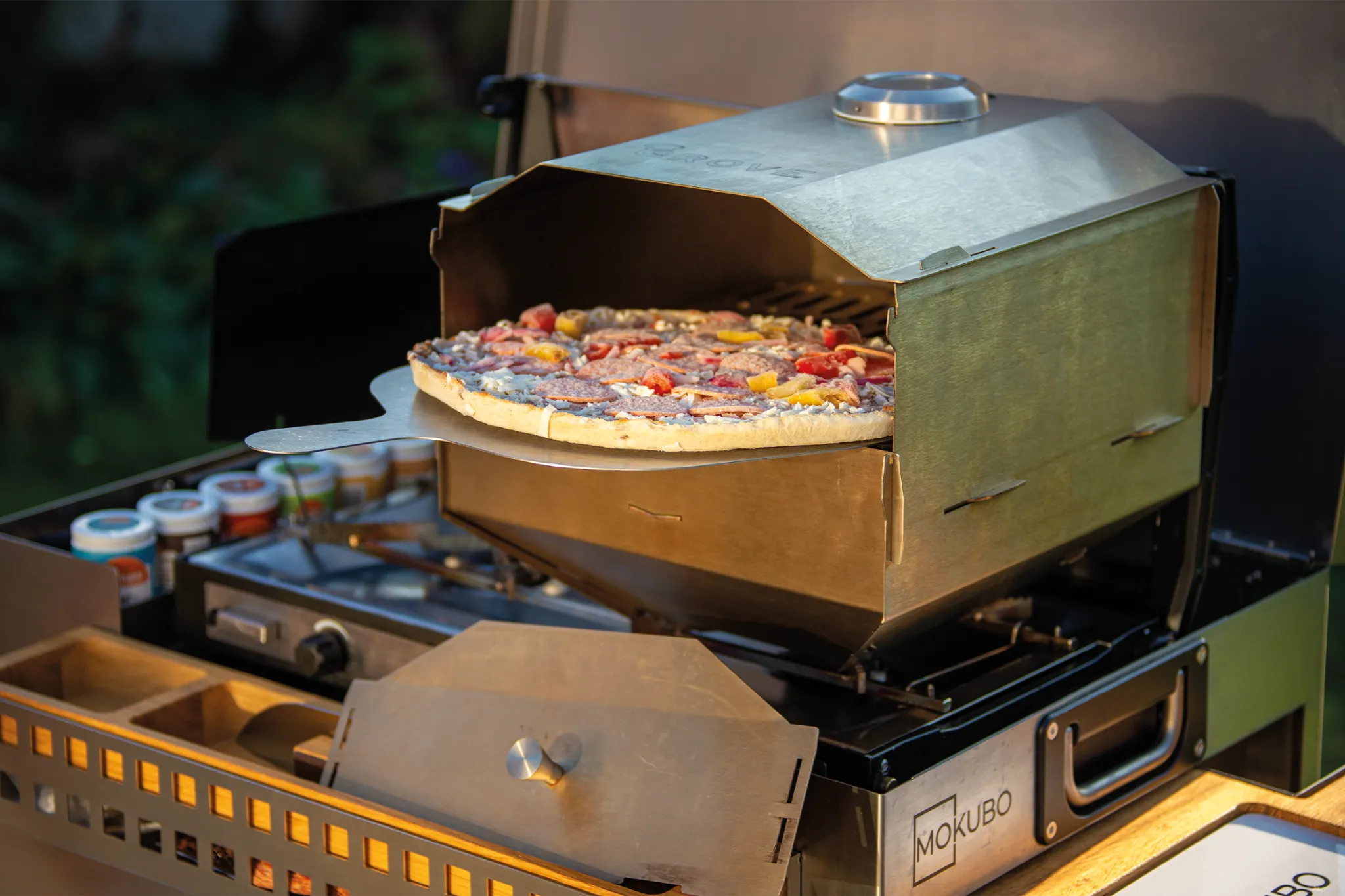
Tristan’s carrot cake pushed the oven furthest from its founding brief. Two layers, held together and coated in an icing that, cut open, revealed an even crumb through both layers with no sign of the heat unevenness the grill had shown elsewhere … a proper domed, round-sided cake, of the kind you cannot produce in a round oven with a hole in its centre, however good that oven might otherwise be. It came out better than either of us expected, and it happens to sit rather well next to the discovery, later on, that a standard supermarket frozen pizza (the roughly 24-centimetre kind from any discount grocer) also fits and cooks perfectly well, for anyone who wants the low-effort version of what Fabian originally set out to build.
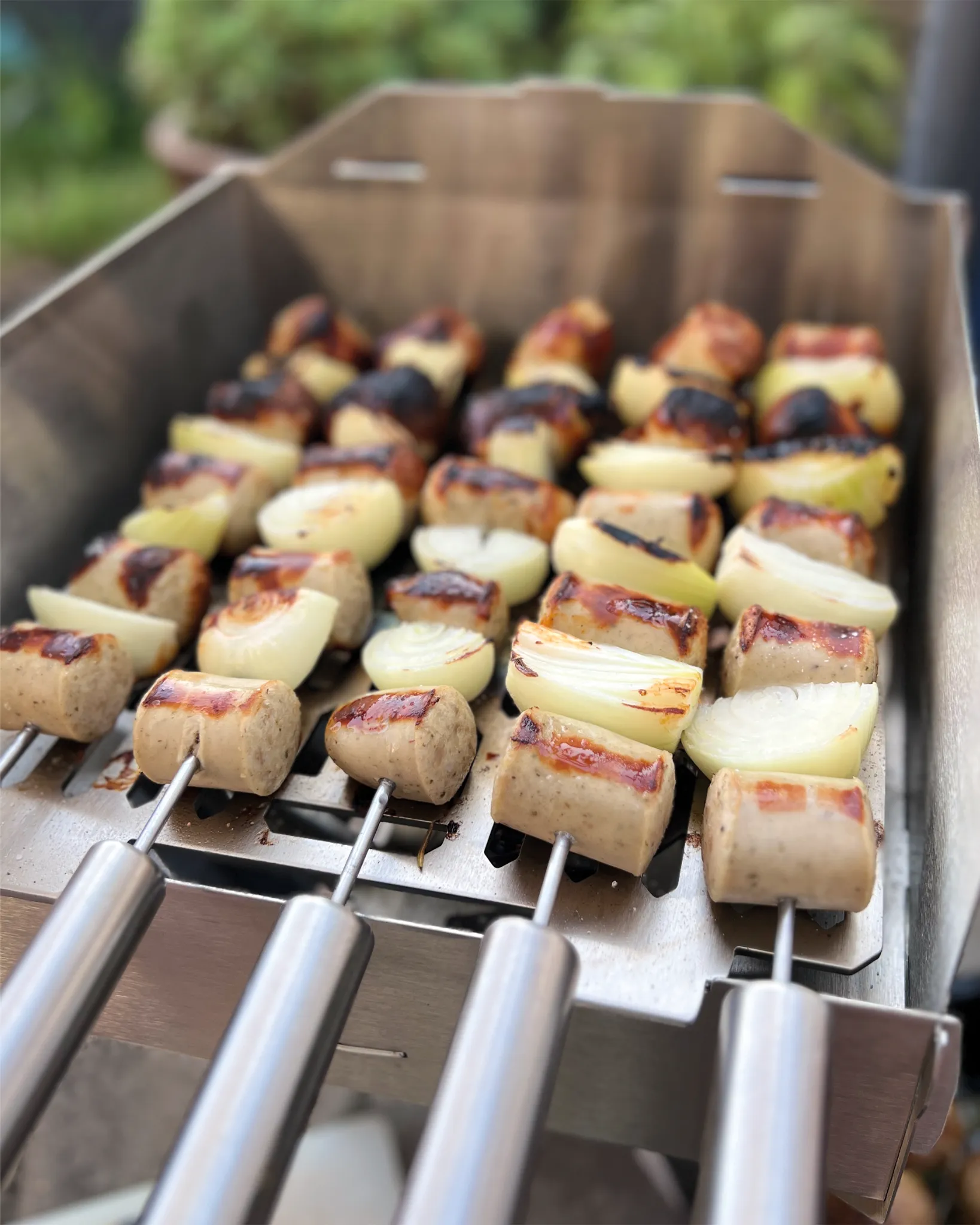
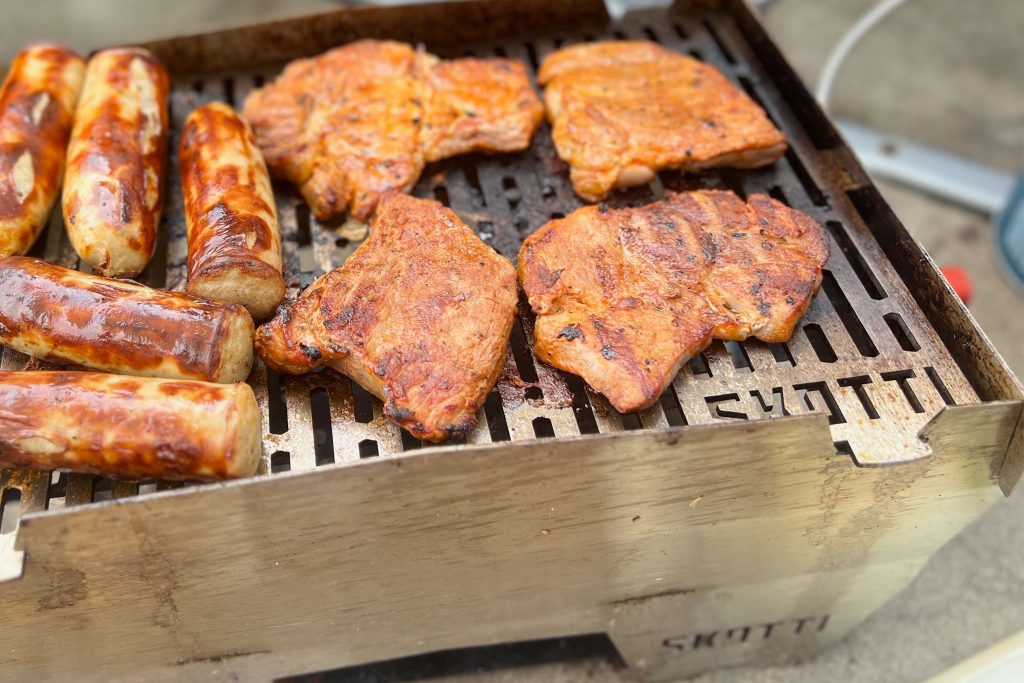
The grill side of things started less tidily. The first gas barbecue menu included baby potatoes with rosemary, garlic, Himalayan salt and cracked pepper, skewered sausage and onion, and halved pork steaks. It all cooked well enough, but with an obvious front-to-back temperature difference, cool near the handle end of the skewers and considerably hotter at the far end. The reason turned out to be straightforward once I’d thought it through: HELGA’s burner is round, a single point source rather than a long tube, sitting beneath a funnel-shaped shell whose rear and side walls rise well above the grill plate while the front sits flush. Warm air rises, cooler air is drawn in from the open front to replace it, and the front of the plate runs cooler as a result. HORST is built to correct for exactly this—a heat deflector spreads HELGA’s round flame more evenly, and the oven floor is channelled to help hot air circulate rather than pool—and a later repeat of another batch of sausages, this time with the door fitted upside down at the front opening, rather than left off, showed a real, noticeable improvement in evenness.
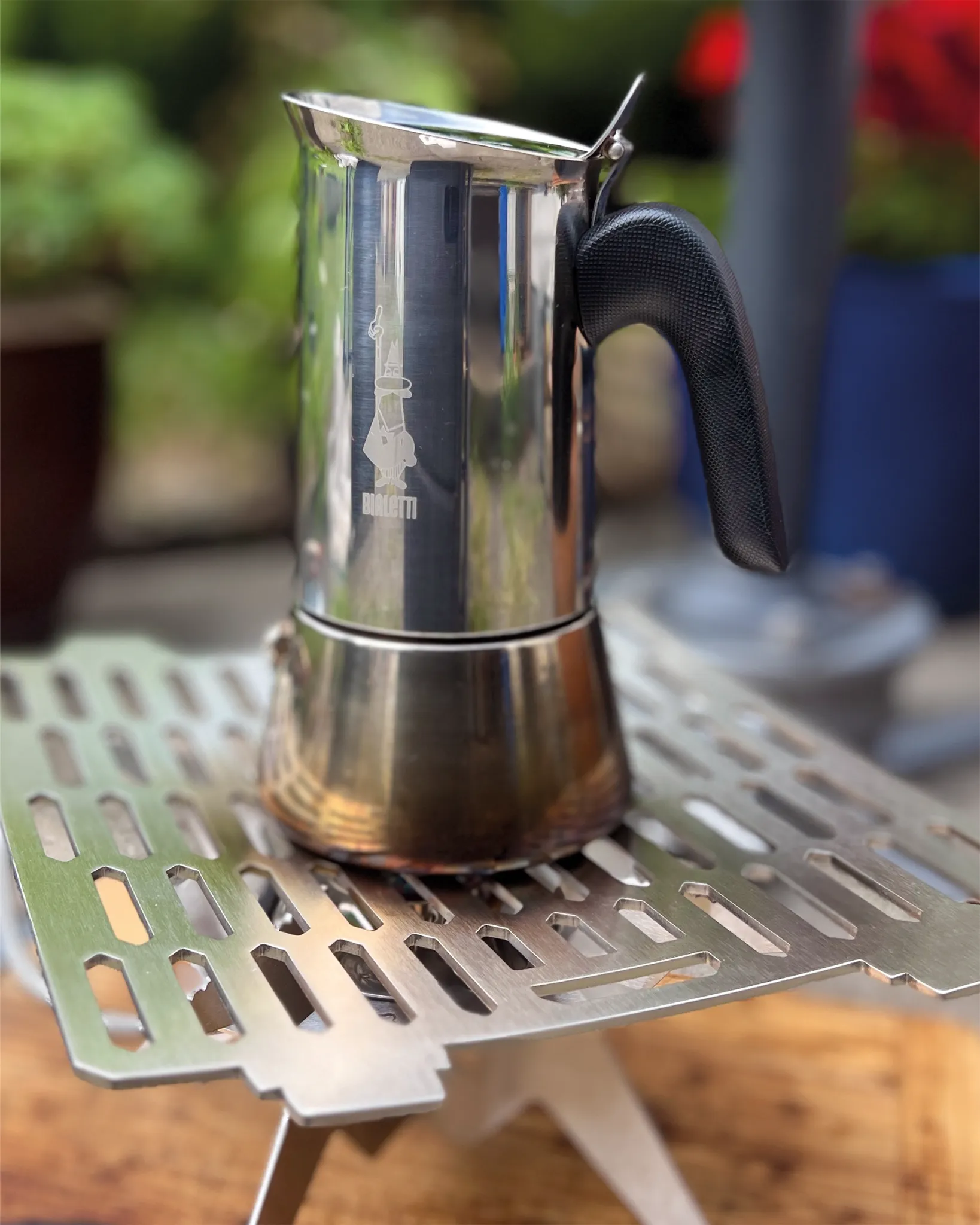
It was around the same stove, in fact, that I did something properly stupid. My own Bialetti espresso pot turned out to be too narrow in diameter to sit securely on HELGA’s burner supports; so, seeing no obvious problem with it, I set the grill plate across the burner instead and stood the pot on that. I took a few photographs, contentedly, and then found myself doubting my own eyes as the pot appeared to sink, very slowly, toward the flame. It was not my eyes. Lifting the pot away revealed the plate had sagged into a genuine, visible bulge. The seriously thick stainless steel had deformed under nothing heavier than a small espresso pot, simply because the grill plate is engineered to sit some distance above a comparatively broad, even source of heat, whether that is the deflector in gas mode or a bed of hot coals. It is not intended to hang directly over a concentrated 3 kW flame with nothing supporting the middle. A cast-iron pot of water, run at full gas over the bulge, did nothing to correct it. What eventually worked was moving the plate onto a cold concrete slab and setting the same pot of boiling water directly onto the bulge, letting the shock of rapid, uneven cooling pull the metal back toward flat, which it did, until it was almost back to its original shape again. The lesson is not subtle, and I’d rather state it plainly than bury it: the grill plate is not designed to be used directly over the gas flame. My bad.
The last mode to test, and the one I’d deliberately saved until I had tried everything else, was charcoal. I used Weber briquettes specifically because in my experience they run hot and hold that heat consistently for a long time … the kind of sustained load that, if anything was going to warp, would be the thing to do it. It didn’t. The briquettes created the heat I expected, ventilation through the gaps around the baseplate was ample, and the whole thing came together with the same ease as the gas mode, spontaneous enough for an impromptu barbecue and consistent enough to be a genuine everyday option rather than an occasional novelty.
Somewhere in the middle of all this, a woman commenting on one of my posts made the observation that you can’t really knock a frying pan, and she’s right. Looking at the HORST-HELGA duo from this angle adds a good degree of clarity: the one is an oven, properly capable, paired with a stove that will run a frying pan just as happily as it runs a grill plate. And there you have it, another great meal: a pan of wild mushrooms, bacon and a port-cream sauce, paired with noodles cooked in parallel on a second burner.
Cleaning is unremarkable in the best sense: soapy water and a sponge lift the great majority of fat and residue, wire wool handles the most stubborn remainders, and the durable stainless takes the handling without complaint. The combination handle-bottle opener also works surprisingly well as a scraper for heavily baked-on residue. On the road, a folding basin (I use either a Sea to Summit round sink or an Ortlieb square bowl) keeps the water use to a minimum.
HELGA runs on the widely available screw-fit gas cartridges you’ll find at any camping retailer, but for my own use, it works best with a refillable eight-kilogram Gaslow bottle, filled for a few euros at any LPG-equipped petrol station and usable across borders with the right adaptor. As always with refillable gas systems, local regulations need to be observed, and any bottle carried inside the vehicle must be installed and secured appropriately. For me, the advantage is simple: long, steady burns for baking and none of the cartridge cost or carrying bulk that comes with buying disposables as you go. As I found out, HORST also sits happily on the Primus Tupike, which forms part of the MOKUBO mobile kitchen box system, but its dimensions rule it out of use with the BOXIO Cook.
Two accessories I’d genuinely like to see are a plancha and a slim pizza stone; neither exists yet in the range as far as I’ve found. The one accessory I haven’t tested, purely because I keep finding my own workarounds with boxes or the car as a windbreak, is Grove’s own windbreak. Despite not having used it myself, I’d recommend it to most buyers without hesitation, because it is part of the system and allows you to set up the kitchen exactly where you want, which may be beside a river and only accessible on foot.
It’s worth setting HORST against the wider field without naming names, because the pattern is broader than any one competitor. There is a category of folding gas barbecue, accessorised with an add-on shell, that becomes an oven of sorts when the accessory is fitted. Clever, often well executed, but built outward from a grill rather than inward from an oven. HORST runs the other way: a genuinely capable oven that happens to break down into a straightforward gas or charcoal grill when you don’t need the rest of it. And there is a second, older category worth mentioning: the round, pot-and-lid style stovetop ovens, usually built as a ring with a hole through the middle. One notable exception does away with that hole altogether, although the lid still has to be lifted to see what is happening inside. Another approach is a transparent lid, allowing the bake to be checked without opening the oven at all. Without that window, the lid has to come off, and with it goes a significant amount of the heat that has taken time to build. HORST’s door opens for a peek inside without that penalty; the heat stays where it is. It’s also, not incidentally, the reason a cake like Tristan’s could come out as a proper round, two-layer thing at all … a product a ring-shaped oven with a hole in the middle simply cannot produce, whatever else it does well.
None of which was the point I set out to prove. I began by looking at practicality and value for money, the ordinary calculus of any gear review, and it was only through doing this over and over, in as many different configurations as I could reasonably put it through, that something else became clear. I wasn’t looking for weaknesses, I was actively looking for the edge of what I could ask it to do within my own way of cooking, and I didn’t find one. That doesn’t happen often, in twelve months of testing anything. Tristan, borrowing the set regularly, has arrived at the same conclusion independently, which counts for more than my own opinion repeated twice. And if there’s one detail I keep coming back to, out of everything logged across a year of sausages, cakes, warped plates and gluten-free bread, it’s the simplest one: you can open the door, check on what’s inside, and close it again, and the heat will still be there waiting for you when you do.
from €269 (HORST), €99 (HELGA) | grove-camping.de