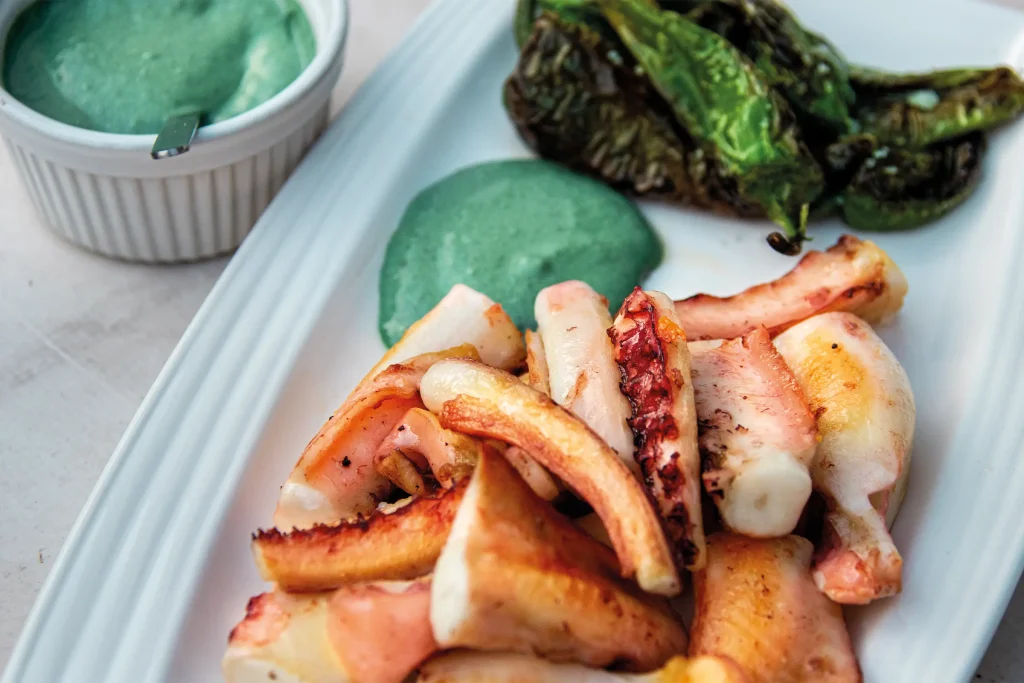
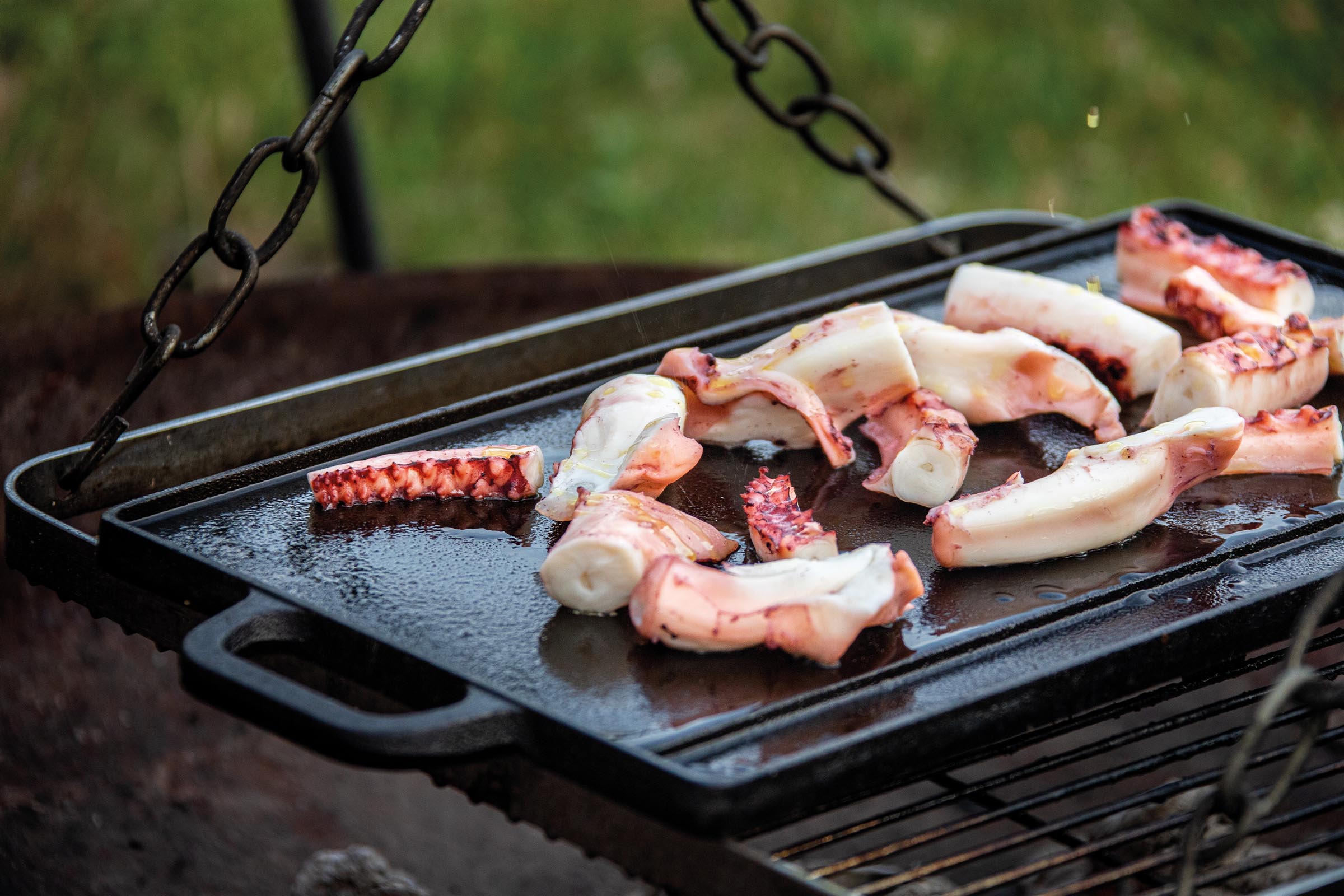
You’re probably familiar with pulpo a la gallega, a popular dish in Spanish tapas bars. But this delicious starter is also quick and easy to prepare at home or on the road. Here’s a simple recipe with a clever twist, along with the somewhat curious story behind it.
In Spain, pulpo a la gallega is also called “pulpo á feira,” and it originates from the “Maragato” cuisine. When the Spanish discovered in the early 17th century that hot paprika powder—pimentón de la vera—was ideal for preserving meat, numerous merchants travelled to Galicia to buy the paprika grown there. These peppers were primarily cultivated along the coast in Padrón (home to pimientos de padrón, also called Padrón peppers or Herbón peppers), after Franciscan monks brought the first seeds from Mexico to Padrón in the 16th century and acclimatised the plants to the oceanic climate. Thus, during the summer months, there was a constant caravan of muleteers, the maragatos, who travelled along the Silver Route (Vía de la Plata, a hidden gem among the routes of the Way of St James) with their carts to acquire this miraculous preservative. In exchange, they brought back olive oil from Extremadura via León.
The Maragatos acquired the dried octopus, which the Galicians despised, almost for free. During their travels, they would rehydrate the octopus and mix it with olive oil and paprika. Some time later, however, the Galicians also began to appreciate this dish. They adopted it as a festival, Mass and pilgrimage dish and gave it the Galician name polbo á feira, meaning “festival octopus.”
It is a traditional Galician festive dish prepared by women—the polbeiras—in copper pots under the open sky.
The Octopus Festival (La Fiesta del Pulpo) in O Carballiño (Orense) has been celebrated every year on the second Sunday in August since 1962, and is one of Spain’s most popular folk festivals. Between 80,000 and 100,000 people attend the festival each year, consuming an astonishing 40,000 kg of Galician octopus in just one day.
Incidentally, the dish also made its way to Sicily due to Spanish rule over the island until 1713. There, however, it is served with a lemon and olive oil dressing.
But who are the Maragatos?
The Maragatos are an ethnic group of around 4,000 people living in approximately 40 villages in the Maragatería region outside Astorga in León. They were first mentioned in Spain in the 10th century. It is believed that they are the last Moorish people in Spain, forced to convert after the Reconquista. Over the centuries, they have preserved their identity by wearing distinctive traditional clothing and maintaining their customs. They are descended from the Berbers of North Africa who arrived on the Iberian Peninsula during the initial Moorish incursions in the early 8th century. They were primarily itinerant merchants who exploited their monopoly on mules to transport goods, and later, the gold of the Spanish monarchs.
Cooking octopus is actually very easy. However, it takes about 40 to 60 minutes to prepare, while the subsequent frying or grilling takes only 6 to 8 minutes.
Tip In Galicia, the polbeiras (female octopus cooks) traditionally dip the octopus into boiling water three times for a few seconds each before cooking it. This helps to prevent the skin from peeling during boiling, and is called “asustar,” which means “to scare.”
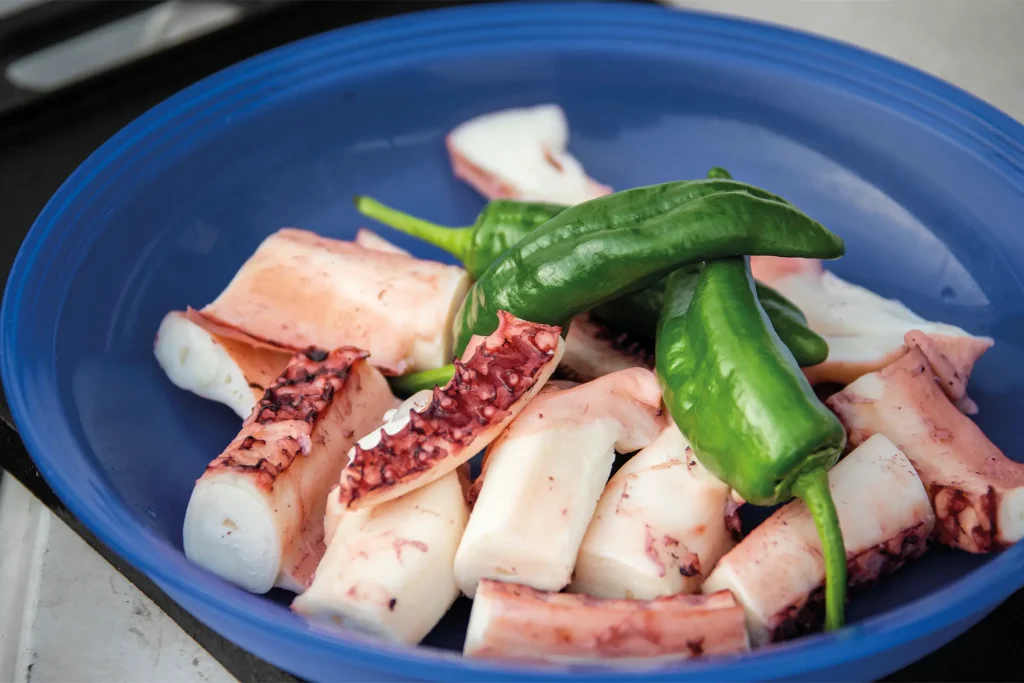
Traditionally, pulpo a la gallega is served in Galicia on a wooden platter with toothpicks. It is accompanied by a glass of tinto (red wine).
¡Buen provecho!
Pulpo a la Gallega
The classic way—a la Plancha—or simply in a Dutch oven or cast-iron skillet.
Serves 4 as a starter or 2 as a main course
Equipment Cast-iron plancha (griddle) or Dutch oven, embers or gas stove, saucepan, chopping board
Ingredients
4 octopus tentacles (or 1 small, ready-to-cook octopus weighing approx. 700–1,000 g; frozen is also fine)
2 tbsp Pimentón de la Vera dulce or picante (smoked paprika, mild or hot)
6 tbsp extra virgin olive oil
A pinch of fleur de sel (coarse sea salt)
Preparation
Wash the octopus (also known as pulpo) to remove any sand that may be trapped in the suction cups.
Bring a generous amount of water to the boil in a large saucepan and briefly dip the octopus into the boiling water three times to shock it.
Then cook the octopus for about 40 minutes, preferably with a weight on top to keep it submerged.
The octopus will soon change in texture and colour, becoming firmer and reddish.
Pierce the octopus with a wooden skewer or fork to check if it is soft enough. If the skewer slides easily into the flesh, the octopus is tender and ready. If not, simply let it simmer for a little longer.
Leave the octopus to cool slightly in the cooking liquid, then remove it from the water.
Heat the plancha to a high heat. After about 12 minutes, slice the tentacles with scissors, as the polbeiras in Galicia do, or with a knife.
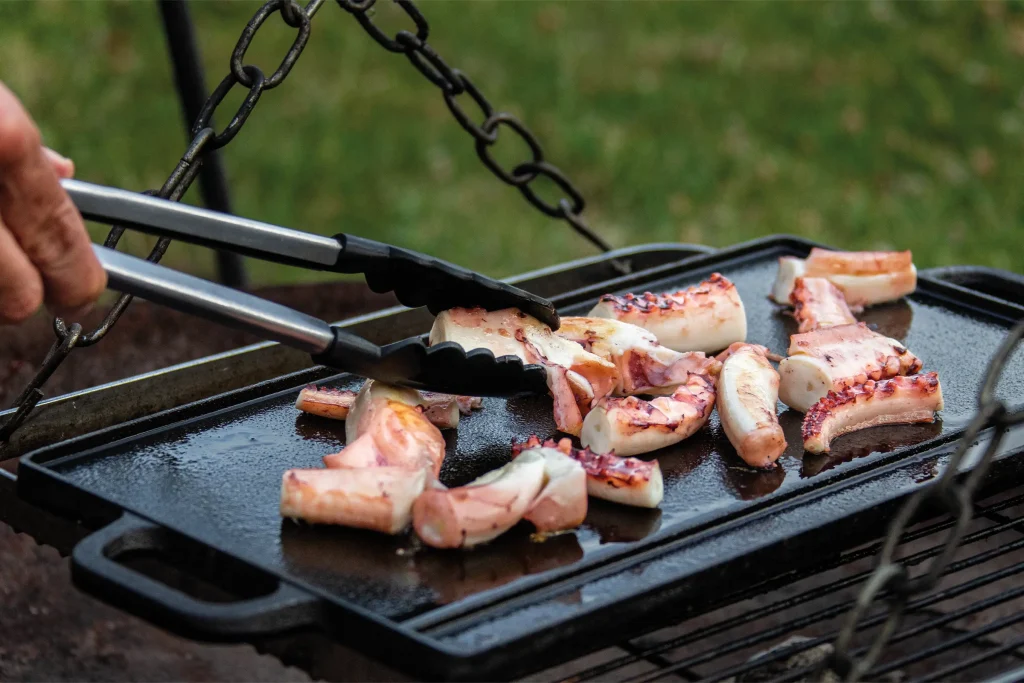
Drizzle a little olive oil onto the plancha and grill the slices for 6–8 minutes, turning frequently, until they are toasted—but take care not to dry them out or burn them.
Remove from the plancha.
Arrange the octopus slices on a wooden board, sprinkle with paprika (pimentón), drizzle with olive oil and garnish with sea salt flakes.
Spirulina Fusion Aioli
Rich in omega-3 and omega-6 fatty acids—and absolutely delicious!
Ingredients
½ cup high-quality mayonnaise (or vegan alternative)
1–2 tsp spirulina powder (adjust based on your flavour preference)
2 cloves garlic, minced or finely grated
1 tbsp fresh lemon juice
1 tsp Dijon mustard
1/4 tsp sea salt
A pinch of white or black pepper
Instructions
Combine the Bases In a mixing bowl, add your mayonnaise*, Dijon mustard, and freshly minced garlic.
*Tip Making your own fresh mayonnaise is quick, easy and delicious. Crack 1 egg (at room temperature) into a tall, narrow container, taking care not to break the yolk. Add 1 tbsp of lemon juice and 1 tsp of Dijon mustard. Pour 125 ml of sunflower oil over the egg so that it’s covered (for a hearty version like aioli, replace half the oil with olive oil). Set the hand blender to the highest setting, then slowly pull it up from the bottom until the ingredients are combined and the mayonnaise is creamy and thick. Season to taste with salt and pepper. Done!
Add the Superfood Whisk in the lemon juice and spirulina powder**.
**Tip To prevent the spirulina powder from clumping, mix it with the lemon juice in a small cup to form a smooth paste before folding it in.
Season & Rest Stir in your salt and pepper. Taste, and adjust seasoning as desired.
Chill Cover and refrigerate for at least 15–30 minutes before serving. This allows the robust garlic and earthy spirulina flavours to properly fuse together into the mayo base.
Serve with halved, roasted baby potatoes—and our homemade Spirulina Fusion Aioli. This vibrant, nutrient-packed Spirulina Aioli merges the earthy superfood benefits of spirulina with the bold, creamy, garlicky bite of a classic aioli. It is incredibly versatile—perfect for dipping sweet potato fries, slathering on grilled fish, or spreading over crusty artisan bread.