In the world of mobile electrics, cold has always been the quiet limiter. Not dramatic, not catastrophic, just enough to quietly shut systems down when you need them most. Votronic’s latest update to its solar charge controller range takes aim directly at that problem, with a development that feels less like a feature and more like a practical correction.
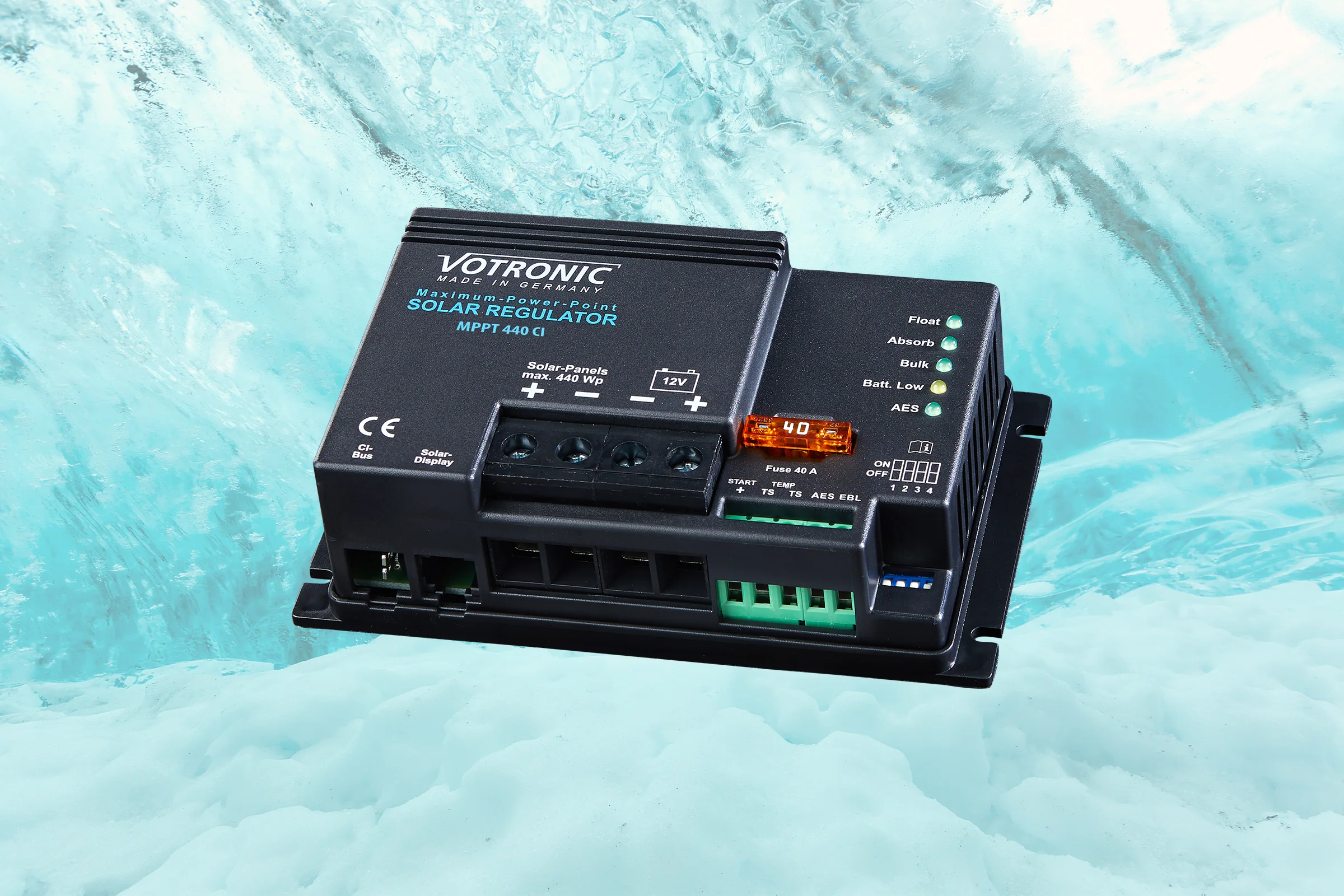
The German manufacturer has introduced a new generation of solar charge controllers designed specifically for motorhomes, expedition vehicles, and off-road builds. At the centre of the update is a dedicated charging programme for heated LiFePO₄ batteries, an increasingly common setup in modern overland vehicles, but one that has historically struggled in low temperatures.
Charging Lithium in the Cold—Without Workarounds
Lithium batteries are efficient, stable, and increasingly the default choice for serious travel setups. But they come with a known limitation: charging at low temperatures can damage the cells, forcing many systems to either reduce output or stop charging altogether.
Votronic’s approach sidesteps that compromise. The new controllers are designed to work directly with heated LiFePO₄ batteries, allowing them to charge safely even in cold conditions, without the need for an additional temperature sensor.
In real-world terms, it removes one more point of failure, one more component to install, and one more variable to manage in a system that should ideally look after itself. For vehicles used year-round—winter camping rigs, alpine travellers, or long-distance expedition builds—it translates into something simple: the system keeps working.
More Energy, Faster Recovery
The controllers continue to rely on MPPT (Maximum Power Point Tracking) technology, which is now standard at this level but still worth getting right. By constantly adjusting to the optimal operating point of the solar panels, the system extracts more usable energy compared to older PWM-based setups.
In practice, that means shorter charging times and better overall yield from the same solar array—useful on short winter days or when parked in less-than-ideal conditions. The system also automatically adapts to different battery types, including AGM, gel, and traditional lead-acid, making it flexible across mixed or legacy setups.
An additional detail that will appeal to those running dual-battery systems is the integrated maintenance charging for the starter battery. It’s a small thing, but one that avoids flat batteries after extended stays off-grid.
Built for Installers, Not Just End Users
Votronic has clearly aimed this generation at professional installers and vehicle builders as much as at end users. The focus is on straightforward integration into existing onboard electrical systems, with fully automatic charging processes and an emphasis on operational reliability.
That positioning makes sense. Modern overland electrical systems are no longer simple add-ons, they are integrated, often complex systems where compatibility and ease of installation matter as much as outright performance. A controller that drops cleanly into an existing setup without requiring workarounds or additional components earns its place quickly.
A Quiet but Relevant Update
There is nothing flashy about a solar charge controller. It sits out of sight, does its job, and is usually only noticed when it fails. But this update addresses a known limitation in a growing segment of the market, and does so in a way that reflects how people are actually using their vehicles.
For anyone running lithium systems in colder climates, or planning to, the ability to maintain charging without intervention is not a luxury. It is a baseline requirement that has, until now, often needed careful system design to achieve.
Votronic’s updated range is available immediately through specialist dealers and authorised installation partners.