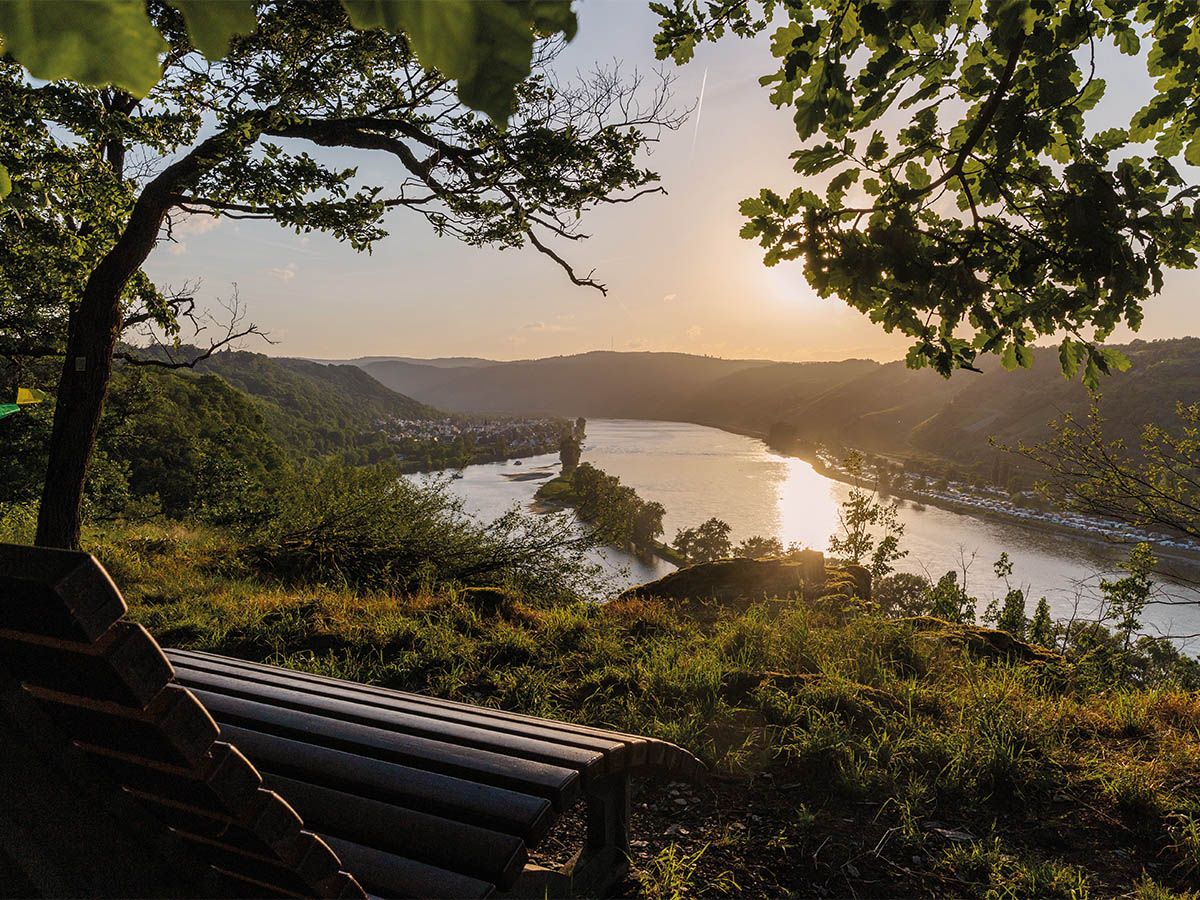
When I wake up in the morning, and the wind is blowing in the right direction, I can hear the deep heartbeat throb of the diesel engines pushing barges up and down the Rhine. To most people, it’s just background noise. To me, it is reassuring … it means the river is flowing normally and the world beyond my front door is carrying on as it should. Silence is worrying. Over the years, I have learned that the Rhine rarely falls quiet without reason. It’s either drought or flood. Too little water beneath the barges or too much under the bridges. Either way, the traffic changes. During floods, the footpaths become channels for fallen trees and debris, and the plains where shepherds graze their flocks in summer disappear beneath kilometres of water. During drought, the barges sit noticeably higher in the water, carrying reduced loads as they cautiously follow the deepest part of the channel.
The Rhine is a powerful river. A gargantuan river. When the barges are moving and the diesel engines are throbbing somewhere beyond the embankment, I know things are probably alright. After all, this body of water lies barely a hundred metres from my front door.
Other than the river, busy with traffic carrying oil, gas, shipping containers, sand, and other commodities, the banks are populated by dog-walkers, joggers, elderly couples with their strollers, kids either rushing hastily in a bid to get to school on time or dawdling on their way home, and commuters on bicycles. Everyone has somewhere to go, their focus on what lies ahead. Whereas a casual Guten Morgen, or Guten Tag might seem ignored, closer observation often reveals earbuds that are most likely immersing the wearer in a private world filled with music or a podcast.
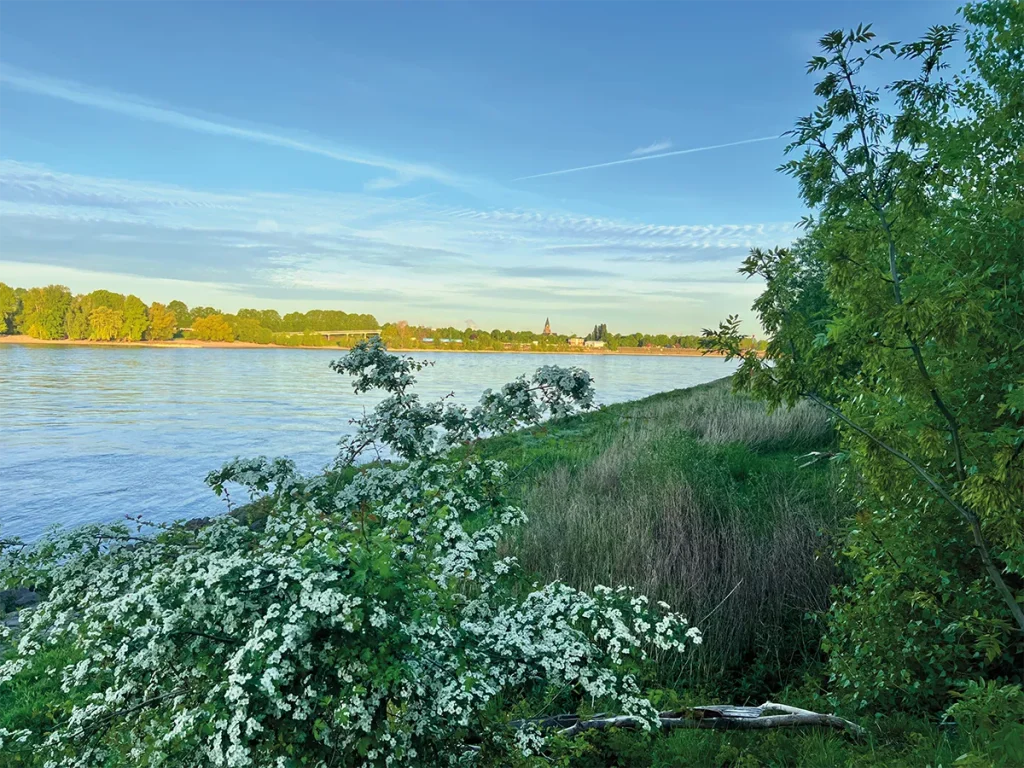
I have lived here for thirty years. Admittedly, work and life in general have also blinkered me. I knew there was more, but I, too, failed to appreciate what the river really has to offer: a diverse landscape made of flood plains, woodlands, stony outcrops leading into the river. The sounds: The splashing of water. The rustle of leaves in the breeze. Nature. Wildlife. It’s a busy environment, but not loud.
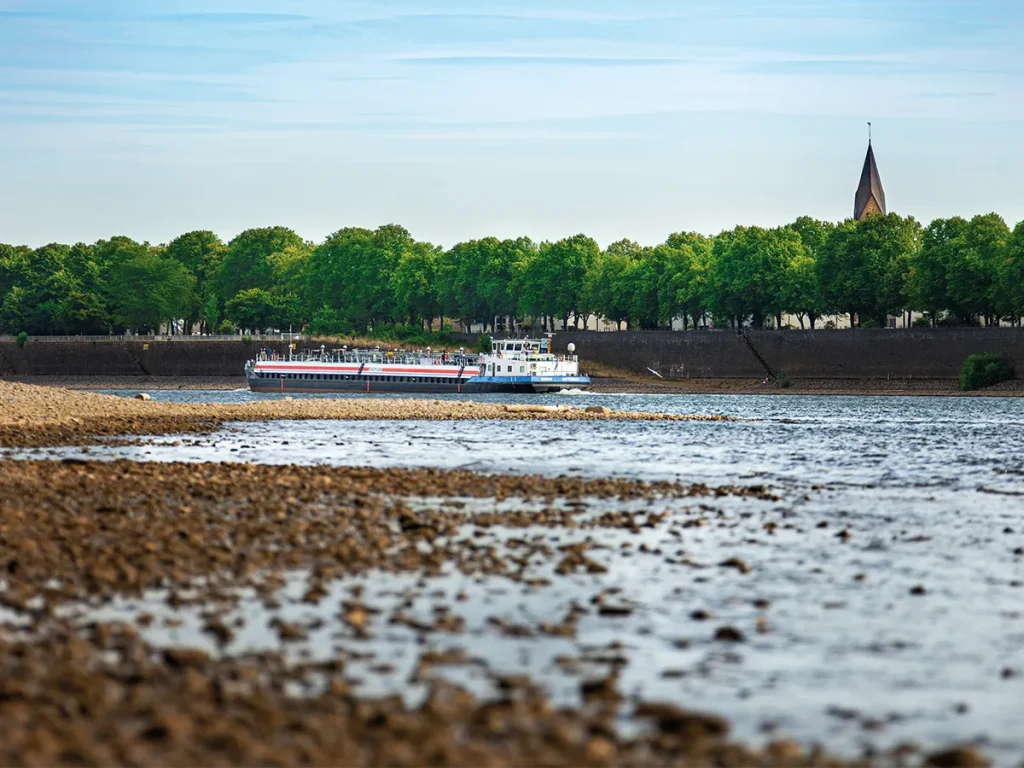
The Rhine actually began playing a role in my life back in 1981 when I first walked across the old wooden bridge from Stein am Rhein, in Switzerland, to Bad Säckingen, where I first settled when I moved from the UK to Germany. I was twenty at the time. In the summer, I would go swimming in the river with friends. We’d jump into the cold water upstream from the bridge and let ourselves be carried by the flow, making sure we stayed dead centre between the bridge supports. Venture too close and the swirling current would suck you down and spit you out some fifty or a hundred metres further downstream. Not for the fainthearted.
If I add up the years, I can say that I have been drawn back to the river continuously for more than four decades. And what haven’t I done in that time? I haven’t been fishing … well, not here. I have fished in other countries, but Germany requires anglers to take an exam before being granted a fishing license. In North Rhine-Westphalia, there is a theoretical exam and a practical exam. But I’ll get to that in a moment.
I enjoy early morning walks along the bank. I use the time to either prepare myself mentally for the day ahead, or the exact opposite: slow down and appreciate the calm. Next to the river, the sound of water against the rocks, watching ducks dip their heads beneath the surface, the small creatures in the grass, the occasional flock of noisy geese flying overhead, even the gulls, they all help to cut through the corporate noise of emails, telephone calls and deadlines.
And then, there are the anglers. They sit quietly watching their rods. They respond to a good morning greeting. Is it the fishing, or simply the ability to sit undisturbed and take in everything going on around them, which otherwise goes unnoticed by all the other busy people who don’t have time to stop?
At some point, the idea of going back to school again to learn for the exam had crossed my mind. But I wasn’t quite there yet and, if I am honest, I would have probably left it on the back burner for much longer had it not been for breakfast with Christian.
Christian is a hunter, passionate Land Rover driver, and member of the Series 2 Club. There is always something to talk about, and we occasionally end up in his kitchen for a good old chinwag. I’m not sure what the main topic had been, but all of a sudden he left the room only to return with a long, thin canvas pouch. This was a recent purchase and one that I could not immediately decipher until he slid out individual sections of a historic House of Hardy fly fishing rod. It was beautiful.
I cannot put a date on it, but I know for sure that this comes from a time long before fibreglass and carbon fibre were a thing. Bamboo. Picking it up, it felt just right. There is something about antique objects like this that is difficult to explain. They seem to carry their own history. Here is a piece, probably as old as me, that was the epitome of its ilk in its day, yet it still performs faultlessly today … just like Larry, my 1963 Land Rover. He still goes places just as he did when he was new, albeit slower than modern vehicles. But, hey, I am not in a hurry.
Anyway, our conversation had a new beat and the pace quickly hastened. I let out that I, too, was thinking of getting my license but … what about the theory, the fish, and all the things I would have to learn? Christian, composed as ever, simply said, “you’ve got this.” That was all it took. I couldn’t take my mind off the challenge. The more I thought about it, the more my mind drifted back to when my uncle taught me to fish on the River Wey which ran through the bottom of his garden. I was knee-high to a grasshopper then, but the tiddlers foolish enough to take my bait kept me enthralled. In fact, this was probably just a smart move on his part, because I was content and occupied from just after breakfast until teatime.
As I grew older, I would walk from home to a nearby river and sit on a bridge—either on my own or with a friend—and cast the line. Funnily enough, it didn’t matter so much if I caught something or not. Mobile phones certainly didn’t exist back then, and it was the norm for kids to be out of doors either playing games, getting up to mischief, or just doing something in nature. Even then, I possibly subconsciously appreciated the peace.
I guess this is one of those things that come full circle. We were having a family holiday in Denmark maybe twenty something years ago. I had forgotten to pack a suitably weatherproof jacket and ended up in a hunting and fishing shop in the nearby town. Tristan, equally knee-high at the time and familiarly inquisitive, asked about the fishing rods standing in the middle of the shop. Well, who was I to ignore the little guy. I asked the man behind the counter if he would sell me a license for a nearby lake. He could. So I picked a rod, tackle, accessories and bait, and thought to myself, it’s been a while, but how hard can this be … and while I’m at it, why tell my son what it’s all about if I can take him fishing and show him.
We found the trout lake in the afternoon. The weather was typical for autumn: grey, damp and with fresh wind. I was wearing my new jacket and Tristan was in a one-piece overall with built-in boots. Was I being a little bit ambitious thinking the young man would be as enthralled as I, standing on the bank, in quiet anticipation the float would twitch or, better yet, sink? The inevitable worn down patience led to the throwing of stones into the lake. Now, if that didn’t go down favourably with the other anglers, how do you think they reacted when there was a yell and an even bigger splash. Tristan had lost his footing and fallen off the bank. If stones create ripples, he was the storm in a teacup. Needless to say, I yanked him out and our fishing excursion was brought to an abrupt end.
Back into the recent present, my mind was weighing up the pros and cons of signing up for a fishing course as I drove home from Christian’s. Cons there were none, unless you considered someone in his mid-sixties going back to school. Fortunately, there were online courses to choose from, so I wasn’t going to be grandpa in a classroom full 21st century youngsters. But even so, I still struggled to hit Buy Now. I had some articles to write, places to be, and the back burner took hold once again … except for one tiny flaw in my delaying tactics. I’d told Elisabeth, my wife, that I had a plan to fish in the Rhine.
My birthday arrived and Elisabeth quietly removed my last excuse. She had bought me a subscription to Fishing King. Now I was in the thick of it: I had to sign in to the website, download the app, and find out when the next exams would be held—they are only twice a year in Cologne. June 24th. Wait a minute, this was April 20th. Do the math … nine weeks and two days was all I had to get proficient in something I essentially knew nothing about. Anything I had picked up over the years had been in English, so not even the fish were the same. I had to start from scratch.
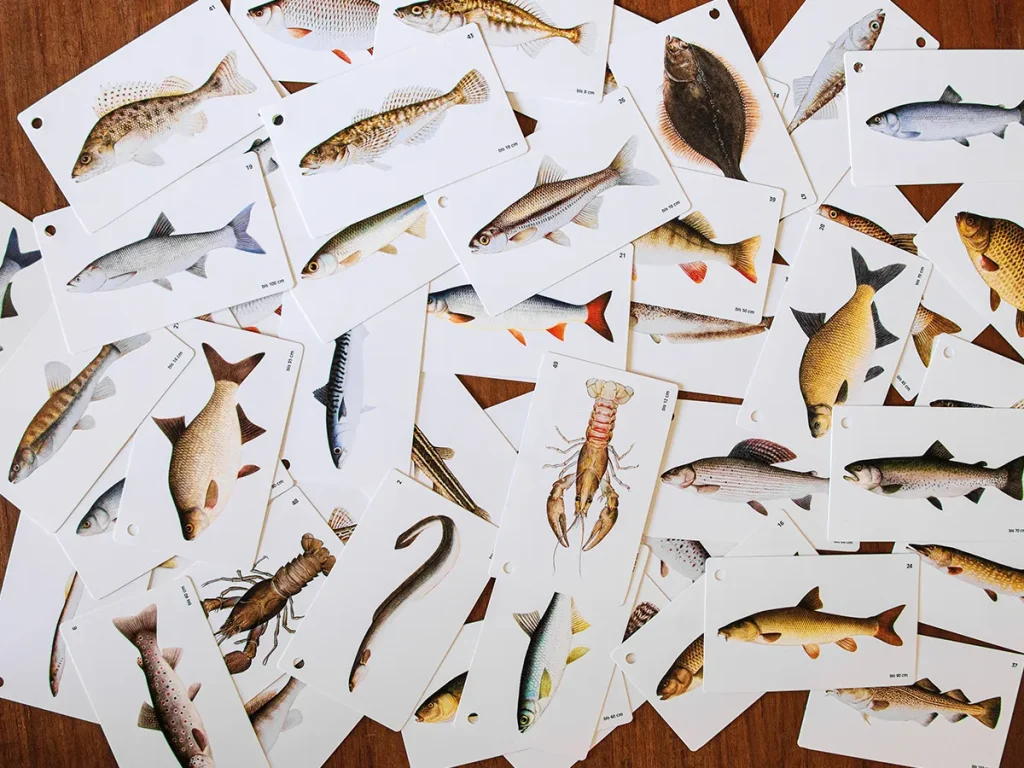
The curriculum was diverse covering everything from fish biology and aquatic ecology to conservation law, species identification, fishing tackle, and even the correct way to assemble rigs. Oh yes, species identification … that entails recognising 49 different fish species. Forty-nine! Fortunately, students are encouraged to buy a set of cards with each species meticulously rendered. I kid you not, I spread them out on the table and saw fish. Just fish. Ok, rainbow trout, eel, and mackerel I could identify, but the rest? Fish.
So, where did that leave me? I had to register for the exam no later than four weeks before the date. To be fair, I had to apply much earlier because, as it turns out, a lot of people in Cologne take the exam every year and there are only so many places available. The next opening wouldn’t be until November. I had to make a decision.
Enter Tristan into my dilemma. He was pretty keen himself, but didn’t have any ambitions to sit an exam. Instead, he tested me every day. We learned to identify fish together. He would learn the theory the night before so that he could test me the following morning. Then, we were testing each other, every day. After a couple of weeks, we both decided to register online for the June exams. Done. Paid for. Now we were committed.
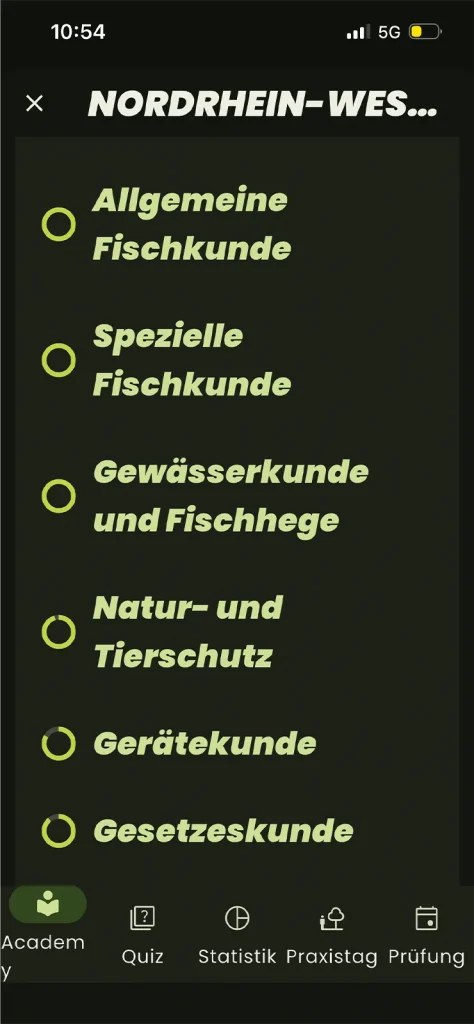
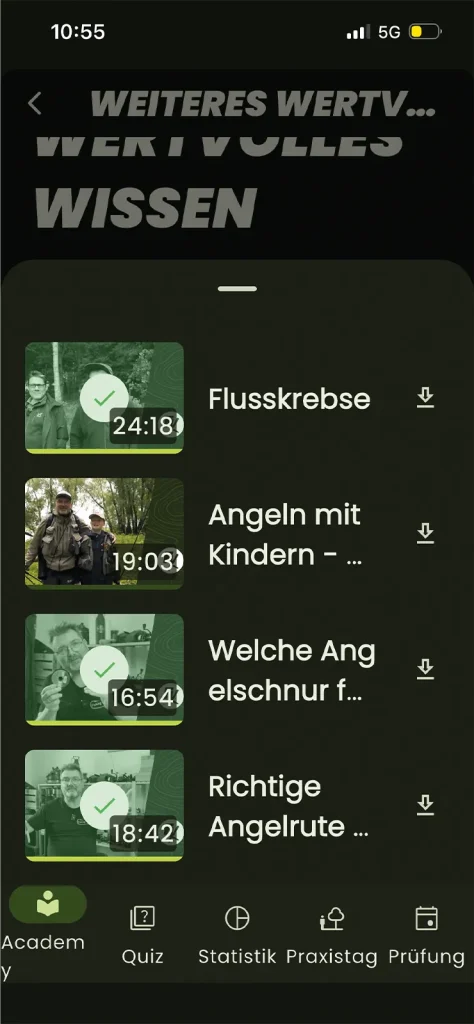
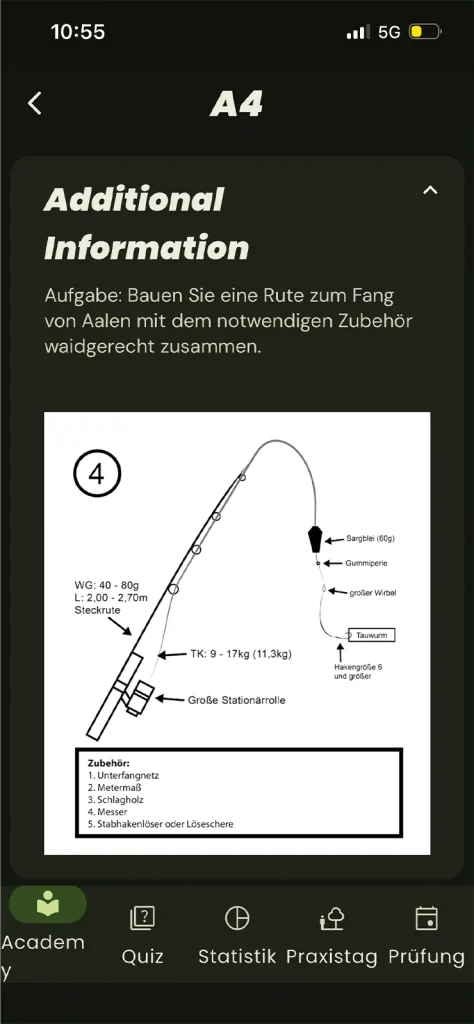
Apps were permanently open on our phones, tutorials were watched, knots were practiced, fish cards lay scattered around the house, and we quizzed each other six species at a time. We completed mock exams, assembled the rods we owned, and sketched the ones we didn’t. Slowly, the fish stopped being just fish. They acquired distinct shapes, colours, and features. Breakfast, lunch and dinner conversations revolved around spawning seasons, legal minimum landing sizes, and questions like, “Who elects the board of the fishing cooperative?” Yes, that really is an exam question. It was just one of four hundred and three questions (including the fish) that we had to know inside out.
Time flies when you’re having a good time. Time certainly flew, and the good times evolved into stress. The exam date neared, but our jobs and family commitments didn’t lessen. I’m pretty sure that by the second week in June, Elisabeth was fed up of finding fishing line trimmings lying around the living room and hated being asked to pick a number between one and ten for the different styles of rod we would randomly have to assemble. But there was no stopping this train until, finally, we arrived on June 24th.
My exam was set to begin at 08:00 in the morning. Tristan’s at two in the afternoon. I am an early riser, so no issues there. I made a point of not opening the app at all when I woke up. If I didn’t know it already, I’d only confuse myself further. In theory, there could have been an advantage for not taking the exam at the same time. In reality, all I could say when I was finished, was the order of the proceedings. There were no tips or tricks to be shared. The one thing that surprised me the most was the randomly picked rod I had to lay out on the table in the order of assembly: dry fly fishing. I thought of Christian’s old Hardy rod and smiled. It couldn’t have been simpler. In fact, I stood there looking at the neatly presented components for a minute or so, because I was convinced I had forgotten something. All good.
Tristan and I passed with flying colours. Zero mistakes.
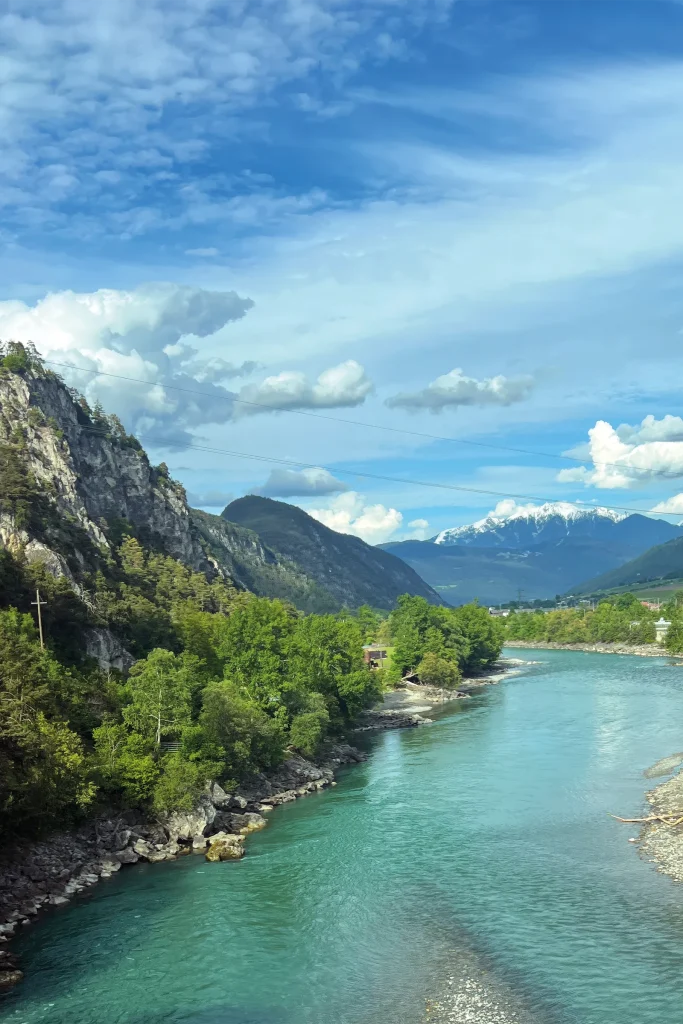
At sixty-five, I discovered that I can still become a beginner. Better still, I can now look forward to fishing on the banks of my favourite river, and perhaps a few others along the way. Not just hearing the familiar throb of the barge engines, but watching their wake toy with my float as they pass.
Safe travels!
Photography by Tristan Brailey