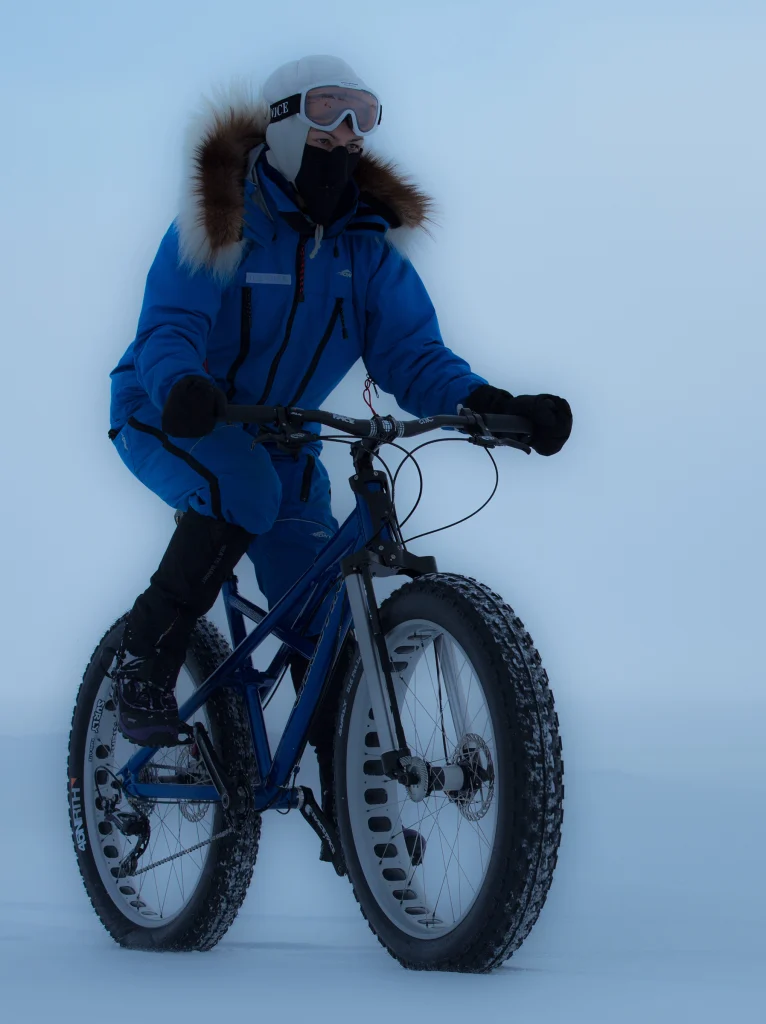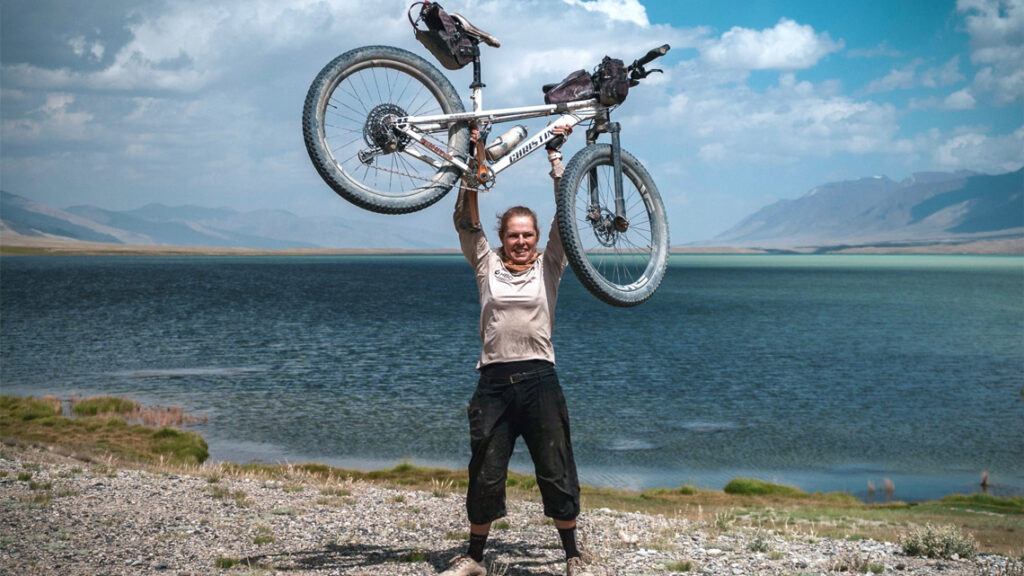
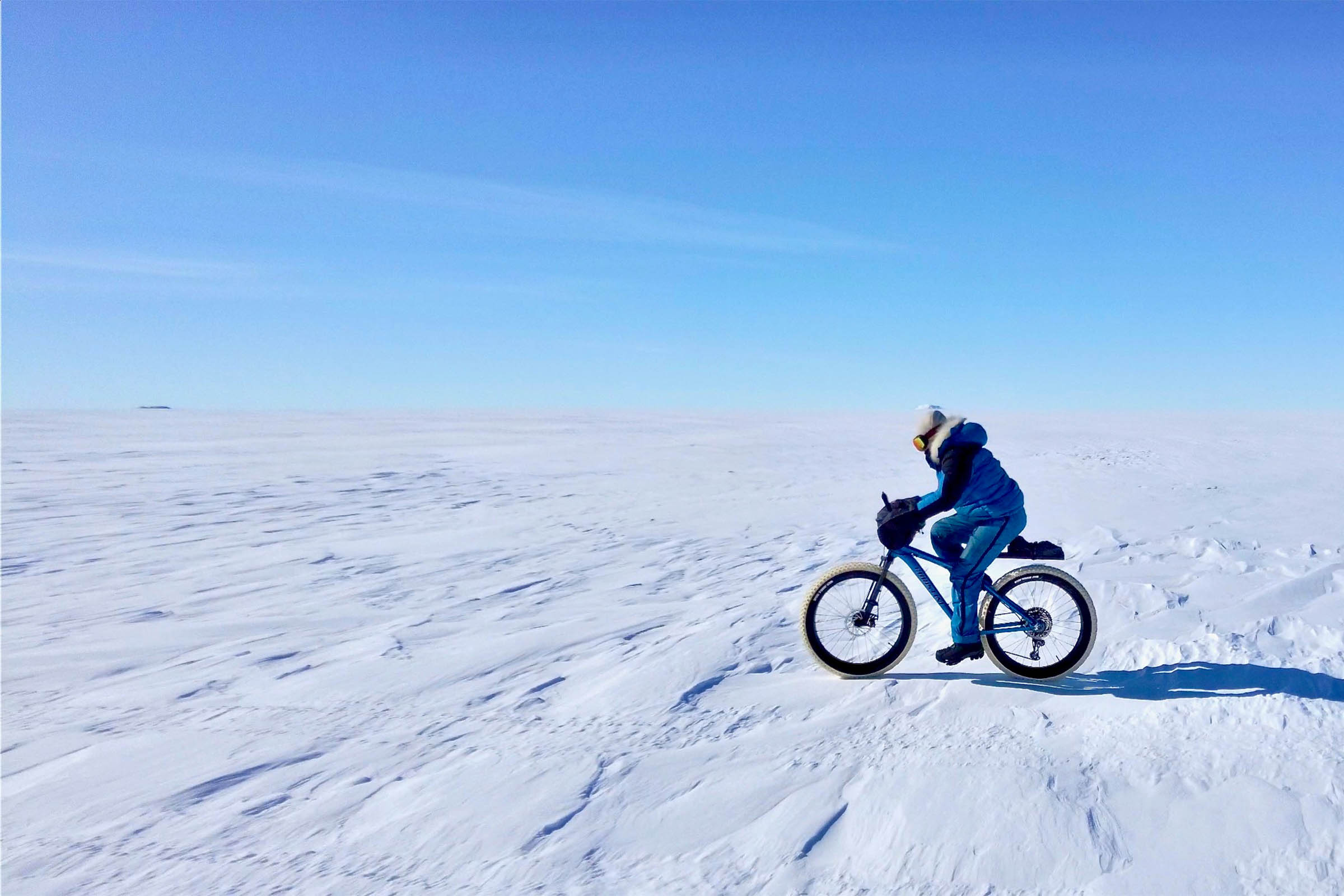
The South Pole is usually the point at which an expedition ends. Kate Leeming intends to ride through it, because reaching one of the most recognisable destinations on earth will still leave her with another side of Antarctica to cross, and the crossing itself has never really been about the Pole at all.
She has spent most of her adult life making difficult journeys by bicycle. More than a hundred thousand expedition kilometres across Europe, Russia, Africa, Australia, South America and Central Asia, where a route following two of the region’s great river systems ended with her identifying the true source of the Oxus.
But the bicycle, for Kate, has never quite been the subject. “I think of myself as someone who is a storyteller who creates stories,” she says. “This is just the way I do it.” That instinct hardened into something more deliberate on the ride across Russia in the 1990s, raising funds for children affected by the Chernobyl disaster, when she realised that whatever an expedition managed to raise, its more durable contribution was usually the story carried home afterwards. Africa followed the same logic, examining the causes and effects of extreme poverty rather than simply riding past them, and the name she gave that expedition, half accident and half pun, thought up sitting on the bike, has stayed with her ever since: Breaking the Cycle.
Antarctica presents a problem none of those journeys prepared her for. There is almost nobody there. Every previous expedition has moved her through villages and conversations, letting a landscape be understood partly through the people living in it, and Antarctica offers none of that. She does not, even so, think of it as disconnected from people, since its influence on global climate reaches every continent she has already ridden across, which is part of why the preparatory expeditions that carried Breaking the Cycle around the rest of the world were never simply rehearsals. They were gradually connecting a project built around people and places to the one continent where almost nobody lives.
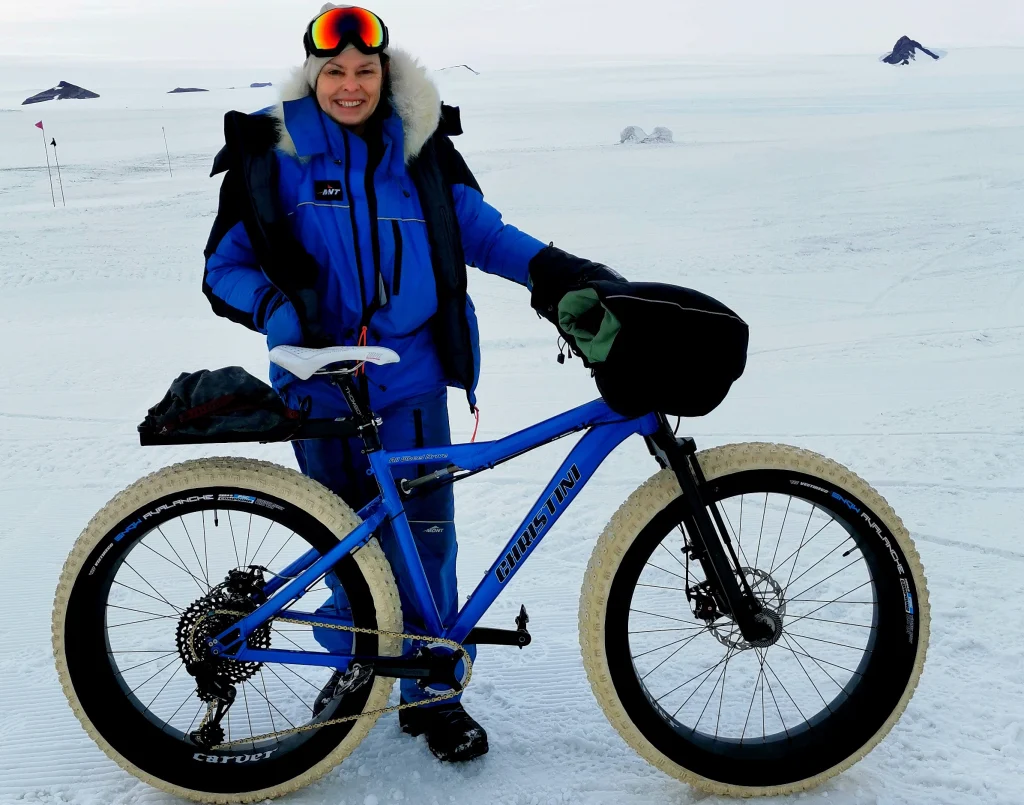
She tested the argument on the ice for the first time in 2023, and the way that expedition came together says a good deal about how the larger one is likely to. She had been talking to the polar logistics operator White Desert since the pandemic, mostly about what a future crossing might eventually require, when those conversations produced an unplanned opening at the tail of a season: a short window, a spare vehicle, supplies already staged. Eight days before the flight south she had raised barely half the money the trip required and was preparing to abandon it. White Desert, who had already put most of the logistics in place, told her to come anyway. She had a damaged knee from an accident on the real tennis court, a bicycle that needed servicing with lubricants rated for extreme cold, and crevasse equipment still to assemble, and then she went, and over the next two hundred kilometres, riding all but nineteen of them, she answered the only question that had to be answered before anything else could be taken seriously: that the bicycle worked, that the proposition held. What was more useful, in the end, was everything that did not.
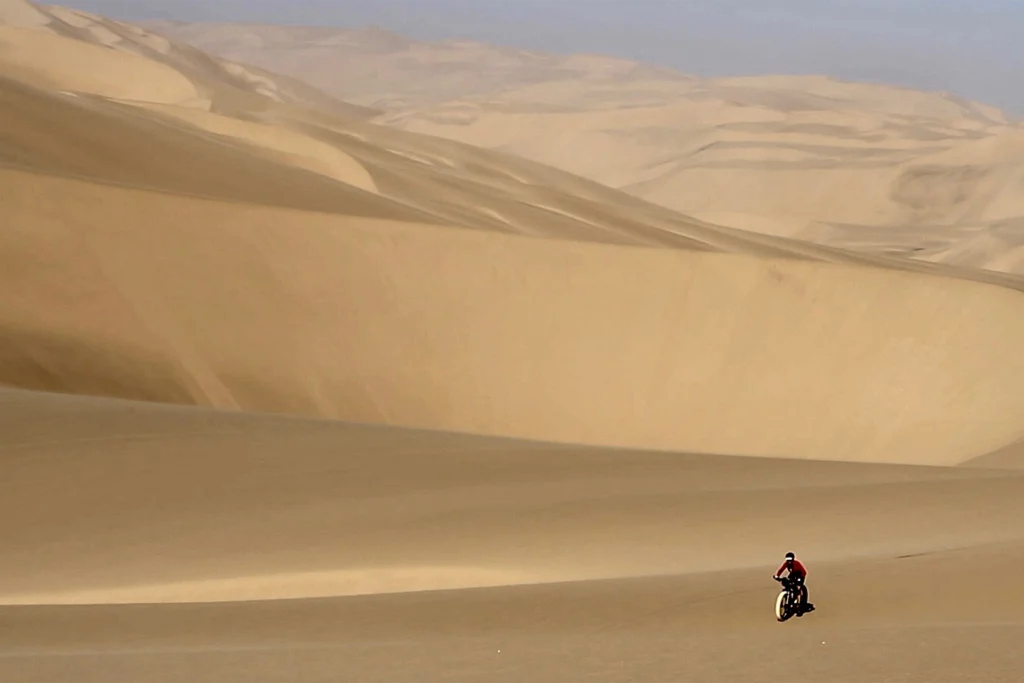
The studs in her tyres had gripped well enough everywhere else she had ridden and failed on stretches of Antarctic ice hard enough to put her on foot for those nineteen kilometres, and she has since tracked down something more aggressive to replace them. Soft snow behaved the way she expected, absorbing the tyres rather than holding them, a problem she already understood from reading sand on the Skeleton Coast and was simply learning to read again in a different medium. What she had not expected was how completely the whiteout could take the ground away from her. A skier in poor contrast still keeps a broad physical relationship with the snow through two skis and a wide stance. A cyclist has to balance, and balance depends on being able to see the small variation in surface a metre or so ahead, and when that disappeared she found herself unable to tell, in the instant it mattered, whether the bicycle beneath her was upright or already falling. She has broken a collarbone before, not from landing on the shoulder but from throwing a hand out in the last available moment. She talks about it without much drama, the way people do about things they anticipate happening again.
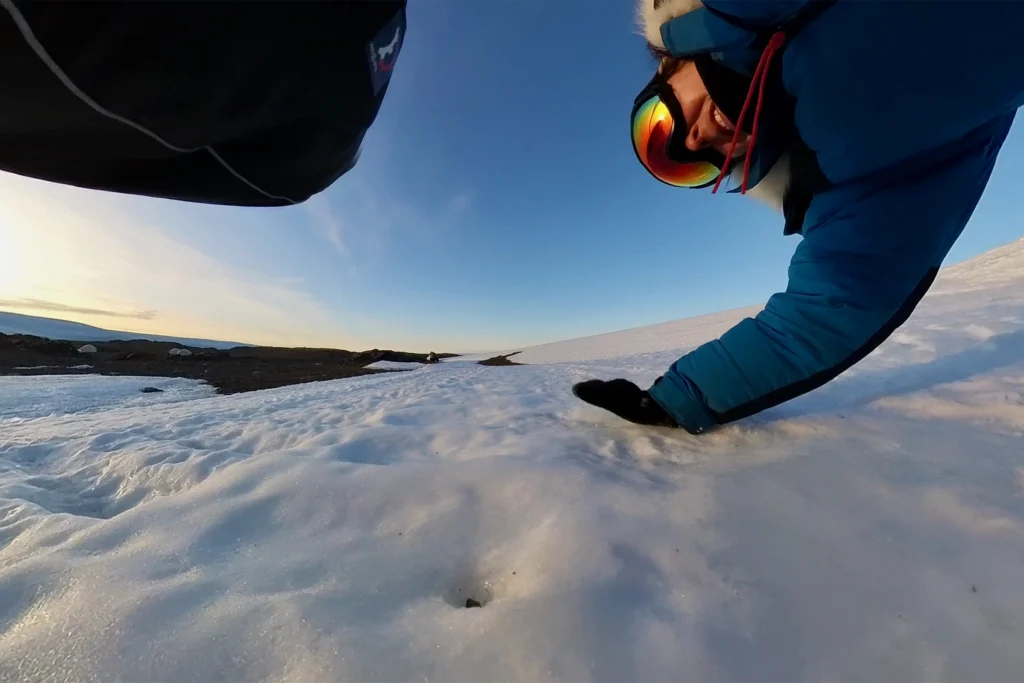
The cold worked on smaller scales too. She rates herself well adapted to heat and poorly adapted to its opposite, and sustaining a heavy physical workload for weeks rather than days in extreme cold remains one of the genuine unknowns of the full crossing. Nutrition sits at the centre of it, not because she doesn’t know the numbers, a dietitian has given her exact targets for carbohydrate, protein and fat, but because not eating often enough in the cold doesn’t just reduce performance, it makes her cold directly. Reaching food quickly enough, without standing still long enough to lose heat doing it, turned out to be its own design problem.
Even taking off a jacket became an issue. She needs the insulation at the start of a ride, before generating enough heat to shed it, and undoing conventional buckles with heavy gloves on costs minutes she cannot spare standing still in the wind. Her fix is almost embarrassingly simple, a seat pack closed with Velcro that she can stuff the jacket into without stopping to think about it, and it is exactly the kind of unglamorous detail that only ever surfaces after the failure has already happened in the field.
None of which answers what a supported crossing of an entire continent actually requires, because Queen Maud Land was never built to answer that. At two hundred kilometres it could only convert years of theory into a specific, workable list, studs, goggles, clothing, nutrition, battery life, lubricants, storage, each of them now revised by contact with the environment they were designed for rather than by guesswork, and each of them multiplied many times over by the distance still to come.
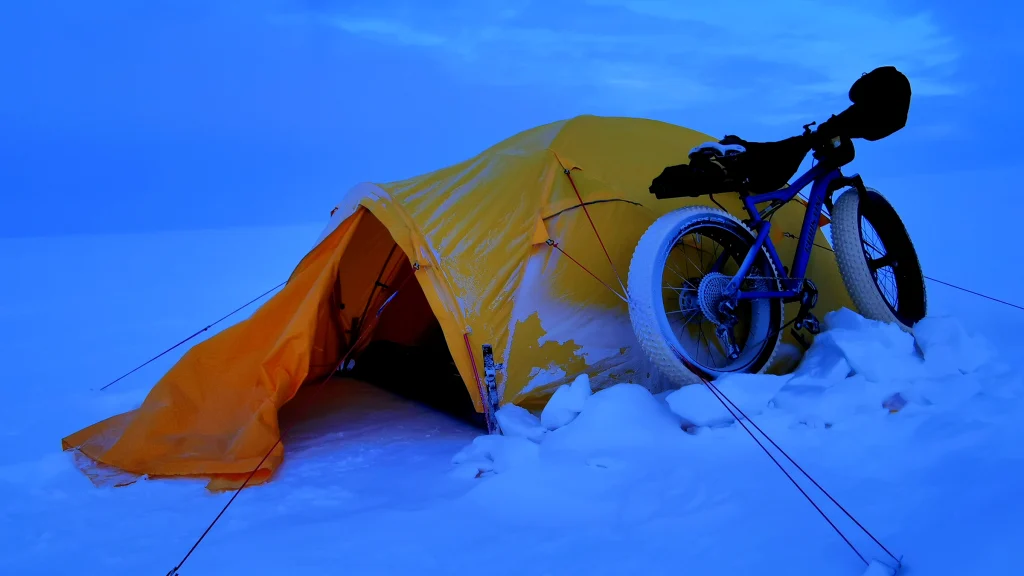
Her preferred route for the full crossing runs from the Ross Ice Shelf towards the Pole along part of the overland traverse, chosen as much for surface, altitude and prevailing wind as for distance. The approach means working largely into the wind; beyond the Pole, conditions should become more favourable. Even that line stays provisional once she is moving, because Antarctica decides the rate of travel, not the map and a bad surface or a run of whiteout can cost a day that a following wind further on may or may not give back. She cannot control the conditions. She can only control her own effort inside them, which is precisely the skill that decades of expedition cycling have trained into her, managing a workload at the right intensity for long enough that it doesn’t matter what the day in front of her looks like.
Which is why the image of the solitary polar rider, however useful for a photograph, misses most of what the crossing actually is. A supported traverse of this scale is a moving system rather than a single effort. People, vehicles, communications, navigation, weather forecasting, food, fuel, medical contingency and filming all having to keep functioning together for weeks, hundreds of kilometres from anything resembling infrastructure, and the team making that possible is not observing the environment from somewhere more comfortable than Kate is. It is operating inside the same one.
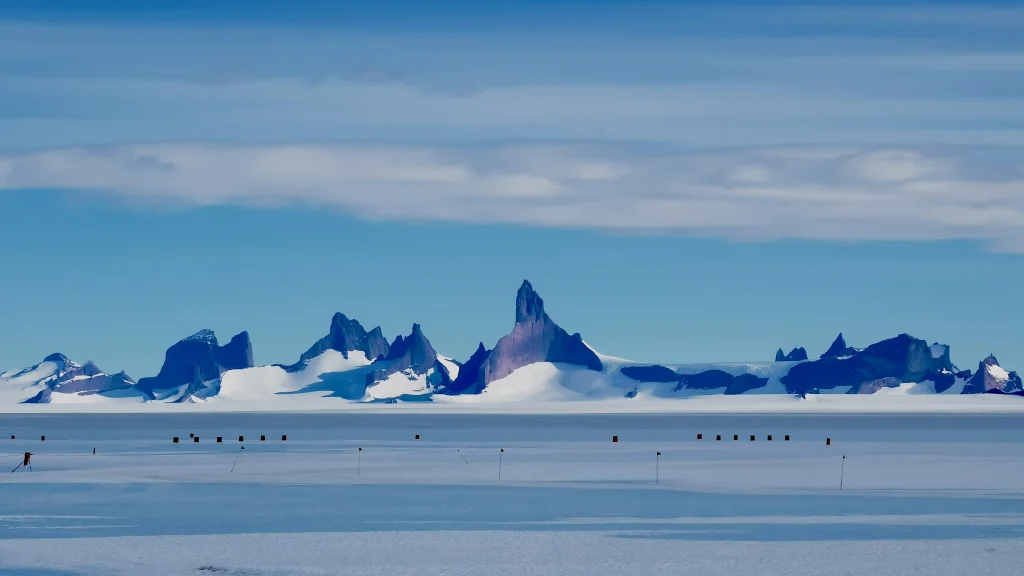
Vehicles in that system stop being transport and become working equipment, expected to start, move and keep functioning through prolonged extreme cold while carrying the people and supplies the whole crossing depends on. This asks questions of fluids, seals, batteries, tyres and heating systems that no ordinary use ever will. It is the same environment that found the weakness in a bicycle stud and turned a buckle into a design problem, and it will find whatever weaknesses exist elsewhere with the same indifference. Claims about durability stop meaning anything once the machinery is actually on the ice. It either does the work, in temperatures and distances that no test track quite replicates, or it does not. There is no use, out there, for anything that exists mainly to be photographed next to the bicycle.
The same principle runs outward from the vehicles to everyone involved. No single person brings all the knowledge required to move an expedition safely across Antarctica, and none of those disciplines is peripheral to the attempt. History tends to remember the person at the front, while forgetting the people and machines that got them there. A bicycle moving slowly across a white continent, with an entire support operation working just out of frame, makes that distinction unusually visible.
There is still considerable work between here and the ice: a nutritional plan turned into something she can actually use while riding in the cold, equipment decisions finalised against the chosen route, training built around what the crossing specifically demands, and a support and production structure assembled around her rather than improvised once she is already on the ice. Some of that work cannot sensibly happen until the people who will eventually be part of it are around the same table, which is where things currently stand, waiting less on any unsolved problem than on the ordinary, unglamorous business of the right conversations resuming.
If they do, there will come a point, some months from now, when years of this kind of preparation resolve into something almost plain: a route chosen, food packed, machines checked over, a support structure moving with her across the ice while the weather comes in over the radio the way it always will. None of it, at that point, can ride the bicycle for her. There will be days when the surface holds the tyres and days when it swallows them, wind that helps and wind that has to be taken back one hard kilometre at a time, and somewhere in the middle of it, in poor light, on a piece of ground she cannot quite see the shape of, she will find out again whether she is still upright before she has time to think about it. She has already broken one collarbone finding that out. She expects, in the way people do about things they have made their peace with, that Antarctica may ask her the same question at least once more before it lets her reach the other side.
And somewhere along the way she will arrive at the South Pole, the place where more than a century of expedition history tells us the journey ought to end. There will be photographs, no doubt, and a moment to take in where she is. Then Kate will get back on the bicycle, because there will still be another side of Antarctica to cross.