From the rugged gorges of the Atlas Mountains to the golden sands of the Sahara, from the labyrinthine medina of Marrakesh to the Atlantic coastline, an itinerary for seasoned travellers through Berber villages and the imperial wonders of Morocco.
By Scilla Nascimbene
A late-summer sun burns above the spine of the Atlas Mountains and their bare rock. Ridges, gentle hills and Mesozoic plateaus follow one another between the switchbacks, shaping a landscape that feels almost prehistoric. The colours have the hardness of iron, from the deepest tones to the pale, restrained shades that fade in the shimmer of the horizon. Limestone crests comb the air before plunging steeply into the gorges below, where amber streams run in the shelter of shadow. Wadis, as they are called in Arabic: narrow fissures where yucca takes root, covering the scars of the earth with miniature gardens. Certain places want to tell us something, Jorge Luis Borges once wrote. One of those places is, without doubt, Morocco.
Water and Rock in the High Atlas
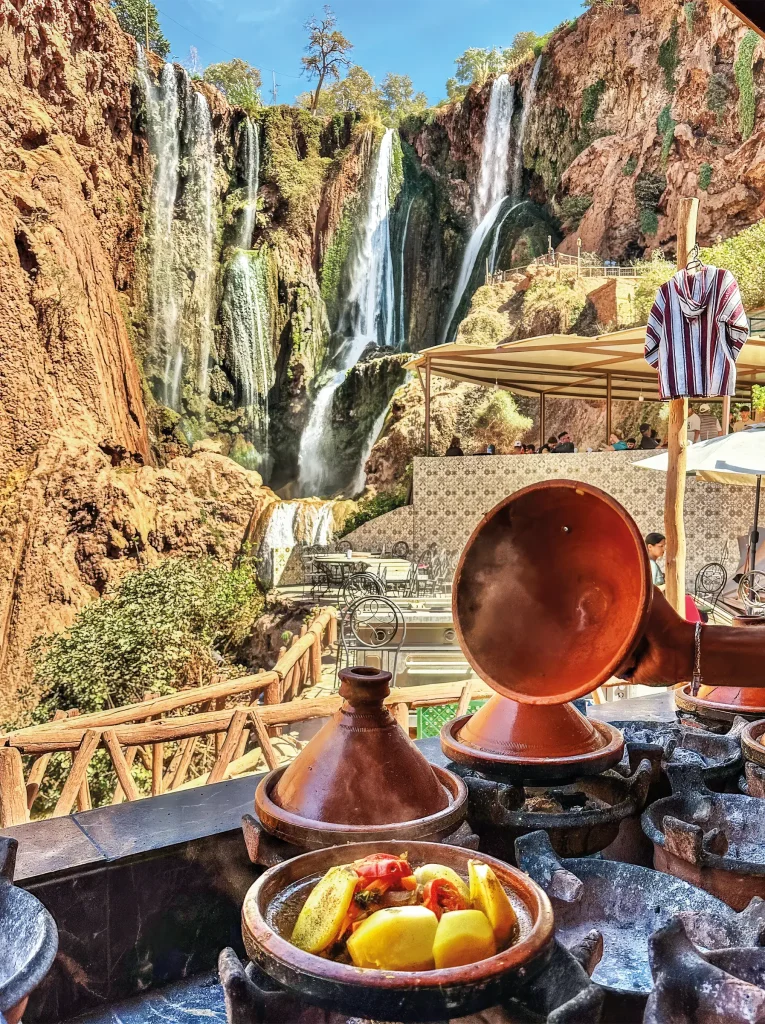
It is a bright morning under a cloudless sky. The road winds along narrow strips of land, where small palm groves and isolated olive trees provide a hint of contrast to the monotony of ochre and rust-coloured earth, until the reddish rock walls of the High Atlas draw ever closer. North Africa’s great mountain chain, and the dominant spine of Morocco’s mountain landscape, is cut through with gorges and waterfalls, including the falls of Ouzoud, 160 kilometres east of Marrakesh. They are the highest in the country: three cascades dropping around one hundred metres into the gorge of the Oued el-Abid. To reach them, you leave the car at the park entrance and follow a trail for about twenty minutes through olive groves lined with stalls where you can pause for a cool glass of pomegranate juice.
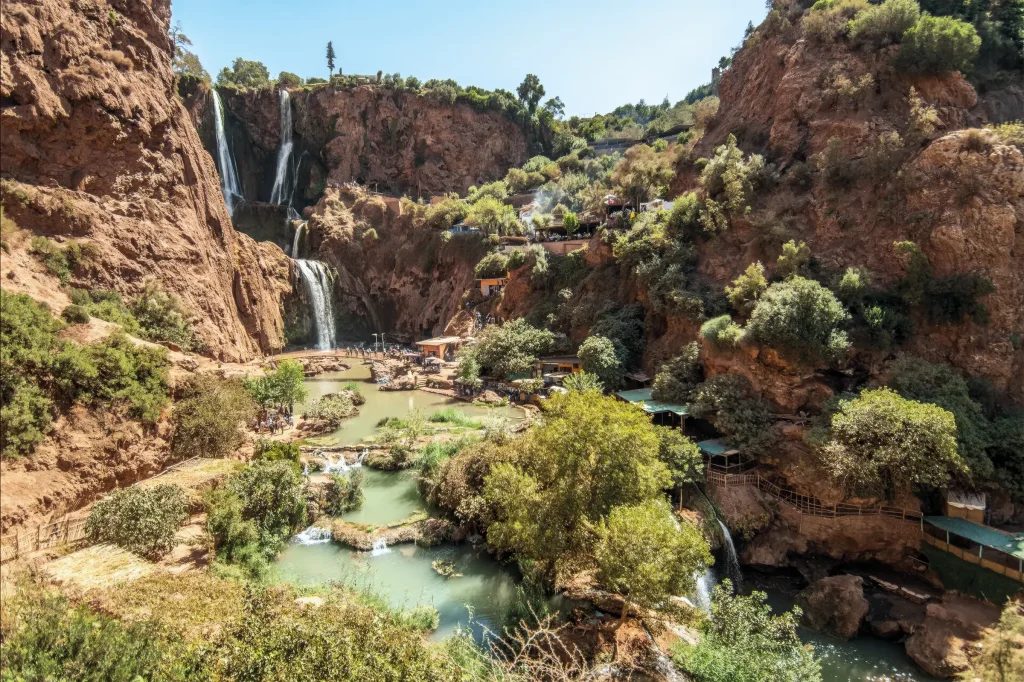
On arrival, it feels like walking onto the set of an adventure film from half a century ago. After the inevitable photographs on the small bridge over the pool at the foot of the falls, few visitors resist the short ride in one of the rowing boats that carry them almost beneath the fine spray of the cascades. After the walk, you can sit on a panoramic restaurant terrace and eat a tajine, the traditional Moroccan stew, slowly cooked in the conical terracotta pot from which it takes its name.
In the park, groups of Barbary macaques (Macaca sylvanus), native to Morocco, often climb among ancient trees and groom one another. Although known as macaques, they are only distant relatives of the Asian species and belong to the same family as those found in Gibraltar, across the strait separating Europe from Africa.
Beyond Azilal, where Berber carpet weaving still flourishes, the road enters the Eastern High Atlas National Park. On the edge of the protected area lies Imilchil, a village known for the timeless legend of two young lovers from rival tribes. Forced by their families to abandon their bond, they chose death together. From their tears, it is said, came two small lakes a few kilometres from the village: Tislit, “hers,” and Isli, “his,” their bright turquoise waters shining like gemstones against rock and sand. Each year, towards the end of September, the village revives this ill-fated love with a festival shaped by hope, during which women may freely choose their fiancés. No one may oppose the marriage, though the wedding itself cannot take place for at least a year.
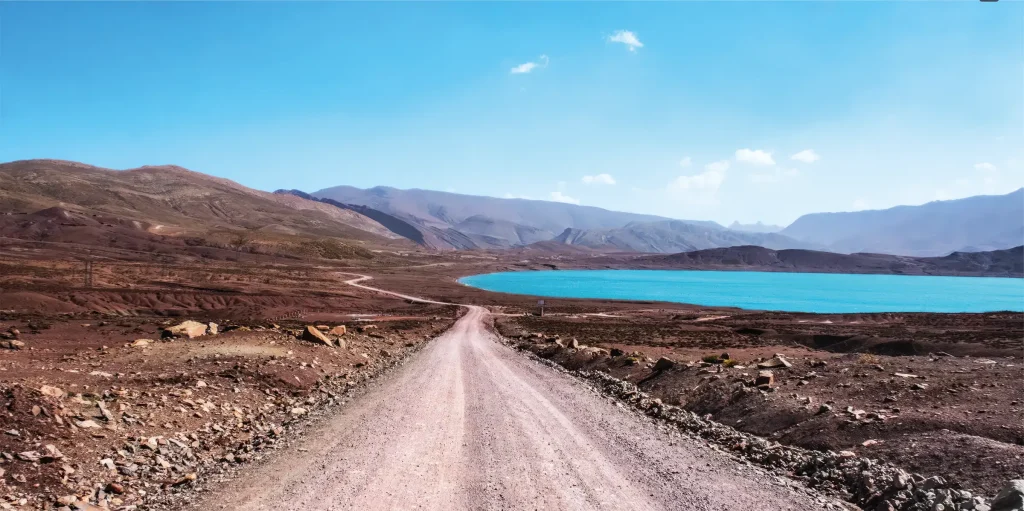
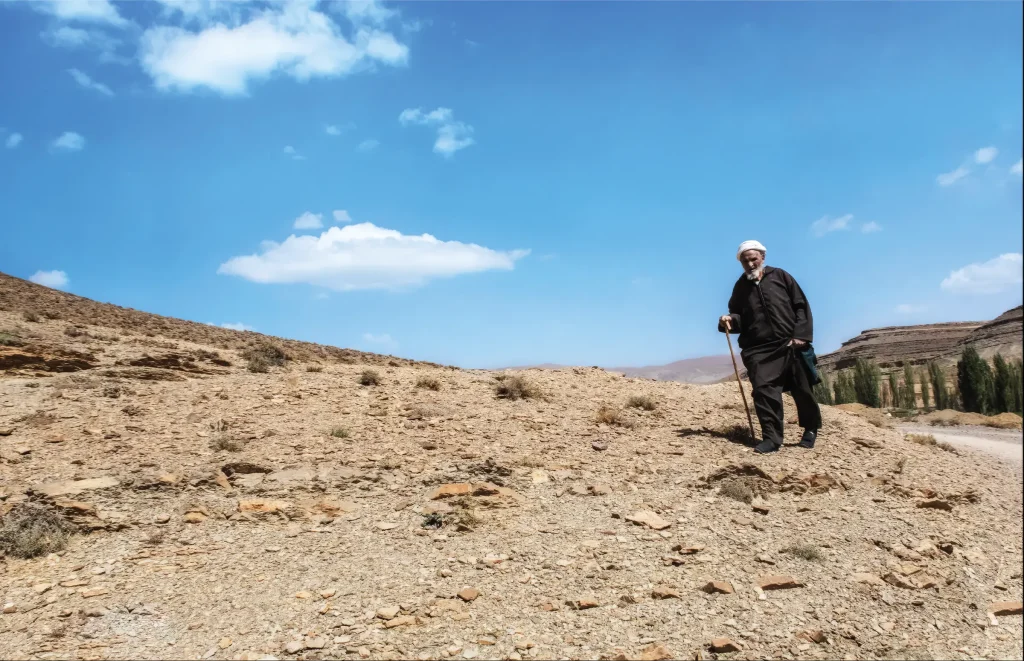
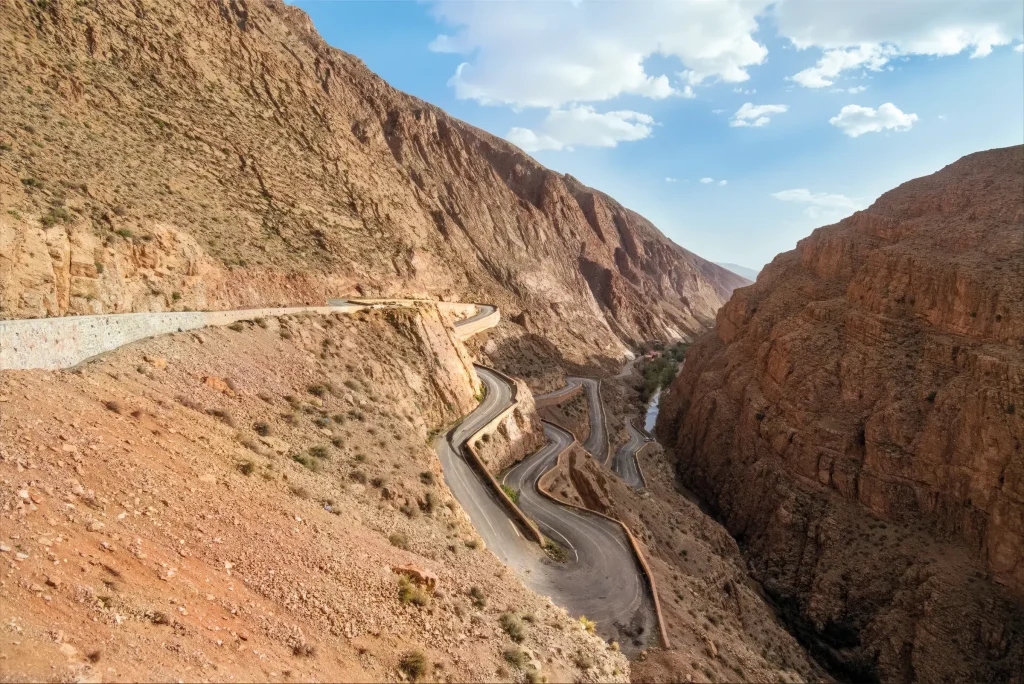
We continue towards seemingly endless horizons, through pastel-coloured hills beneath a wind-swept sky, while encounters along the road speak of the pride of the Atlas peoples and the simplicity of life in these communities. After the spectacular switchbacks of the Dadès Gorge, between sandstone and limestone shaped by the river, we reach the Todra Gorge. Here, the rock walls narrow into a passage between cathedral-like cliffs: irregular, immense surfaces that have made this canyon a paradise for climbers, with routes cutting through the stone.
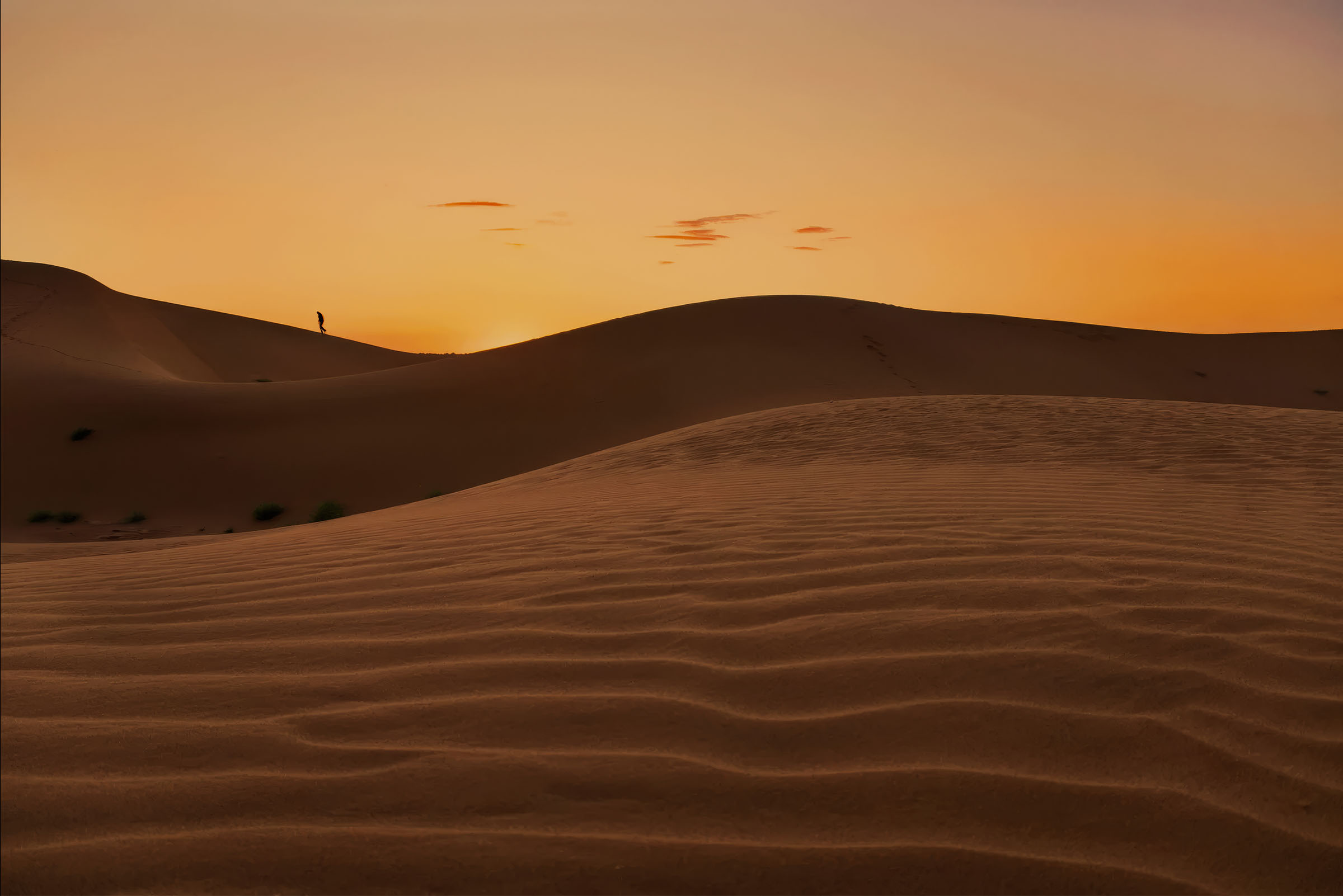
Beyond the gorges, the landscape changes. The gravel tracks of the hammada appear, stony deserts and dry expanses scattered with coloured rocks and sharp forms, quite different from the erg, with its wandering dunes, and the serir, those broad, compact plains of gravel. Then, in the distance, the first golden waves begin to rise: the desert of Erg Chebbi.
PREMIUM ARCHIVE
Continue reading with OverlandEurope membership
This article forms part of more than ten years of independent overland journalism. Learn what membership includes and how it opens the complete archive.
Already a member? Log in to continue.
Log in to continue reading
Enter your member details to continue reading this article without leaving the page.
The complete OverlandEurope archive, published independently since 2016.